
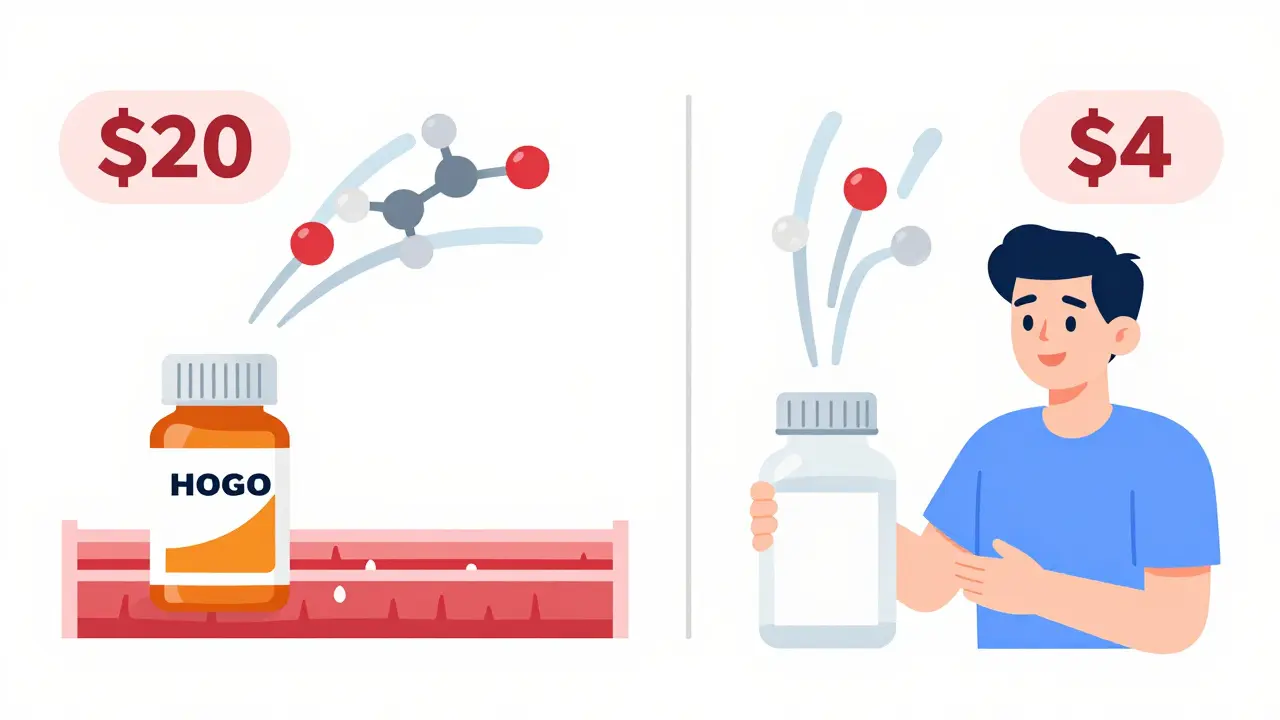
When you pick up a prescription, you might see a label that says generic instead of the brand name you recognize. It’s cheaper-often 80% to 85% cheaper-but does it work the same? This isn’t just a question of cost. For millions of people managing chronic conditions like high blood pressure, diabetes, or depression, the answer matters deeply. So what do actual clinical studies show?
How Generics Are Proven to Work
The U.S. Food and Drug Administration (FDA) doesn’t just accept a generic drug because it looks similar. Every generic must prove it delivers the same active ingredient, in the same amount, at the same rate as the brand-name version. This is called bioequivalence. The testing is strict: healthy volunteers take both the brand and generic versions in a crossover design, and researchers measure how much of the drug enters the bloodstream and how fast. The FDA requires that the 90% confidence interval for the ratio of absorption (measured by Cmax and AUC) falls between 80% and 125%. That’s not a wide margin-it’s tight enough to ensure consistent results.
A 2013 analysis of over 2,000 bioequivalence studies approved by the FDA between 1996 and 2007 found no meaningful difference in how generics and brand-name drugs performed. That’s not an outlier. The European Medicines Agency (EMA) reached the same conclusion in a 2020 review, finding therapeutic equivalence in 98.3% of approved generics. These aren’t theoretical standards-they’re backed by real human data.
Real-World Outcomes: Do Generics Save Lives?
Cost savings are obvious, but what about health outcomes? A landmark 2020 study in Scientific Reports tracked nearly all insured Austrians with chronic metabolic diseases between 2007 and 2012. The results were striking: patients taking generic versions of 10 out of 17 medications had fewer deaths. For 11 of the 17 drugs, there were fewer major heart events like heart attacks or strokes. After adjusting for age, income, and other factors, five-year survival rates were 82.7% for generics versus 79.8% for brand-name drugs. That’s not a small gap-it’s a clinically meaningful advantage.
Another large study in 2019, analyzing 3.5 million patients in the U.S., found no difference in outcomes between generics and brand-name drugs for common medications like amlodipine (for high blood pressure), glipizide (for diabetes), and escitalopram (for depression). In fact, for amlodipine and its combination with benazepril, generics were linked to slightly lower cardiovascular risk. One possible reason? Better adherence. When a pill costs $4 instead of $20, people are more likely to take it every day.
When Things Don’t Go as Planned
But it’s not always smooth sailing. Some studies point to real, though rare, problems. A 2013 paper by L. Gallelli documented cases where patients switched from brand to generic and experienced treatment failure. One patient on generic levofloxacin kept having infections until switching back to the brand name-then symptoms vanished within days. Similar reports come from neurologists treating epilepsy: switching between different generic versions of lamotrigine or levetiracetam has been tied to breakthrough seizures, even when bioequivalence standards were met.
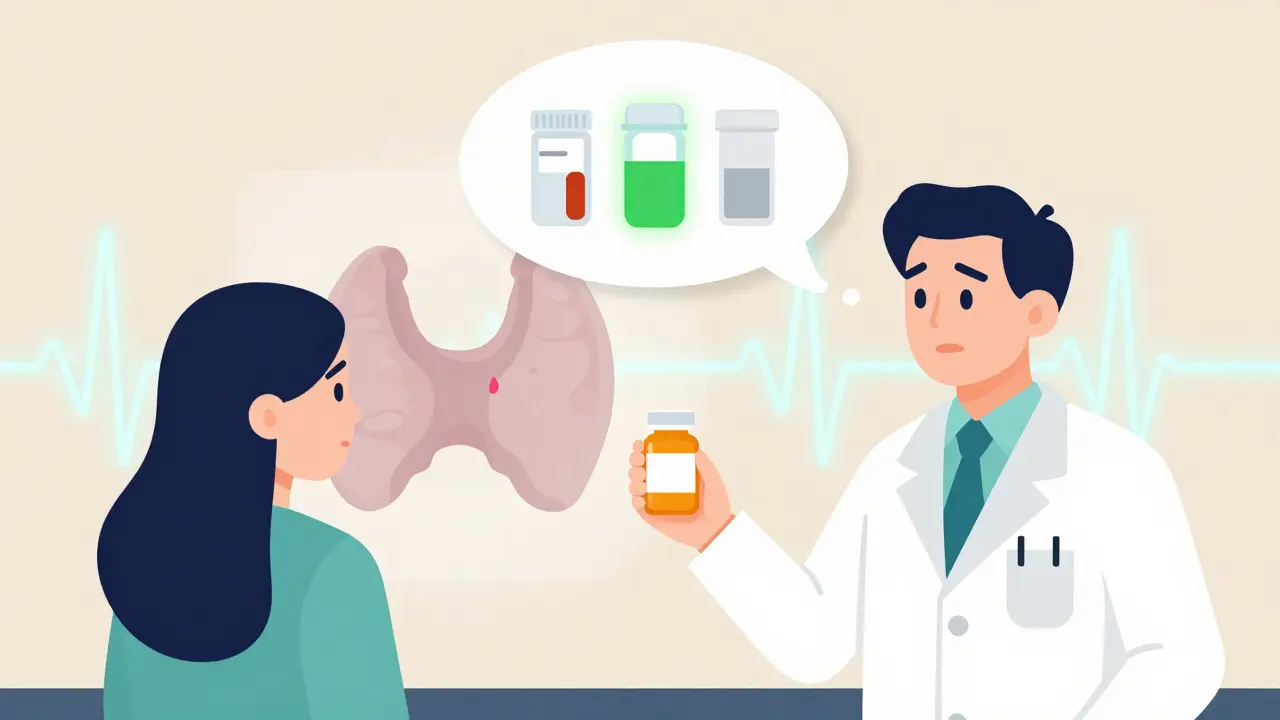
Why? These drugs have a narrow therapeutic index. That means the difference between an effective dose and a toxic one is tiny. Even small changes in absorption-like 5% more or less-can tip the balance. The FDA acknowledges this. While 90% of generics are A-rated (therapeutically equivalent), a small number are B-rated, meaning they may not be interchangeable. These include drugs like warfarin, levothyroxine, and certain antiseizure medications.
Patients notice this too. On Reddit’s r/pharmacy, users report trying three different generic versions of levothyroxine-only one kept their thyroid levels stable. Pharmacists confirm: 42% of patients express concerns about generic quality, even when those concerns aren’t backed by science. The issue isn’t always the drug itself-it’s the psychological effect of switching. If you’ve been on a brand-name drug for years and suddenly get a different pill, you might feel like something’s wrong, even if your labs say otherwise.
Who’s Using Generics-and Why It Matters
Nine out of ten prescriptions filled in the U.S. are for generics. That’s not because doctors are pushing them-it’s because patients want them. Medicare beneficiaries report that 68% saw no difference in effectiveness after switching to generics. Only 22% reported minor side effects that faded over time. GoodRx user reviews show a 4.2 out of 5-star rating, with 78% saying generics worked just as well as the brand name.
But behind those numbers is a system designed to make generics accessible. Pharmacists are allowed to substitute generics unless the doctor writes “dispense as written”-a request that appears in only 3.2% of prescriptions. That means in nearly every case, you’re getting a generic unless you specifically ask otherwise. And that’s a good thing. From 2012 to 2021, generics saved the U.S. healthcare system $612 billion. Medicare Part D saved $1.67 trillion between 2006 and 2020.
What You Should Know Before Switching
If you’re on a chronic medication and your pharmacy switches you to a generic, here’s what to do:
- Check the drug’s therapeutic equivalence rating in the FDA’s Orange Book. Look for an “A” rating-those are interchangeable.
- For drugs with narrow therapeutic indices (like thyroid meds, seizure drugs, or blood thinners), monitor your symptoms closely after the switch.
- If you notice new side effects, worsening symptoms, or lab results that don’t match your baseline, talk to your doctor. Don’t assume it’s “all in your head.”
- Keep a record of which generic manufacturer you’re using. Some patients find one brand of generic works better than another-even if both are FDA-approved.
Doctors are catching on too. A 2020 survey found that 87% of physicians trust generic efficacy. But specialists in neurology, cardiology, and endocrinology are more cautious. That’s not skepticism-it’s experience. They’ve seen the exceptions.
The Bigger Picture: Generics Are Here to Stay
The global generic drug market is worth over $400 billion and growing. The FDA is investing over $1 billion through its GDUFA III program to improve testing for complex generics like inhalers, topical creams, and extended-release pills. By 2025, the agency plans to require more real-world studies for these tricky formulations.
That doesn’t mean generics are perfect. Manufacturing issues happen-like the 2021 valsartan recall due to cancer-causing impurities. But those problems aren’t unique to generics; brand-name drugs get recalled too. The difference? When a generic fails, it affects more people at once because it’s used by millions. That’s why oversight matters more, not less.
For most people, generics are a win. They’re safe. They’re effective. And they’re affordable. The research doesn’t lie: for the vast majority of drugs, there’s no clinical reason to pay more for the brand name. But for a small group-those on narrow therapeutic index drugs-the difference can be real. That’s why informed decisions matter. Know your medication. Know your options. And don’t be afraid to speak up if something feels off.
Are generic drugs as effective as brand-name drugs?
Yes, for the vast majority of medications. The FDA requires generics to prove bioequivalence, meaning they deliver the same active ingredient at the same rate and extent as the brand-name version. Large studies involving millions of patients show no meaningful difference in outcomes for drugs like blood pressure medications, antidepressants, and diabetes treatments. However, for drugs with a narrow therapeutic index-like levothyroxine, warfarin, or certain antiseizure meds-small differences in absorption can matter, and some patients may respond better to one formulation over another.
Why do some people say generics don’t work for them?
There are a few reasons. First, some patients are switching from a brand-name drug they’ve used for years, and any change-even a harmless one-can trigger psychological doubt. Second, for drugs with a narrow therapeutic index, slight variations in inactive ingredients or manufacturing can affect absorption, leading to symptoms returning. Third, different generic manufacturers use different fillers or coatings, and some patients are more sensitive to those differences. If you notice a change after switching, track your symptoms and talk to your doctor. It’s not always the drug-it could be the formulation.
Can I ask my pharmacist to give me the brand name instead?
Yes, but you’ll likely pay more. Pharmacists are legally allowed to substitute generics unless your doctor writes “dispense as written” on the prescription. That phrase appears on fewer than 4% of all prescriptions. If you want the brand name, you can request it-but you’ll need to pay the difference out of pocket unless your insurance covers it. In most cases, the generic is just as effective and saves you hundreds a year.
Are all generic drugs the same?
All FDA-approved generics must meet the same bioequivalence standards, but they can come from different manufacturers with different inactive ingredients. That means two generics for the same drug might look different or have slightly different absorption rates. For most people, this doesn’t matter. But for those on critical medications-like thyroid or seizure drugs-switching between generic brands can sometimes cause problems. If one generic works well for you, stick with it. You can ask your pharmacist to refill the same manufacturer each time.
What should I do if I think my generic isn’t working?
Don’t stop taking it. First, check if you’ve switched manufacturers recently. Write down any new symptoms or changes in how you feel. Then, schedule a visit with your doctor. They can order blood tests to check drug levels or adjust your dose. In some cases, switching back to the brand name-or to a different generic-can resolve the issue. The key is to communicate clearly: tell your provider exactly what changed and when.
12 Comments

Michael Marchio
January 12, 2026 AT 06:15 AM
It’s amusing how people treat generics like they’re some kind of pharmaceutical lottery ticket. The FDA’s bioequivalence standards are not suggestions-they’re mathematical certainties enforced by chromatography and statistical rigor. If your ‘generic isn’t working,’ it’s not the drug-it’s your confirmation bias wearing a lab coat. You’ve been conditioned to believe brand names mean quality, when in reality, you’re just paying for the logo and the ad budget. The active ingredient doesn’t care if it’s in a blue pill or a white one.

Ashlee Montgomery
January 14, 2026 AT 00:34 AM
I’ve been on generic escitalopram for six years. I’ve tried three different manufacturers. One made me feel like I was underwater. Another gave me headaches. The third? Perfect. I now only refill the one with the little triangle on it. It’s not about brand vs generic-it’s about consistency. If your doctor doesn’t know your pharmacy’s supplier, they’re not doing their job. Write down the imprint code. It’s your right.

Dwayne Dickson
January 14, 2026 AT 22:07 PM
While the aggregate data robustly supports the therapeutic equivalence of FDA-approved generics across broad populations, one must acknowledge the epistemological limitations of population-level inference when applied to individual pharmacodynamic variance. The narrow therapeutic index of certain compounds-particularly antiepileptics and thyroid hormones-introduces a non-linear risk profile that is inadequately captured by Cmax and AUC metrics alone. The clinical phenomenon of patient-reported therapeutic failure following generic substitution, while statistically rare, remains clinically significant and warrants individualized therapeutic monitoring, particularly in polypharmacy contexts where pharmacokinetic interactions may be amplified.

Jaqueline santos bau
January 15, 2026 AT 08:53 AM
My cousin took generic warfarin and nearly died. Her INR spiked to 8.5. The hospital said it was ‘just a coincidence.’ Coincidence? She’d been on the same brand for 12 years. They switched her without telling her. Now she’s terrified of every pill. Who’s responsible? The pharmacist? The doctor? The FDA? Someone’s gotta pay for this. And it’s not the big pharma CEOs-they’re laughing all the way to the bank.

Paul Bear
January 16, 2026 AT 21:31 PM
Let’s be clear: the 80–125% bioequivalence range is not a loophole-it’s a regulatory standard designed to ensure clinical interchangeability. Any claim that generics are ‘less effective’ is either anecdotal, misattributed, or rooted in placebo-driven perception. The 2020 Austrian study showed lower mortality with generics. The 3.5M-patient U.S. study found no difference. And yet, we still have people treating generics like they’re knockoff sneakers. If your blood pressure isn’t controlled, it’s not because the amlodipine is ‘fake.’ It’s because you’re not taking it. Or you’re eating salt like it’s candy.

neeraj maor
January 17, 2026 AT 02:32 AM
They don’t want you to know this but generics are made in the same factories as brand names. The only difference? The label. Big Pharma owns the generic companies too. The FDA is paid by the industry. The studies? Edited. The recalls? Buried. You think your thyroid meds are safe? Check the batch numbers. Look up the Chinese supplier. That’s not medicine-that’s a chemical cocktail with a stamp of approval. You’re being used as a guinea pig to save money. Wake up.

Jake Kelly
January 17, 2026 AT 03:17 AM
I get why people are nervous. Switching meds feels like changing your car’s engine mid-drive. But for most of us, it’s fine. I’ve been on generic metformin since 2018. My A1c is stable. I save $180 a month. My bank account and my doctor are both happy. If you’re worried, talk to your pharmacist-they’ll tell you which manufacturer they use and how to stick with it. No drama needed.

Aurora Memo
January 18, 2026 AT 12:16 PM
My grandmother switched to generic lisinopril and started feeling dizzy. We didn’t panic-we called her pharmacist. They checked the manufacturer. It was a different one than before. We switched back to the old one. Her dizziness vanished. No new prescription. No drama. Just paying attention. That’s all it takes. Generics work. But you have to be the detective in your own health.

Ritwik Bose
January 18, 2026 AT 23:28 PM
🙏 Thank you for this clear, evidence-based breakdown. As someone from India where generic access is life-changing, I’ve seen families choose between food and medicine-until generics came along. The science is solid. The exceptions are real but rare. Let’s not let fear override fact. And yes, if you’re on levothyroxine, stick with one brand. Consistency > cost. 💊

Kunal Majumder
January 19, 2026 AT 00:06 AM
My dad took generic atorvastatin for 8 years. No issues. Then they switched to a new batch and he got muscle pain. We called the pharmacy. They said it was from a different maker. We asked for the old one. Done. He’s fine now. Just ask for the same one. Easy.

chandra tan
January 19, 2026 AT 21:50 PM
Generics saved my sister’s life. She’s on insulin and metformin. Without generics, she couldn’t afford it. She’s alive because someone decided to make a cheap pill that works. Don’t knock it till you’ve had to choose between rent and your meds.
Write a comment
Popular Posts

Doxt-SL: Uses, Dosage, Side Effects & Price Guide
Sep, 21 2025
lisa Bajram
January 11, 2026 AT 09:44 AM
Let me tell you, I switched my mom to generic levothyroxine last year and she went from feeling like a zombie to actually sleeping through the night. I was skeptical too-until I saw the lab results. Same dose, same bloodwork, but now she’s baking pies and complaining about the neighbors’ dogs. Generics aren’t magic, but they’re not poison either. Just don’t switch brands every month like your pharmacist’s playing roulette.