
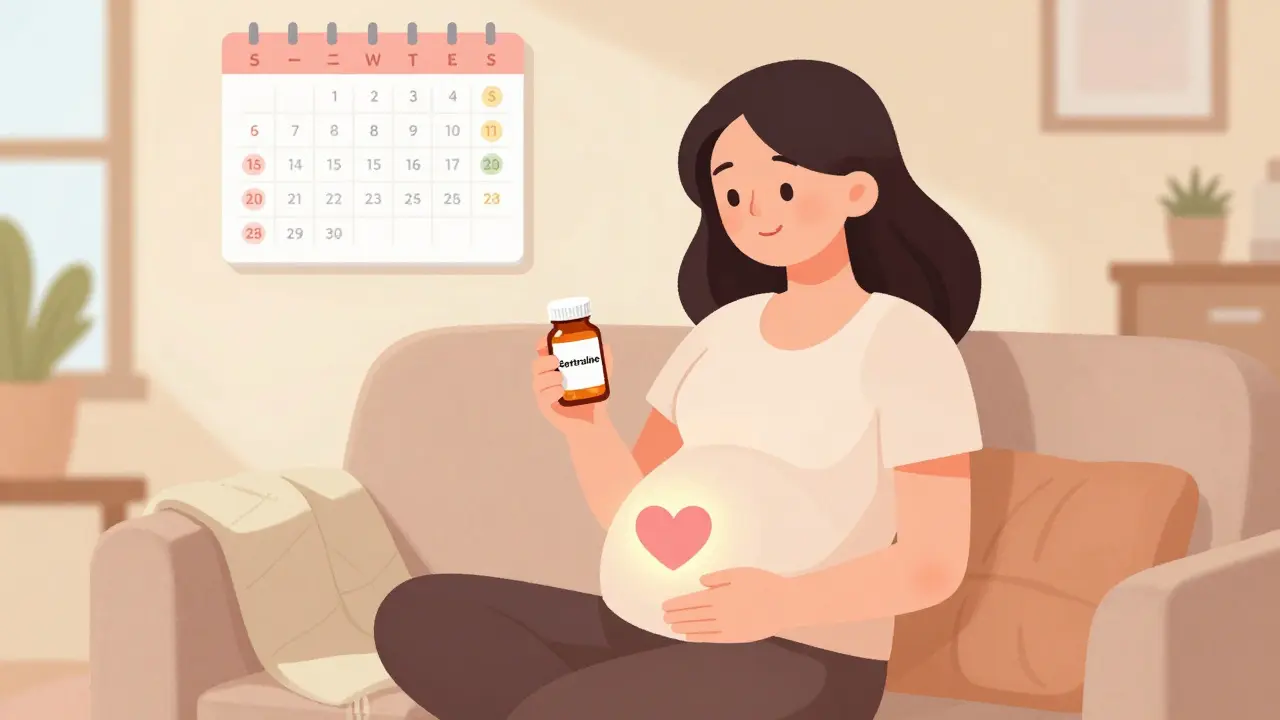
Pregnancy Antidepressant Risk Calculator
Understand Your Risks
This tool compares the relative risks of continuing antidepressants versus stopping during pregnancy based on your specific situation. All data is based on medical research.
Depression during pregnancy is real - and treating it matters
One in seven pregnant people in the U.S. experiences depression. That’s not rare. It’s common. And yet, many women stop taking their antidepressants the moment they find out they’re pregnant, terrified of harming the baby. The fear is understandable. But the data tells a different story. Leaving depression untreated often carries greater risks than staying on medication.
Why untreated depression is more dangerous than antidepressants
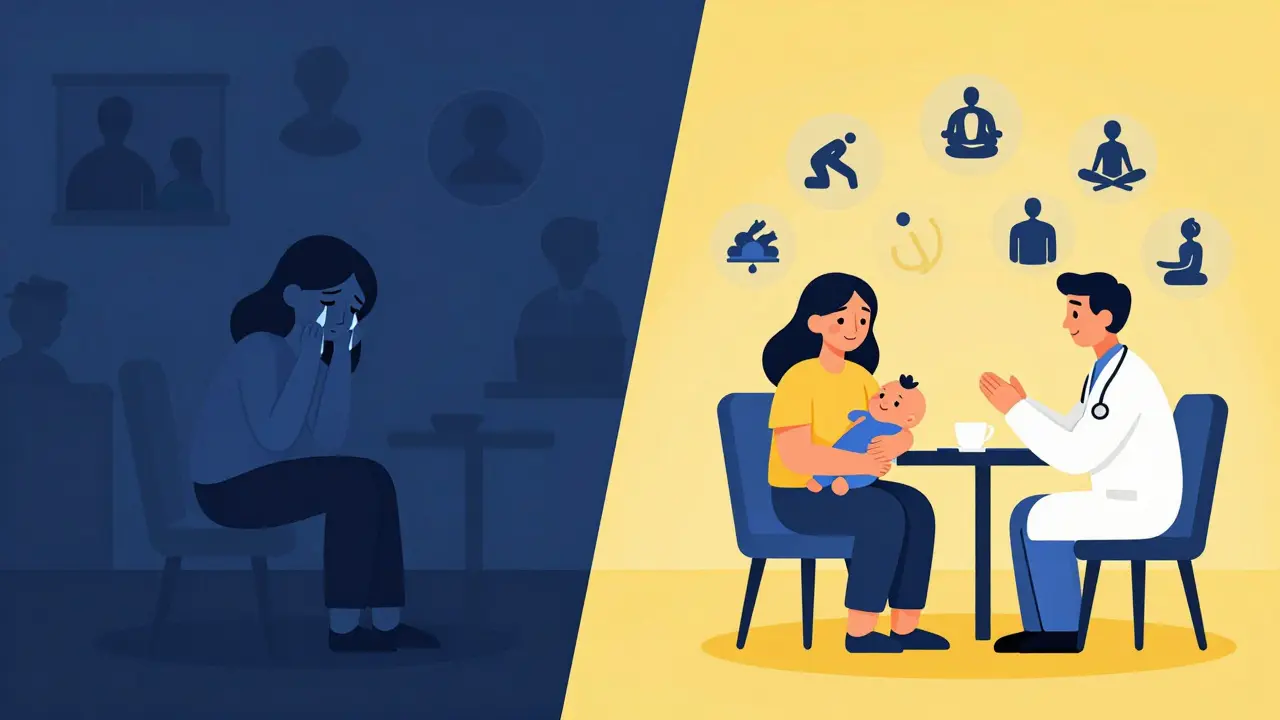
When depression goes unmanaged during pregnancy, the effects aren’t just emotional. They’re physical - for both mother and baby. Studies show women with untreated depression are 40% more likely to have a preterm birth. Their babies are 30% more likely to be born underweight. The risk of preeclampsia jumps by 25%. And here’s the hardest truth: depression is the leading cause of pregnancy-related death in the U.S. Between 2017 and 2019, mental health conditions caused nearly a quarter of all maternal deaths, according to CDC data. That’s more than bleeding, infection, or high blood pressure alone.
Women with depression are also less likely to show up for prenatal visits. They’re more likely to smoke, drink, or skip prenatal vitamins. They’re more likely to feel isolated, overwhelmed, and hopeless. These aren’t just symptoms - they’re threats to survival.
Which antidepressants are safest during pregnancy?
Not all antidepressants are created equal. The most commonly prescribed are SSRIs - selective serotonin reuptake inhibitors. Among these, sertraline (Zoloft) has the strongest safety record. It’s the first-line choice for most doctors because it’s been studied in more pregnant women than any other SSRI. Citalopram (Celexa) and escitalopram (Lexapro) are also considered low-risk.
There’s one exception: paroxetine (Paxil). It’s linked to a higher chance of heart defects in babies - 1.5 to 2 times higher than other SSRIs. If you’re taking paroxetine and planning pregnancy, talk to your doctor about switching. You don’t have to stay on it.
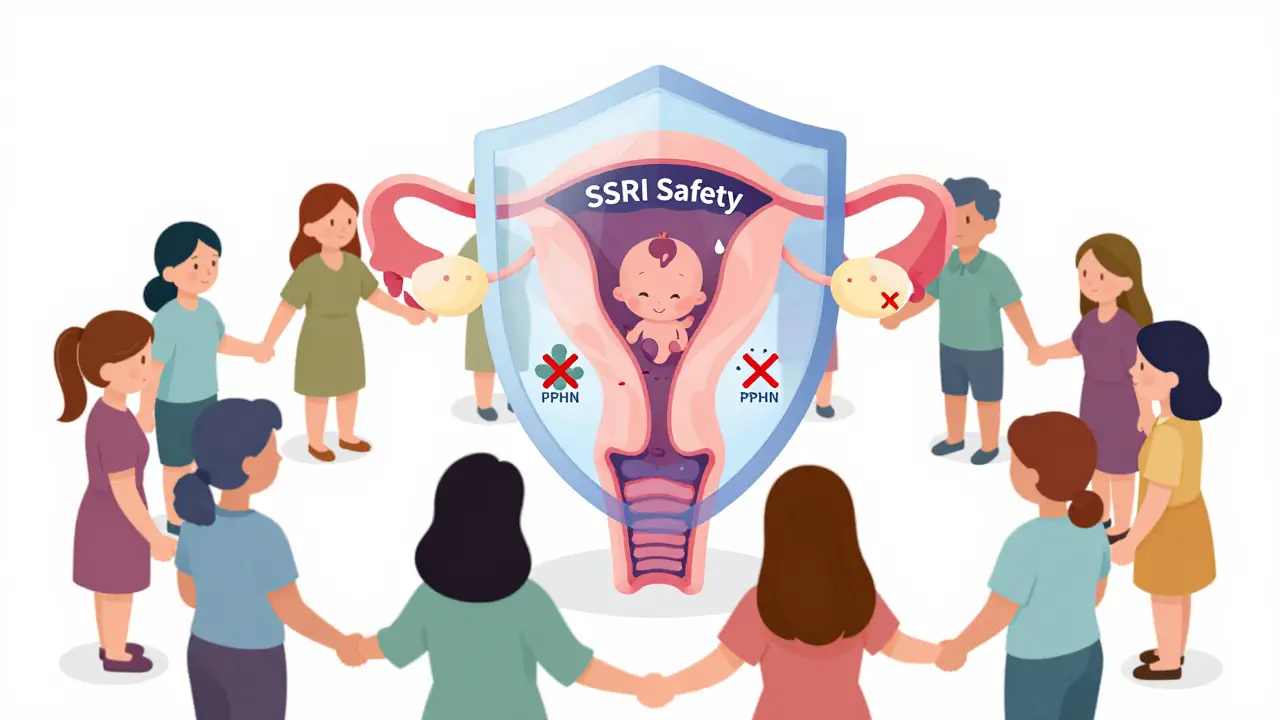
Fluoxetine (Prozac) is another option, but it carries a slightly higher risk of a rare lung condition in newborns called persistent pulmonary hypertension (PPHN). The risk is still low - about 5 to 6 cases per 1,000 births compared to 2 to 3 in unexposed babies - but it’s enough for doctors to prefer sertraline first.
Do antidepressants cause birth defects?
Early studies raised alarms. They showed a small increase in birth defects among babies exposed to SSRIs. But those studies didn’t account for one crucial thing: the mothers’ depression itself.
Later, smarter research came along. One 2018 meta-analysis looked at nearly 30 high-quality studies. When researchers compared women taking SSRIs to women with depression who weren’t taking meds, the difference in birth defects vanished. The odds ratio dropped from 1.25 to 1.04 - meaning no real increase in risk. The same pattern held for other issues like low birth weight or developmental delays.
By 2025, the Society for Maternal-Fetal Medicine declared clearly: “The available data consistently show that SSRI use during pregnancy is not associated with congenital anomalies, fetal growth problems, or long-term developmental problems.”
What about neonatal adaptation syndrome?
This is the most common real side effect - and it’s temporary. About 30% of babies exposed to SSRIs in the last trimester may have jitteriness, trouble feeding, or mild breathing issues right after birth. These symptoms usually last less than two weeks and don’t need special treatment. They’re not brain damage. They’re not long-term harm. They’re just the baby’s body adjusting to life outside the womb without the medication.
Doctors watch for these signs in the first 48 hours. Most babies go home on time with no issues. If your baby does have mild symptoms, it doesn’t mean you made the wrong choice. It means your baby is normal.
What happens if you stop your meds?
Stopping antidepressants during pregnancy is risky - and often unnecessary. One study found that 68% of women who quit their meds during pregnancy had a major depression relapse. Only 26% of those who stayed on medication did. That’s a huge gap.
And it’s getting worse. In January 2025, a JAMA study showed that antidepressant refills among pregnant women dropped by 50% compared to the year before pregnancy. Meanwhile, psychotherapy use didn’t go up. So women are stopping meds - but not getting other help.
It’s not safer. It’s more dangerous.
Can you switch or lower your dose?
Yes - and you should do it with help. If you’re on paroxetine, switching to sertraline before or early in pregnancy is smart. If your depression is mild and you’ve been stable for months, your doctor might suggest lowering the dose. But never stop cold turkey. Sudden withdrawal can cause anxiety, dizziness, nausea, and even trigger a depressive episode.
The goal isn’t to avoid all medication. It’s to use the right one, at the lowest effective dose. Most women do fine on 50-100 mg of sertraline daily. Higher doses aren’t always better. And if you’re already stable, there’s usually no reason to change.
What about therapy and other treatments?
Medication isn’t the only tool. Cognitive behavioral therapy (CBT) works just as well as SSRIs for mild to moderate depression during pregnancy. Exercise - even walking 30 minutes a day - has been shown to lift mood. Support groups, mindfulness, and sleep hygiene all help.
But here’s the catch: therapy takes time, money, and access. Not everyone can get it. And for severe depression, therapy alone often isn’t enough. That’s why experts say the best approach combines both - medication when needed, plus therapy when possible.
The FDA controversy and why it confused everyone
In July 2025, an FDA expert panel released a statement that sent panic through the medical community. It suggested SSRIs might be riskier than previously thought. But here’s what they didn’t say: only one of the ten panelists was a specialist in perinatal psychiatry. Most had no clinical experience treating pregnant women.
ACOG immediately pushed back. Their president called the panel “alarmingly unbalanced.” They warned that the report would scare women into stopping life-saving treatment. And they were right. Within weeks, clinics reported a spike in anxiety calls - women afraid to take their meds, even when they were severely depressed.
The truth? The science hasn’t changed. The data still shows SSRIs are safe. The danger isn’t the medication. It’s the silence that follows fear.
What should you do if you’re pregnant and on antidepressants?
- Don’t stop without talking to your doctor. The risk of relapse is too high.
- If you’re on paroxetine, ask about switching to sertraline or citalopram.
- Work with both your OB and a psychiatrist. Team care makes the difference.
- Keep taking your meds unless your provider says otherwise.
- Track your mood. If you feel worse, tell someone - don’t wait.
- Consider therapy, exercise, and support groups alongside medication.
Long-term effects on children? The data says: none
One of the biggest fears is: will my child have autism, ADHD, or learning problems because I took antidepressants?
A 2022 study followed 44,000 children from birth to age five. Half were exposed to SSRIs in utero. Half weren’t. There was no difference in language development, motor skills, behavior, or IQ. Other large studies in Scandinavia and Canada reached the same conclusion.
There’s no evidence that SSRIs harm brain development. But there’s strong evidence that untreated depression does.
You’re not alone. And you’re not doing anything wrong
Taking antidepressants during pregnancy isn’t a failure. It’s a responsible choice. It’s not weakness - it’s strength. You’re choosing to be healthy so you can be there for your child. You’re choosing to break the cycle of silence, shame, and suffering.
The science is clear. The risks of treatment are small. The risks of not treating? They’re life-threatening.
15 Comments

owori patrick
January 30, 2026 AT 22:07 PM
In Nigeria, we don't talk about this. But I'm glad someone is. My sister stopped her meds and had a breakdown after delivery. She's on sertraline now and holding it together. Thank you for this.

Darren Gormley
February 1, 2026 AT 02:01 AM
FDA panel said SSRIs might be risky 😱 But ACOG said nah 😎 Guess who's getting paid more? The guy who wrote the paper or the OB who actually delivers babies? 🤔

Gaurav Meena
February 1, 2026 AT 12:16 PM
As someone who's helped 30+ pregnant women in India with depression, I can tell you this: the real danger is stigma. Many stop meds because their in-laws say 'it's in the mind'. We need more community education, not just medical facts.

Amy Insalaco
February 2, 2026 AT 20:59 PM
The 2018 meta-analysis you cite is methodologically flawed-publication bias in favor of industry-funded studies is well-documented, and the 1.04 odds ratio is statistically insignificant but clinically misleading when confounders like maternal BMI, smoking, and socioeconomic status aren't fully adjusted for in the pooled data. The PPHN risk, while low, is not negligible in a population-level context.

Katie and Nathan Milburn
February 4, 2026 AT 13:37 PM
I appreciate the thoroughness of this post. It's rare to see such balanced, evidence-based information presented without alarmism. My wife is on sertraline and we're both grateful for clarity.

Beth Beltway
February 5, 2026 AT 14:06 PM
You're ignoring the fact that SSRIs cross the placenta and alter fetal serotonin signaling during critical neurodevelopmental windows. The fact that long-term studies show no difference in IQ doesn't mean there's no subtle impact on emotional regulation. You're normalizing pharmaceutical intervention like it's a vitamin.

kate jones
February 5, 2026 AT 17:33 PM
The data is clear: untreated maternal depression increases cortisol exposure to the fetus, which affects HPA axis development. SSRIs mitigate that. Sertraline has the lowest placental transfer rate among SSRIs. Combined with CBT, it's the gold standard. No one's saying meds are perfect-but silence is worse.

Natasha Plebani
February 7, 2026 AT 16:20 PM
There's an ontological tension here: we're told to trust science, yet when science contradicts cultural narratives about purity and naturalness, we distrust it. The real crisis isn't SSRIs-it's our collective refusal to acknowledge that healing sometimes requires chemical intervention. We fetishize 'natural' while ignoring the biology of suffering.

Kelly Weinhold
February 7, 2026 AT 21:53 PM
I was terrified to take meds too. But I had panic attacks so bad I couldn't leave the house. Sertraline didn't make me 'zombie mom'-it made me present. I played with my baby, cooked meals, cried less. That's not weakness. That's survival. And I'm proud of that choice.

Kimberly Reker
February 9, 2026 AT 18:32 PM
My OB and psychiatrist worked together. We lowered my dose at 28 weeks. Baby was fine. No jitteriness. I breastfed. No issues. This post saved me from a relapse. Thank you.

Eliana Botelho
February 10, 2026 AT 17:07 PM
Okay but what about the 2023 Canadian study that found a 14% increase in autism spectrum diagnoses in SSRI-exposed kids? You totally ignored that. And don't give me that 'correlation isn't causation' crap-your whole argument is built on that logic. Why not just say 'we don't know' instead of pretending it's safe?

Rob Webber
February 11, 2026 AT 09:51 AM
This is why women die. Because people like you make them feel guilty for taking pills. Like they're monsters for needing help. I lost my sister to suicide after she stopped her meds because of this exact fear. You're not helping. You're gaslighting.

calanha nevin
February 11, 2026 AT 15:55 PM
The data consistently supports SSRI safety in pregnancy. The greatest risk is discontinuation. Clinical guidelines from ACOG, SMFM, and NICE all concur. If you're concerned about neonatal adaptation syndrome, monitor for 48 hours. It's transient. It's not harm. It's physiology.

Diksha Srivastava
February 12, 2026 AT 19:28 PM
I took sertraline during pregnancy. My daughter is now 4 and speaks three languages, draws like an artist, and hugs me like she's never let go. She didn't get autism. She got a mom who was there. That's the real win.

Lisa McCluskey
January 30, 2026 AT 02:54 AM
I was on sertraline through both pregnancies. No issues. Baby #1 cried a bit for 3 days, then ate like a champ. Baby #2? Zero symptoms. Don't let fear override data.