
Bleeding Risk Calculator
Calculate Your Bleeding Risk
Your Bleeding Risk Assessment
Key Risk Factors:
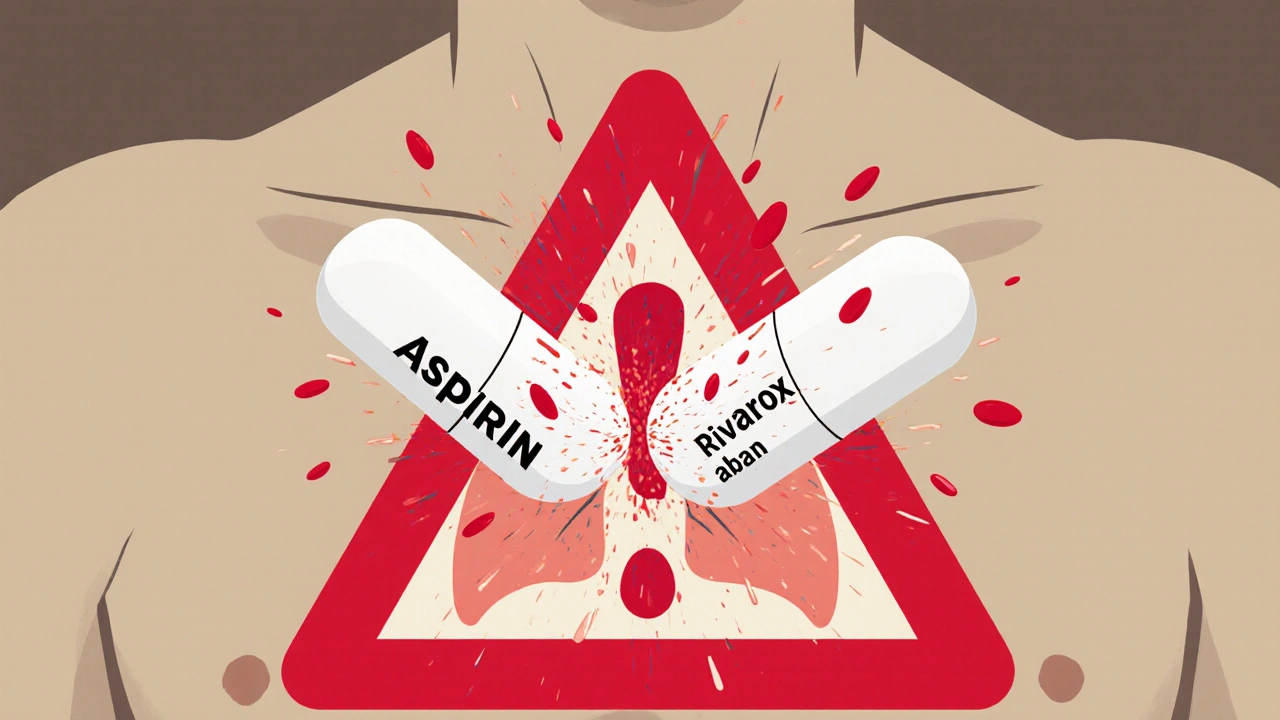
Based on 2024 researchCombining aspirin with other blood thinners might seem like a smart move if you're trying to protect your heart - but it can be dangerously misleading. The truth is, when you mix aspirin with prescription anticoagulants, your risk of serious bleeding doesn't just go up a little. It doubles.
Why Aspirin and Blood Thinners Don't Mix Well
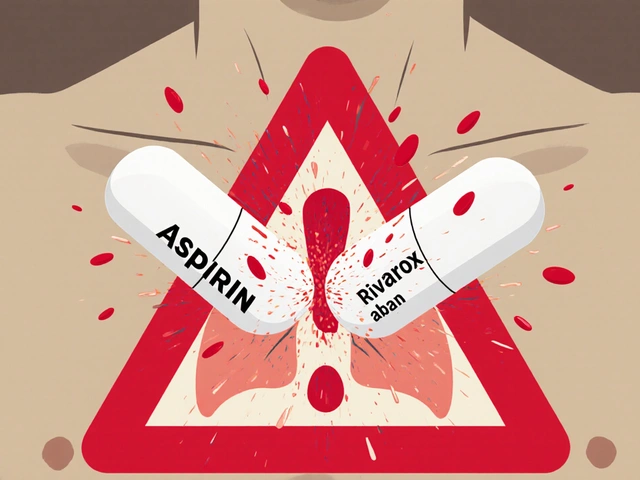
Aspirin doesn't work like warfarin or rivaroxaban. It's not an anticoagulant - it's an antiplatelet. That means it stops your platelets from clumping together to form clots. Other blood thinners, called oral anticoagulants (OACs), work by slowing down the clotting process itself. When you take both, you're hitting the body's clotting system from two different angles. That’s not synergy - it's overload.Studies show this combo increases major bleeding events by nearly 100% compared to using just one drug. The most common places this goes wrong? Your stomach, brain, lungs, and urinary tract. For example, people on both aspirin and an OAC are over twice as likely to have a gastrointestinal bleed. The risk of bleeding in the brain jumps even higher - more than three times the chance compared to using only one drug.
Which Blood Thinners Are the Riskiest to Combine?
Not all blood thinners are the same when mixed with aspirin. Data from 24 separate studies published in 2024 found that rivaroxaban carries the highest bleeding risk when paired with aspirin. Dabigatran and apixaban are slightly safer, but still dangerous. Warfarin, the older option, has been studied for decades - and the pattern holds: adding aspirin increases bleeding without adding much protection.Even over-the-counter painkillers can make things worse. Naproxen (Aleve) raises bleeding risk by over four times when taken with anticoagulants. Diclofenac isn’t far behind. Ibuprofen (Advil, Motrin) is a bit less risky, but still not safe. If you’re on a blood thinner and reach for an NSAID for a headache, you’re playing with fire.
Who Should Avoid This Combo?
If you're healthy and over 60, you likely shouldn’t be taking aspirin at all - even alone. The ASPREE trial followed nearly 20,000 older adults without heart disease and found that daily low-dose aspirin didn’t prevent heart attacks or strokes. Instead, it increased the risk of serious brain bleeds from falls by 38%. The National Institute on Aging now advises against routine aspirin use in healthy seniors.For those with existing heart disease - say, after a heart attack or stent placement - aspirin might still make sense. But even then, adding another blood thinner should only happen if your doctor has a very clear reason. Most people with atrial fibrillation, for example, don’t need aspirin. Their OAC alone is enough. Adding aspirin doesn’t prevent more strokes - it just causes more bleeding.
Signs You Might Be Bleeding Internally
Bleeding from these drug combinations doesn’t always come with a cut or a bump. Often, it’s silent. Watch for these red flags:- Dark, tarry stools (a sign of stomach bleeding)
- Unexplained bruising, especially large patches without injury
- Blood in urine or unusually dark urine
- Persistent headaches, dizziness, or confusion (possible brain bleed)
- Shortness of breath or coughing up blood (lung bleed)
- Feeling unusually tired, weak, or pale (signs of anemia from slow blood loss)
Anemia from hidden bleeding happens nearly three times more often in people taking both aspirin and an OAC. Many don’t realize they’re losing blood until they’re already in the hospital.
What to Do Instead
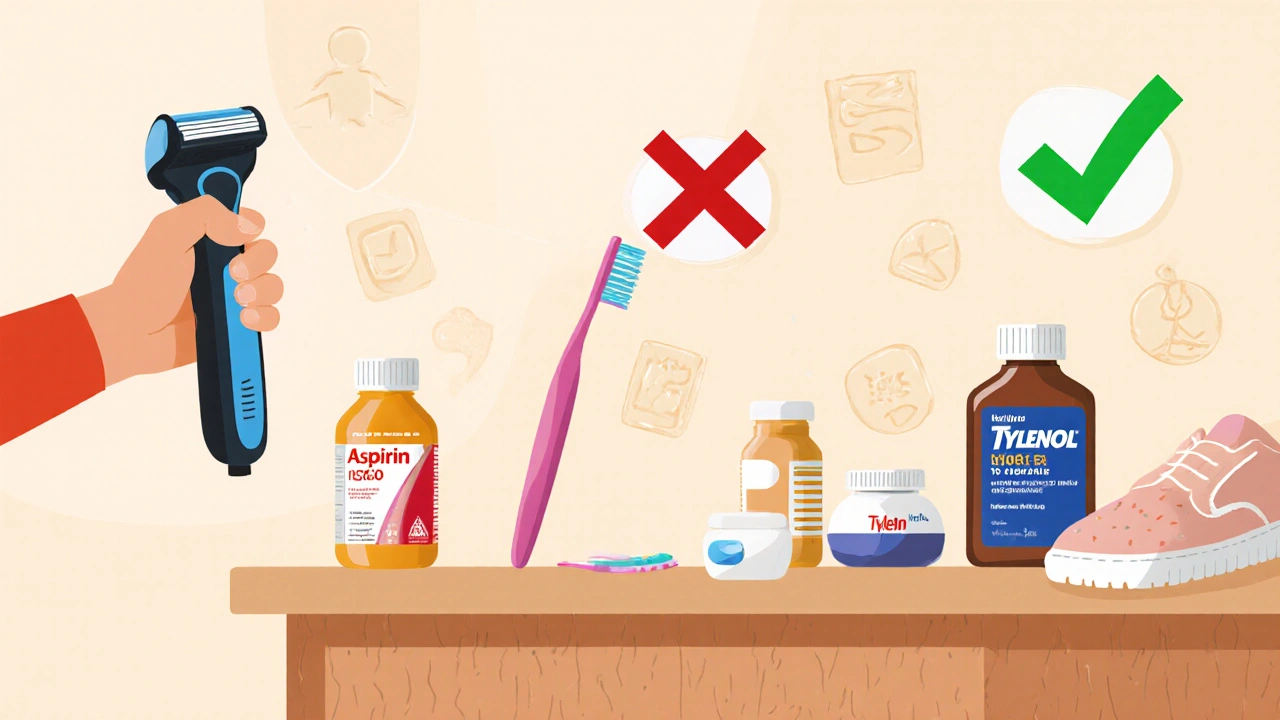
If you’re on a blood thinner and also taking aspirin, ask your doctor one simple question: Why? If they can’t give you a clear, evidence-based reason - like a mechanical heart valve or recent stent placement - you might be able to stop aspirin safely.For pain relief, acetaminophen (Tylenol) is generally safer than NSAIDs. Use it for headaches or joint pain. For stomach protection, don’t rely on taking aspirin with food. That helps a little with indigestion, but it doesn’t stop bleeding. If you must take aspirin, ask about a proton pump inhibitor like omeprazole - but only if your doctor says it’s necessary.
Also, make small changes to reduce injury risk: use an electric razor, switch to a soft-bristle toothbrush, wear shoes with good grip, and remove throw rugs at home. Falls are a leading cause of dangerous bleeding in people on these drugs.
Monitoring Is Non-Negotiable
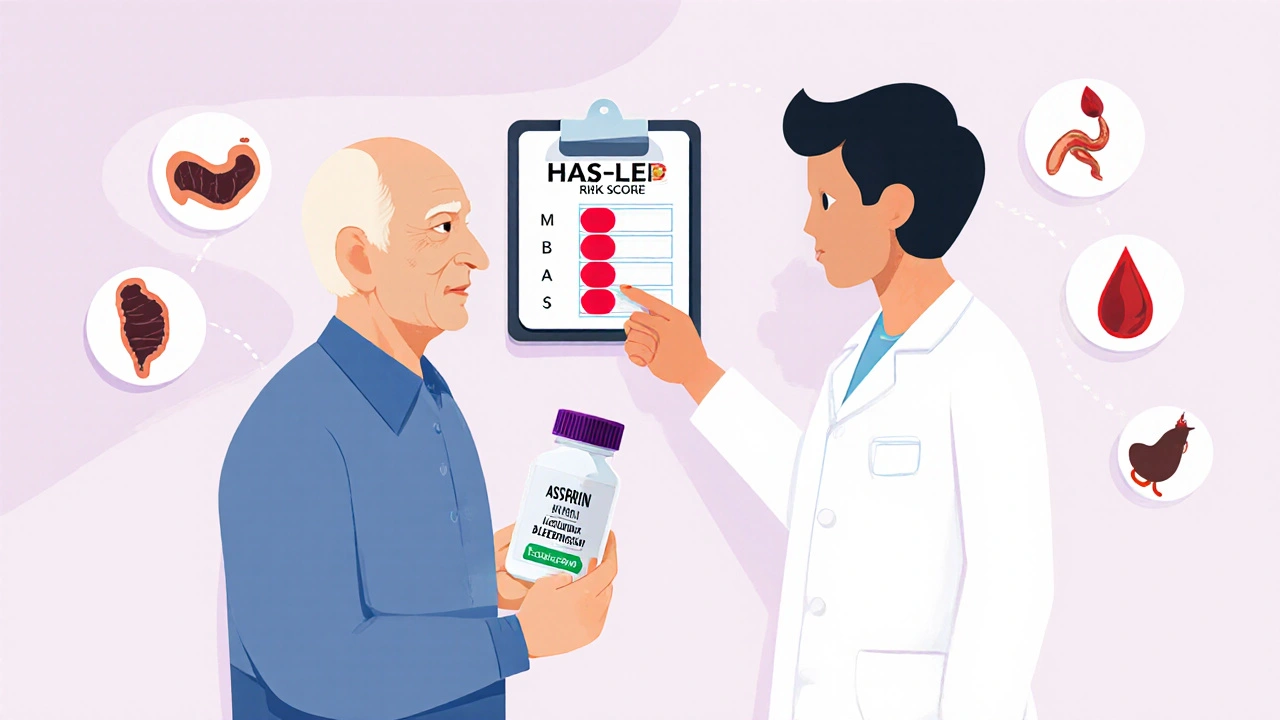
If your doctor says you need both drugs, you can’t just take them and forget about it. You need regular blood tests. Hemoglobin levels should be checked every 3 to 6 months. Your doctor should also use the HAS-BLED score - a simple tool that looks at things like high blood pressure, kidney disease, and past bleeding history - to estimate your risk.Some people with specific conditions, like mechanical heart valves, do need this combo. But even then, the dose of aspirin should be kept as low as possible - usually 75-100 mg daily. Higher doses don’t add protection; they just add risk.
The Bigger Picture: Why This Is Still So Common
About 29 million Americans take daily aspirin. That number is falling, especially for healthy people, thanks to updated guidelines from the U.S. Preventive Services Task Force. But many older adults still take it because they’ve been told to for decades. Doctors, too, sometimes keep prescribing it out of habit - especially when patients are already on multiple medications.The global anticoagulant market is growing fast, with newer drugs like apixaban and rivaroxaban replacing warfarin. But the combination with aspirin hasn’t gone away. Regulatory agencies like the FDA have added boxed warnings to some NSAID labels because of this exact issue. Still, patients aren’t always warned.
What’s Next?
Researchers are now looking at genetic testing to personalize treatment. Some people have variations in genes like CYP2C9 and VKORC1 that affect how they process warfarin. In the future, we might see blood thinner plans tailored to your DNA - but that’s still years away.For now, the message is simple: don’t combine aspirin with other blood thinners unless your doctor has a strong, specific reason - and even then, monitor closely. The risk isn’t theoretical. It’s real. And it’s happening to people right now.
Can I take aspirin with warfarin?
Taking aspirin with warfarin increases your risk of serious bleeding - especially in the stomach and brain. This combination is only recommended in rare cases, like after a heart stent or with a mechanical heart valve. For most people with atrial fibrillation or a history of blood clots, warfarin alone is enough. Always talk to your doctor before combining them.
Is it safe to take aspirin with rivaroxaban or apixaban?
No, it’s not considered safe. Studies show rivaroxaban has the highest bleeding risk when combined with aspirin. Apixaban is slightly safer, but still carries a significantly increased risk of major bleeding. Neither combination is recommended unless there’s a life-threatening reason - like a recent stent placement. Even then, doctors try to limit aspirin to the shortest time possible.
What pain reliever can I take instead of aspirin if I’m on a blood thinner?
Acetaminophen (Tylenol) is the safest option for pain or fever relief when you’re on a blood thinner. Avoid NSAIDs like ibuprofen, naproxen, and diclofenac - they significantly raise bleeding risk. Always check with your doctor before taking any new medication, even over-the-counter ones.
Should I stop taking aspirin if I’m on a blood thinner?
Don’t stop taking aspirin on your own - but do ask your doctor if you still need it. For healthy adults over 60, aspirin offers no benefit and increases bleeding risk. Even for people with heart disease, the need for aspirin is often outdated. If you’re taking it for primary prevention (to avoid a first heart attack), you should almost certainly stop. If you’re taking it after a heart attack or stent, your doctor can tell you how long you need it.
How do I know if I’m bleeding internally?
Internal bleeding doesn’t always show up right away. Watch for dark or tarry stools, unexplained bruising, blood in urine, persistent headaches, dizziness, shortness of breath, or feeling unusually tired and pale. These can all be signs of slow, hidden bleeding. If you notice any of these, contact your doctor immediately - don’t wait.
8 Comments

linda wood
December 1, 2025 AT 10:06 AM
So let me get this straight… we’ve got millions of people taking aspirin like it’s a vitamin, and doctors are still prescribing it like it’s 2005?
Meanwhile, the FDA slapped warning labels on NSAIDs, but no one’s yelling about the aspirin + OAC combo?
Someone’s making bank off this ignorance. And we’re the ones bleeding out.
Also, "just take it with food"? Bro. That’s like saying "just drive slower" when you’re on a highway with no brakes.

LINDA PUSPITASARI
December 1, 2025 AT 23:01 PM
OMG this is so important 😭 I just found out my mom is on apixaban AND aspirin and she’s 72 and has never had a heart attack… she’s been taking aspirin since 2010 because her friend said "it’s good for circulation" 🤦♀️ I’m calling her doctor tomorrow. Also Tylenol yes please 🙏 and no more Aleve for her knee pain. I’m printing this out and handing it to her. And yes I know she’ll ignore me but at least I tried 💪
Also dark stools? I had no idea that was a thing. Learned something today 🙌

gerardo beaudoin
December 3, 2025 AT 09:59 AM
My dad had a stent two years ago. They gave him aspirin and rivaroxaban. He didn’t know why. We asked his cardiologist and he said "it’s standard." We pushed back. Turned out the nurse had just copied a template. He took aspirin off after 3 months. No issues. Just ask. Don’t assume.
Also, Tylenol for headaches. Done.
And yeah, if you’re healthy and over 60? Skip the aspirin. You’re not helping yourself.

Joy Aniekwe
December 3, 2025 AT 14:52 PM
Oh wow. So the whole "aspirin for heart health" thing is just a myth pushed by Big Pharma and lazy doctors? And we’ve been letting grandmas bleed internally because someone said "it’s good for the blood"? Classic.
Meanwhile, my cousin in Abuja is still taking aspirin with warfarin because her "herbalist" said it "enhances the effect." I’m sending her this link. She’s gonna hate me. Worth it.

tushar makwana
December 3, 2025 AT 21:04 PM
in india we have this problem too... many people take aspirin with warfarin because they think more medicine = better result... my aunt had a brain bleed last year... she was on both... doctors said it was avoidable... i think people dont trust the doctors enough to ask why... they just take what they are given... i wish more people knew this
also tylenol is safe... but in india it is hard to find good quality... so many fake brands... so we have to be careful even with that

Richard Thomas
December 5, 2025 AT 16:20 PM
It is both disconcerting and profoundly alarming that the medical community continues to perpetuate the conflation of antiplatelet and anticoagulant pharmacodynamics in the lay population. The conflation of aspirin's mechanism of action with that of direct oral anticoagulants represents a fundamental misunderstanding of hemostatic physiology, and its persistence in clinical practice is a failure of both continuing medical education and regulatory enforcement. The 100% increase in major hemorrhagic events, as documented in the 2024 meta-analysis, is not merely statistically significant-it is ethically indefensible. Furthermore, the normalization of aspirin monotherapy in primary prevention among elderly populations, despite the ASPREE trial’s unequivocal findings, reflects a systemic erosion of evidence-based medicine in favor of historical inertia and paternalistic prescribing. One must question the institutional accountability of entities that permit such practices to persist without mandatory patient counseling protocols or algorithmic decision support in electronic health records.

Monica Lindsey
December 6, 2025 AT 07:42 AM
People are dying because they trust their neighbor more than their doctor. And doctors are too lazy to re-educate.
Stop taking aspirin. Period.
If you’re not in a stent or mechanical valve, you’re just bleeding for nothing.
And if you think Tylenol is dangerous? You’re the problem.
Peter Lubem Ause
November 30, 2025 AT 19:23 PM
Man, I read this and thought about my uncle back in Lagos. He was on warfarin after a stroke and kept popping aspirin like candy because his neighbor said it "cleans the blood." He ended up in the ER with black stools and hemoglobin at 6.5. Doctors had to transfuse him. No one told him the combo was dangerous. This post is a lifesaver. If you're on a blood thinner, stop guessing. Ask your doctor. Seriously.
And if you're over 60 and healthy? Don't take aspirin at all. The data doesn't lie. It's not "prevention," it's a gamble with your guts.
Also, Tylenol is your friend. Not Advil. Not Aleve. Tylenol. Simple as that.