If you've ever woken up with sharp, stabbing pain in your lower left abdomen, you might have been dealing with diverticulitis. It occurs when small pouches called diverticula in the lining of your colon become inflamed or infected. It sounds technical, but the sensation is often described by patients as feeling like something has "snapped" deep inside. While mild cases can pass quietly at home, knowing the warning signs and the latest treatment guidelines can be a lifesaver. With more than 35 million adults affected globally, this isn't just a niche gut issue; it's a common chapter in many people's health stories.
The Basics of Inflamed Colon Pouches
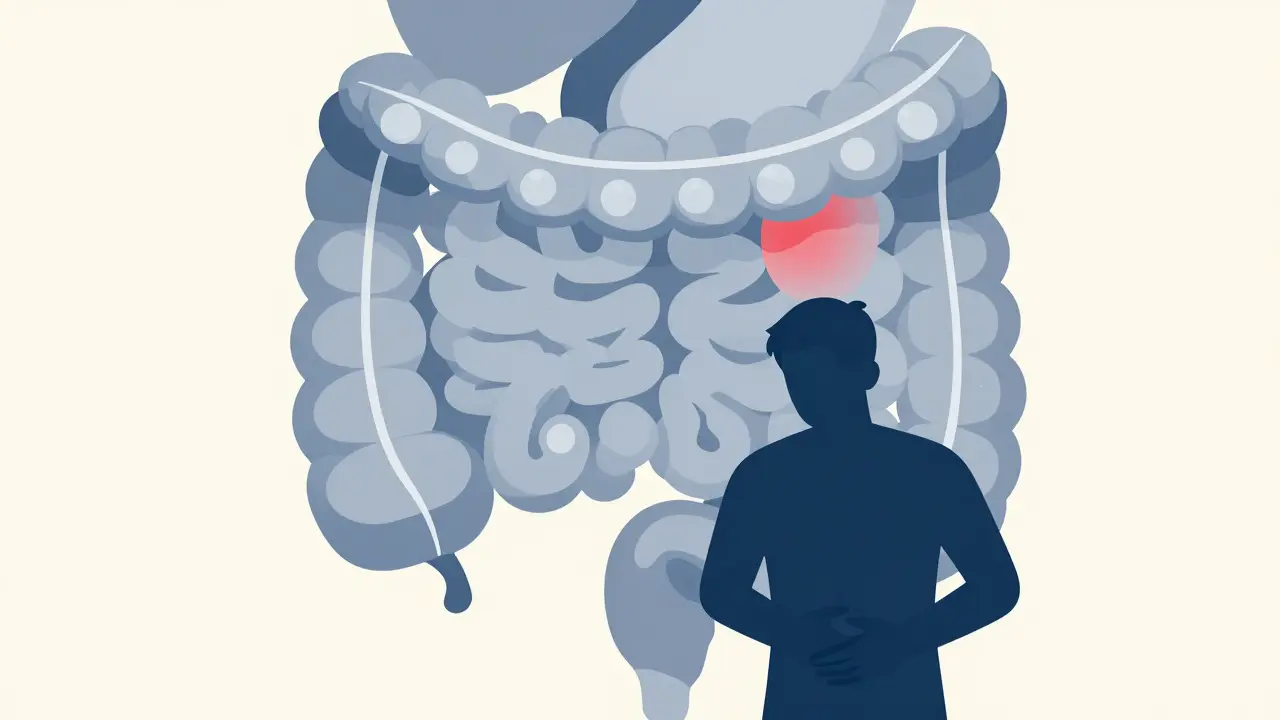
To understand the inflammation, you first need to meet the pouches themselves. These structures, known medically as diverticula, develop when pressure pushes against weak spots in the wall of the large intestine. Think of them like blisters forming on a balloon that gets too full. When they are simply present without causing trouble, doctors call it diverticulosis. However, when bacteria invade these pouches or food gets trapped and blocks them off, the condition turns into acute diverticulitis.
About 60% of people over the age of 60 actually have these pouches lurking in their system without even knowing it. The problem arises when the immune system sends white blood cells to attack the infection in the sac. This defensive response causes the swelling, tenderness, and fever that characterize a flare-up. While most pouches form in the sigmoid colon-the final S-shaped curve before the rectum-there are anatomical differences based on ethnicity. In Asian populations, the right side of the colon is frequently involved, leading to pain on the opposite side of the abdomen compared to typical Western presentations.
Recognizing the Difference Between Flare-ups
Not all stomach pain is diverticulitis, and mistaking it for a bad cramp or constipation can delay necessary care. The hallmark symptom remains localized abdominal pain, usually found in the lower left quadrant. Unlike the shifting cramps of irritable bowel syndrome (IBS), this pain tends to stick around in one spot and often worsens if you move or cough. A high temperature above 38°C (100.4°F) is another strong signal. If your body feels hot to the touch and you feel generally unwell, you are likely dealing with systemic inflammation rather than simple indigestion.
Doctors also look at lab results to gauge severity. An elevated white blood cell count (leukocytosis) confirms the body is fighting an active battle. The clinical picture usually includes a cluster of findings: persistent pain, fever, nausea, and sometimes changes in bowel habits. It is crucial to distinguish this from other conditions like appendicitis or ovarian cysts, especially since misdiagnosis costs thousands annually in unnecessary imaging or procedures. If the pain shifts to the right side, appendicitis becomes the primary suspect, while women may also need to rule out gynecological issues.
How Doctors Confirm the Diagnosis
When you visit a hospital with suspected symptoms, the standard diagnostic tool is a computed tomography, commonly known as a CT scan. While physical exams and blood work give clues, the CT scan is the gold standard. It allows the radiologist to see exactly where the inflammation is located and check for complications like abscesses. A normal colon looks smooth, whereas an inflamed area shows thickened walls and surrounding fat stranding.
Medical teams classify the severity using the Hinchey classification system, which helps determine if you can go home or need admission. Stage I involves a localized abscess smaller than 3 centimeters, often manageable with a short hospital stay. Stage II indicates larger pelvic abscesses that might need draining. Stages III and IV represent serious emergencies involving general peritonitis or perforation where the infection spills into the entire abdominal cavity. Accurate staging saves lives by ensuring severe cases get immediate surgical attention while mild cases avoid unnecessary invasive procedures.

The Shifting Landscape of Treatment
Historically, if you had a flare-up, you got sent home with a bottle of heavy-duty antibiotics. The logic was straightforward: fight the bug. However, recent years have seen a massive paradigm shift supported by major trials like the 2021 DIVERT study. This research showed that for mild, uncomplicated cases, the body often clears the infection on its own without medication.
| Severity Level | Typical Approach | Key Action |
|---|---|---|
| Mild (Uncomplicated) | Bowel rest and fluids | Monitor at home |
| Moderate (with Fever) | Antibiotics prescribed | Prevent progression |
| Severe (Abscess/Perforation) | Hospitalization & Drainage | Surgical consult |
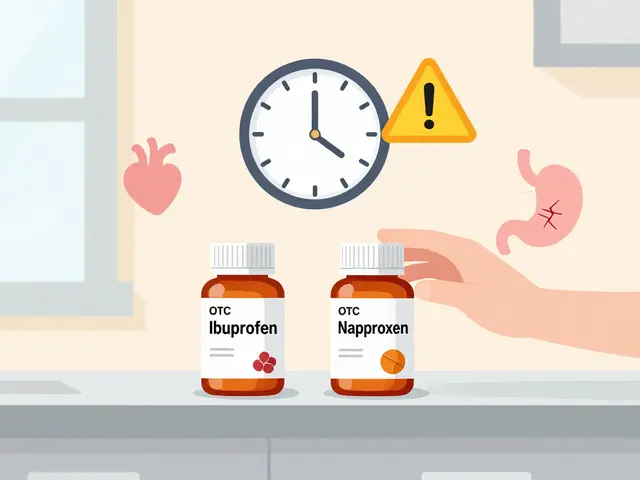
For those who do require medication, doctors typically prescribe broad-spectrum agents like amoxicillin-clavulanate or a combination of ciprofloxacin and metronidazole. The goal is to cover the mixed flora found in the colon. Pain management has also evolved. Patients are strongly advised to avoid non-steroidal anti-inflammatory drugs (NSAIDs) like ibuprofen during an active attack. NSAIDs can irritate the lining of the gut and increase the risk of bleeding or perforation. Acetaminophen remains the safer choice for managing fever and discomfort during the acute phase.
Living Beyond the Attack: Prevention and Recurrence
Once the fire is put out, the focus shifts to keeping the embers from sparking again. Recurrence is common, affecting nearly 30% of people after their first bout. For decades, doctors told patients to avoid seeds, nuts, and popcorn because they thought these hard bits could get lodged in the pouches. We now know this fear is unfounded. Large cohort studies following tens of thousands of people found no link between eating these foods and future attacks. In fact, avoiding healthy whole foods unnecessarily limits your fiber intake.
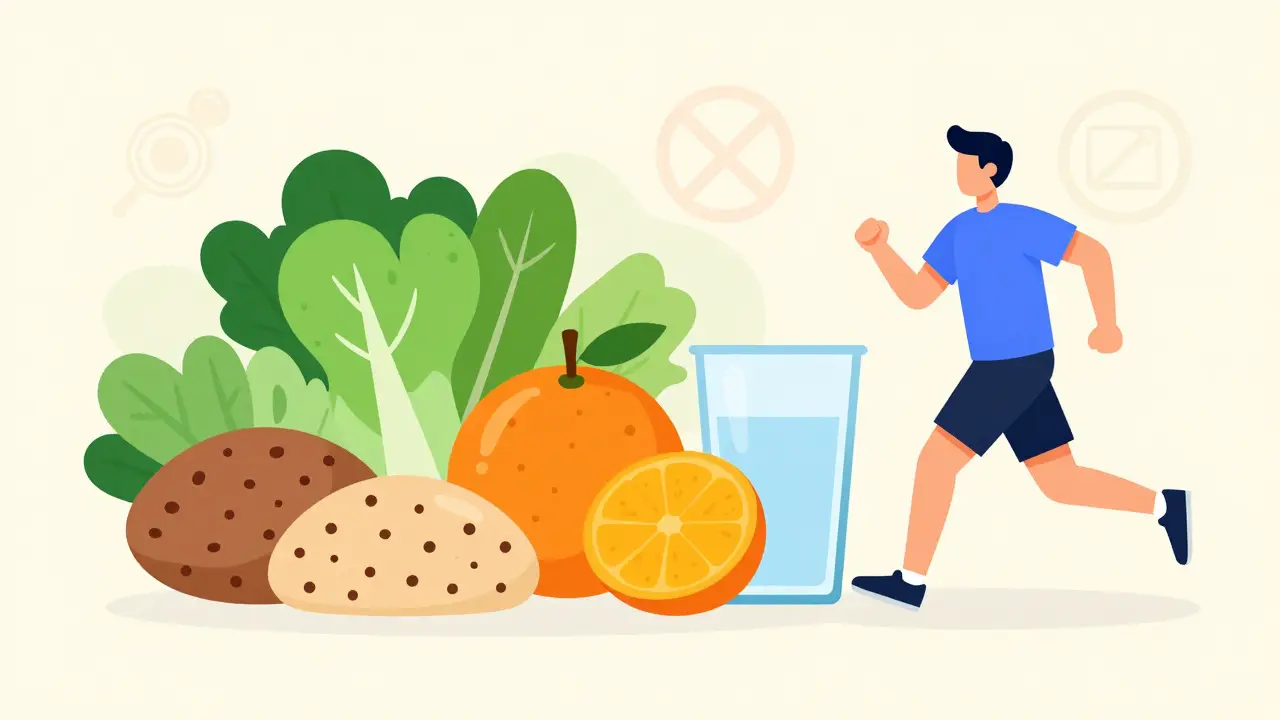
Fiber is the true hero of recovery. A high-fiber diet consisting of fruits, vegetables, and whole grains helps keep stool soft and reduces pressure inside the colon. Most adults struggle to reach the recommended 25-30 grams daily. Adding psyllium husk or increasing vegetable portions gradually can make a significant difference in preventing intraluminal pressure spikes. Hydration is equally critical; fiber needs water to function properly as a bulking agent, otherwise, it can contribute to the constipation that triggers episodes.
Other lifestyle factors play a substantial role. Smoking doubles the risk of developing diverticular disease, while maintaining a healthy weight keeps intra-abdominal pressure in check. Regular physical activity keeps bowel movements regular, reducing stasis in the colon. If you have had two or three attacks requiring hospitalization, the conversation may turn toward surgery. Elective resection of the diseased segment is increasingly reserved for those whose quality of life is significantly impacted or who have complex history, rather than as a routine preventative measure for every patient.
Understanding the Role of Complications
The biggest worry for any patient is the development of a perforation. This happens when the inflamed pouch tears completely, spilling intestinal contents into the sterile space of the abdominal cavity. It is a medical emergency that requires immediate intervention. Signs include rigid abdominal muscles, uncontrollable vomiting, and a sudden drop in blood pressure indicating sepsis.
Abscesses that don't resolve with conservative measures are managed through image-guided drainage. Interventional radiologists use needles guided by ultrasound or CT to drain the pus pocket externally. This approach avoids immediate surgery, allowing the acute inflammation to settle down so that the bowel heals better before any cutting takes place. If the disease progresses to generalized peritonitis (Stage IV), laparoscopic lavage or segmental resection becomes mandatory to wash out the abdomen and remove the source of infection.
Frequently Asked Questions
Is diverticulitis contagious?
No, diverticulitis is not contagious. It cannot spread from person to person through contact or air. It is a structural issue within your own digestive tract caused by inflammation of pouches in the colon wall.
Can I cure diverticulitis permanently?
While you cannot reverse the formation of the pouches (diverticula), you can manage the condition effectively. Maintaining a high-fiber diet and staying active significantly lowers the risk of recurrent infections and attacks.
Do I need to take antibiotics every time?
Recent guidelines suggest that mild, uncomplicated cases may not require antibiotics. Many patients recover fully with clear liquids and bowel rest alone, reserving antibiotics for those with fever or severe symptoms.
What foods should I avoid during an attack?
During an acute flare-up, doctors recommend a clear liquid diet to rest the bowels. You should temporarily avoid solid foods until pain subsides. Long term, however, there is no evidence you must avoid nuts or seeds.
When should I see a specialist?
You should see a gastroenterologist if you experience frequent attacks, complications like fistulas, or if your symptoms persist despite treatment. They can guide decisions regarding elective surgery.