
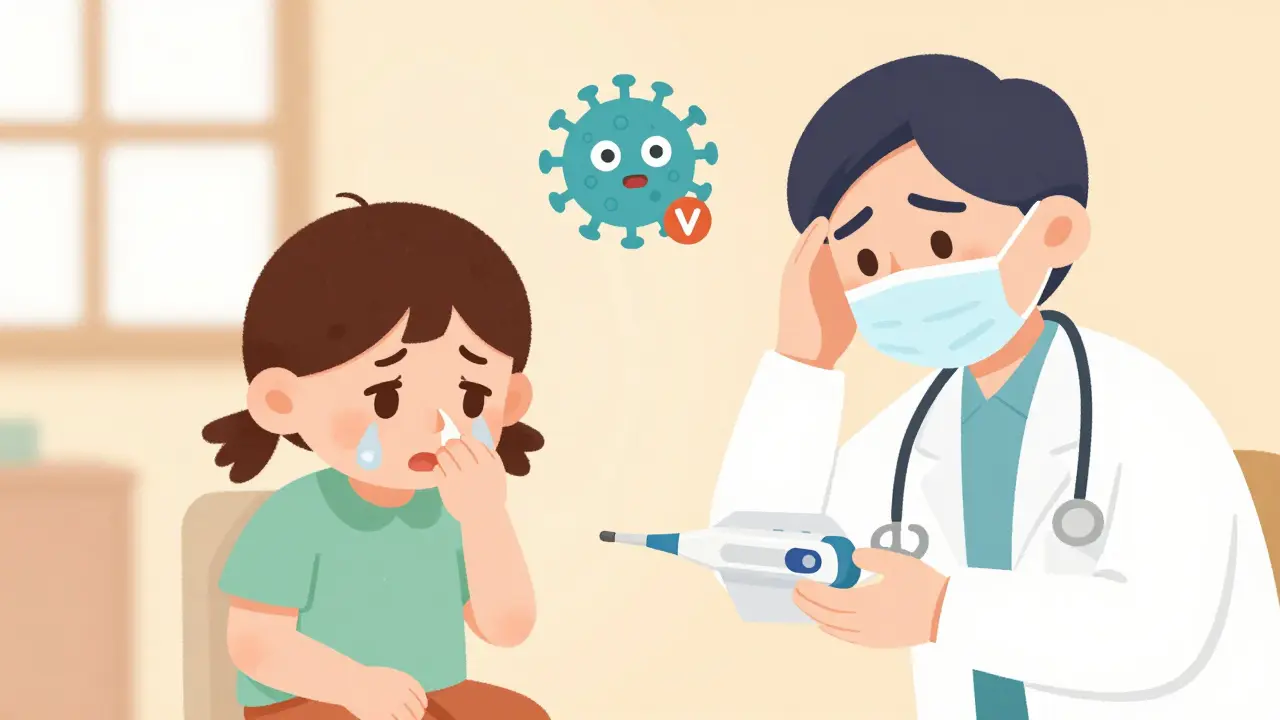
Every parent has been there: your child has a fever, a runny nose, and won’t eat. You rush to the doctor hoping for a quick fix. But when the doctor says, "It’s viral," and doesn’t hand you antibiotics, you feel confused-even guilty. Why won’t they just give something to make it better?
The truth is, most childhood illnesses don’t need antibiotics. And giving them when they’re not needed doesn’t just waste time-it puts your child at risk.
Antibiotics Only Work on Bacteria, Not Viruses
Antibiotics are powerful drugs designed to kill or stop the growth of bacteria. They don’t work on viruses, which cause the vast majority of childhood illnesses. That means:
- Common colds? Viral. Antibiotics won’t help.
- Flu? Viral. Antibiotics won’t shorten it.
- Most coughs, sore throats, and ear infections? Also viral.
Only about 20% of sore throats in kids are caused by strep bacteria. Less than 10% of pneumonia cases in children are bacterial. And over 99% of vomiting and diarrhea cases? Viral.
Yet, studies show that 30% of antibiotic prescriptions for kids are unnecessary. Why? Because it’s hard to tell the difference between a viral and bacterial infection just by looking. That’s why doctors now rely on tests-like rapid strep tests or CRP blood tests-to confirm bacteria are present before prescribing.
When Are Antibiotics Actually Needed?
Antibiotics should only be used when there’s clear evidence of a bacterial infection. Here’s what doctors look for:
- Strep throat: A positive rapid test or throat culture. Not just a red throat or fever.
- Ear infections (otitis media): Moderate to severe ear pain, bulging eardrum, or fluid draining from the ear. For kids under 2 with mild symptoms, doctors often recommend waiting 48-72 hours first.
- Sinus infections: Symptoms lasting more than 10 days without improvement, or worsening after initial improvement.
- Pneumonia: Confirmed by chest X-ray and symptoms like high fever, fast breathing, and crackling sounds in the lungs.
- Whooping cough: A persistent, violent cough with a "whoop" sound. Azithromycin is the go-to treatment.
For many cases-like a mild ear infection in a healthy 2-year-old-the best first step is watchful waiting. Let the body fight it off. If symptoms don’t improve in 2-3 days, then antibiotics are reconsidered.
Common Antibiotics Used in Children
Not all antibiotics are the same. Doctors choose based on the infection, the child’s age, and past reactions. Here are the most common ones:
- Amoxicillin: The first choice for most bacterial infections. It’s safe, effective, and given twice daily. Dose: 80-90 mg per kg of body weight per day, split into two doses.
- Cephalosporins (like cefdinir): Used when amoxicillin doesn’t work or for more severe infections like recurrent ear infections or pneumonia.
- Azithromycin: Often used for whooping cough or milder pneumonia. Given once daily for just 3-5 days.
- Clindamycin or vancomycin: Reserved for serious infections like MRSA (a drug-resistant staph bug).
Amoxicillin is the most commonly prescribed because it’s broad-spectrum, well-tolerated, and cheap. But even the "safe" ones have risks.
Side Effects: What to Expect
About 1 in 10 kids will have side effects from antibiotics. Most are mild-but they’re common enough that every parent should know what to watch for.
- Diarrhea: Happens in 5-25% of kids. It’s not always an infection-it’s just the good bacteria in the gut being wiped out.
- Nausea and vomiting: Affects 3-18% of children. Often happens right after taking the medicine.
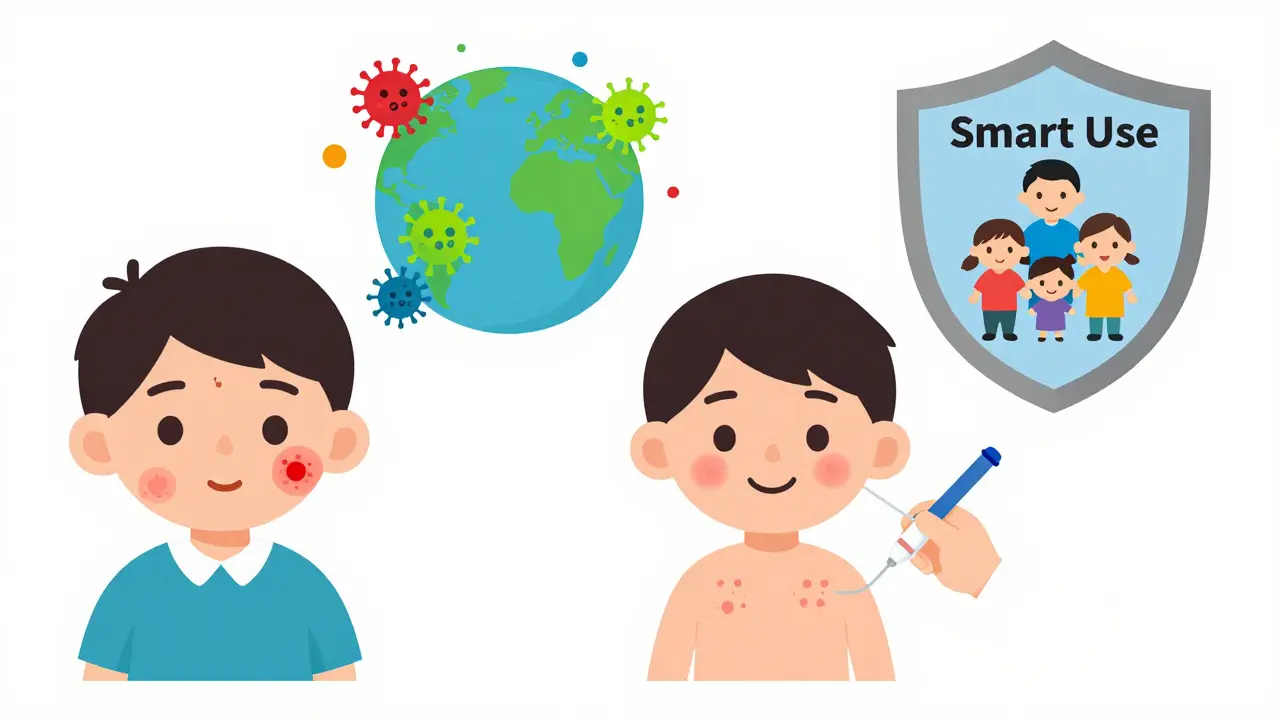
- Rashes: 2-10% of kids get a rash. But here’s the big mistake: most aren’t allergies.
- Yeast infections: Especially in girls. Look for redness, itching, or white patches in the mouth (thrush).
If your child gets diarrhea, keep them hydrated. Probiotics (like Lactobacillus) may help reduce it, though evidence is mixed. Avoid anti-diarrhea meds unless a doctor says so.
And yes-some kids get a rash. But 80-90% of these are harmless side effects, not true allergies. A rash that’s flat, pink, and doesn’t itch? Likely not an allergy. A rash with hives, swelling, or trouble breathing? That’s an emergency.
True Allergies vs. Misdiagnosed Reactions
Many parents think their child is allergic to penicillin because they got a rash as a kid. But studies show that 95% of kids labeled "allergic" to penicillin can actually take it safely.
True allergic reactions include:
- Hives (raised, itchy welts)
- Swelling of the lips, tongue, or face
- Wheezing or trouble breathing
- Anaphylaxis (a life-threatening reaction)
If your child has any of these, stop the medicine and call 911. But if it’s just a mild rash, don’t assume it’s an allergy. Ask your doctor about an allergy test. Many pediatric clinics now offer penicillin skin testing to confirm whether it’s safe.
And here’s something surprising: if a parent is allergic to penicillin, it doesn’t mean the child will be. Genetics don’t work that way with antibiotic allergies.
Why Completing the Full Course Matters
"I stopped the antibiotics because my child felt better after two days."
This is the most common mistake. And it’s dangerous.
Antibiotics don’t work like painkillers. You don’t stop when you feel better-you finish the full course to kill every last bacterium. Stopping early lets the toughest bugs survive. Those are the ones that multiply. And soon, they’re resistant.
That’s how we got MRSA, superbugs that no longer respond to standard drugs. In the last decade, community-acquired MRSA in kids has jumped 150%. And 47% of strep pneumoniae strains are now resistant to penicillin.
Even if your child feels fine, give every single pill. If they vomit within 30 minutes of taking it, give the full dose again. If it’s between 30 and 60 minutes, give half. After an hour? Don’t repeat it.
How to Get Kids to Take Antibiotics
Let’s be real: most liquid antibiotics taste awful. One study found 43% of kids refuse to take them because of the bitterness.
Here’s what actually works:
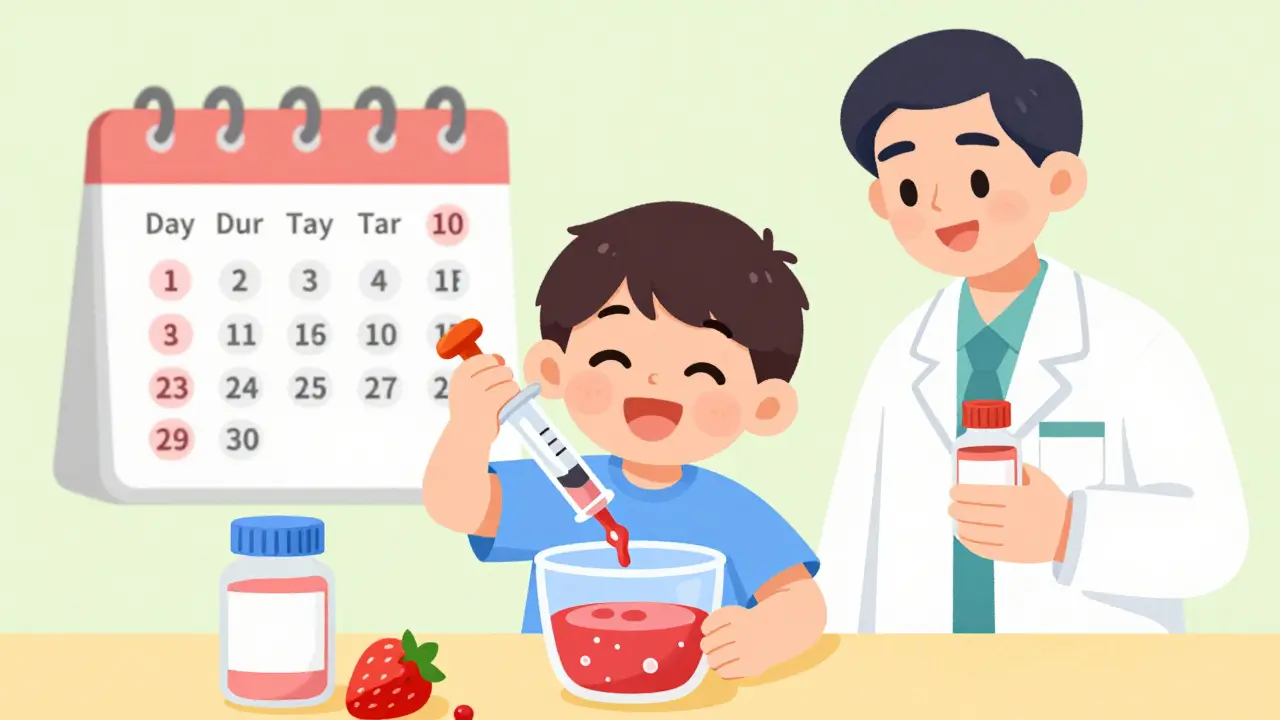
- Use a dosing syringe, not a spoon. It’s more accurate and less messy.
- Mix a small amount with chocolate syrup, applesauce, or yogurt. Don’t mix it into a full meal-it might interfere with absorption.
- Ask your pharmacist about flavoring services. Many can make amoxicillin taste like bubblegum or strawberry.
- Give it right before a snack or meal. The food helps mask the taste.
Don’t hide it in juice. Some antibiotics bind to calcium and lose effectiveness. And never use a bottle to give medicine-it’s hard to measure, and kids might drink too much.
Antibiotic Resistance: The Silent Crisis
Every time we give an antibiotic when it’s not needed, we’re helping bacteria learn to survive. These superbugs don’t just affect your child-they affect everyone.
Here’s what’s at stake:
- Over 2.8 million antibiotic-resistant infections happen in the U.S. every year.
- 35,000 people die from them.
- Children’s hospitals are seeing more cases of untreatable infections.
- It costs the U.S. healthcare system $4.6 billion a year just to treat resistant infections.
And it’s not just about the medicine. It’s about the mindset. Parents feel pressure to get antibiotics because they want to help their child. But the real help? Knowing when to wait.
Doctors are now using faster tests-like CRP blood tests and new rapid susceptibility tools-to tell if an infection is bacterial in under 6 hours. That means fewer guesses. Fewer wrong prescriptions.
What Parents Can Do
You’re not powerless. You’re your child’s best advocate. Here’s how to use antibiotics wisely:
- Ask: "Is this infection bacterial?" If the answer is no, ask why.
- Ask: "Can we wait 48 hours and see if it gets better?"
- Ask: "Is there a test to confirm this?"
- Never use leftover antibiotics from a previous illness.
- Never share antibiotics between kids.
- Don’t judge a cold by green snot. It’s normal. It doesn’t mean bacteria.
And remember: fever doesn’t mean bacteria. Most viral infections last 7-10 days. Antibiotics won’t speed that up. Rest, fluids, and time will.
When to Call the Doctor Again
Antibiotics should start working in 48-72 hours. If your child’s symptoms haven’t improved-or have gotten worse-call the doctor. Don’t wait. That could mean:
- The infection isn’t bacterial.
- The bacteria are resistant.
- There’s a complication.
Also call if your child develops:
- High fever that won’t go down
- Difficulty breathing
- Severe diarrhea (more than 8 watery stools a day)
- Signs of dehydration (dry mouth, no tears, no wet diaper for 8+ hours)
And if your child has any signs of a true allergic reaction-hives, swelling, wheezing-go to the ER immediately.
Antibiotics are lifesavers when used right. But they’re dangerous when used wrong. The goal isn’t to avoid them completely-it’s to use them only when they’ll actually help. And that’s the most responsible thing you can do for your child-and for everyone else’s kids too.
Can antibiotics cause diarrhea in children?
Yes, antibiotics can cause diarrhea in 5-25% of children. This happens because antibiotics kill both harmful and helpful bacteria in the gut. The diarrhea is usually mild and goes away after stopping the medicine. Giving probiotics or keeping your child well-hydrated can help. If diarrhea is severe, bloody, or lasts more than a few days, contact your doctor-it could be a Clostridium difficile infection.
Is it safe to give my child leftover antibiotics from a previous illness?
No. Leftover antibiotics may not be the right type or dose for the current illness. They may also be expired or less effective. Using the wrong antibiotic can delay proper treatment and increase the risk of antibiotic resistance. Always get a new prescription for each new illness.
Does green or yellow mucus mean my child needs antibiotics?
No. Green or yellow mucus is normal during a viral cold and doesn’t mean a bacterial infection. The color comes from white blood cells fighting the virus. Most colds last 7-10 days, and antibiotics won’t shorten that. Only use antibiotics if symptoms last longer than 10 days, worsen after improving, or are accompanied by high fever and severe pain.
My child had a rash after taking amoxicillin. Does that mean they’re allergic?
Not necessarily. About 80-90% of rashes after amoxicillin are harmless side effects, not true allergies. A true allergic reaction includes hives, swelling of the face or lips, or trouble breathing. If your child had a flat, pink rash without other symptoms, they may still be able to take penicillin safely. Ask your doctor about an allergy test to be sure.
How long should my child take antibiotics?
Always finish the full course, even if your child feels better. Most courses last 7-10 days for antibiotics like amoxicillin, or 3-5 days for azithromycin. Stopping early allows the strongest bacteria to survive and multiply, leading to antibiotic resistance. Follow your doctor’s instructions exactly-don’t guess.
Can I mix antibiotics with food to make them taste better?
Yes, you can mix a small amount of liquid antibiotic with chocolate syrup, applesauce, or yogurt to improve taste. But avoid mixing with large meals or dairy products unless your doctor says it’s safe. Some antibiotics don’t absorb well with calcium. Always check with your pharmacist or doctor first.
14 Comments

Charlotte N
January 5, 2026 AT 11:05 AM
So many parents think green snot = bacteria but it's literally just dead white blood cells... the body's little soldiers dying in battle against a virus... why do we still treat symptoms like they're enemy signals

Catherine HARDY
January 5, 2026 AT 12:24 PM
They're lying about antibiotics. Big Pharma pays doctors to prescribe them so they can sell more. The real reason they don't test? Because tests cost money and they want you hooked on prescriptions. Watchful waiting? That's just a cover for negligence. My cousin's kid got meningitis because they waited too long.

Vicki Yuan
January 5, 2026 AT 23:25 PM
Probiotics are not a magic fix, but they do help with antibiotic-related diarrhea. Look for strains like Lactobacillus rhamnosus GG or Saccharomyces boulardii-they have the most evidence. And yes, mixing with applesauce is fine, but avoid dairy if it’s amoxicillin unless your pharmacist says it’s okay. Always check the label.

Uzoamaka Nwankpa
January 6, 2026 AT 18:10 PM
I’ve seen too many kids in Nigeria get antibiotics for every sniffle. Parents think it’s the only way to show they’re doing something. But when the kid gets sick again next month, the same pills don’t work anymore. We’re killing our future with laziness.

Chris Cantey
January 7, 2026 AT 16:37 PM
It’s not about whether antibiotics are overused-it’s about how we’ve turned medicine into a transaction. Parents want a pill. Doctors want to appease. The child gets caught in the middle. We’ve outsourced patience to pharmaceuticals.

Abhishek Mondal
January 9, 2026 AT 04:02 AM
Let’s be honest-most American parents are just too lazy to sit with their sick child for 72 hours. They want a quick fix, so they pressure doctors. Meanwhile, in countries where medicine is scarce, people wait. And guess what? Their kids survive. It’s not biology-it’s culture.

Oluwapelumi Yakubu
January 10, 2026 AT 06:34 AM
Bro, antibiotics ain't candy. I seen my cousin’s boy turn into a walking diarrhea factory after a course of amoxicillin for a cold. Now he can’t eat yogurt without screaming. We need to stop treating medicine like a Netflix subscription-just press play and hope it fixes everything.

Terri Gladden
January 10, 2026 AT 15:03 PM
my kid got a rash and now i cant give her anything for years??? i just wanted her to feel better why is this so hard??? i hate this system

Jennifer Glass
January 12, 2026 AT 02:37 AM
I used to think antibiotics were like painkillers-take it until you feel better. Then I read about superbugs and realized I was part of the problem. Now I ask my pediatrician for a test before accepting a script. It’s uncomfortable, but it’s the right thing to do.

Joseph Snow
January 12, 2026 AT 09:06 AM
This article is dangerously naive. The CDC’s own data shows that antibiotic resistance is driven more by agricultural use than pediatric prescriptions. Blaming parents is a distraction. The real villains are factory farms and pharmaceutical lobbying. This is performative medicine.

Mandy Kowitz
January 14, 2026 AT 05:11 AM
Oh wow, so we’re supposed to just *wait*? Like, let our kid suffer for days while we play the patience game? What’s next, recommending herbal tea and positive affirmations? I’m sure the WHO loves this.

Roshan Aryal
January 14, 2026 AT 13:14 PM
India has 80% of its antibiotics sold over the counter without prescriptions. You think this is a problem? Wait till you see what happens when a child with a simple ear infection gets a half-dose of cefdinir from a street vendor. Then you’ll understand why the world is on the brink of a post-antibiotic era.

Ethan Purser
January 16, 2026 AT 05:33 AM
You know what’s worse than antibiotics? The guilt. The way you look at your child when they’re feverish and you say, ‘I can’t give you anything.’ Like you’re failing them. But then you remember-sometimes love means holding back. And that’s the hardest prescription of all.
Write a comment
Popular Posts




Doreen Pachificus
January 4, 2026 AT 17:55 PM
My kid got a rash on amoxicillin last year. We panicked and swore off penicillin forever. Turned out it was just a viral rash. Learned the hard way that not every rash is an allergy. Glad this article clarified that.