Getting your medications right isn’t just about taking pills on time. It’s about avoiding dangerous mistakes that can land you in the hospital-or worse. In New Zealand, one in five people on home-based treatment experiences a preventable drug error. Many of these happen because no one sat down to map out a clear, simple plan. You don’t need to be a doctor to build one. You just need to talk to your care team and follow a few key steps.
Start with a complete list of everything you take
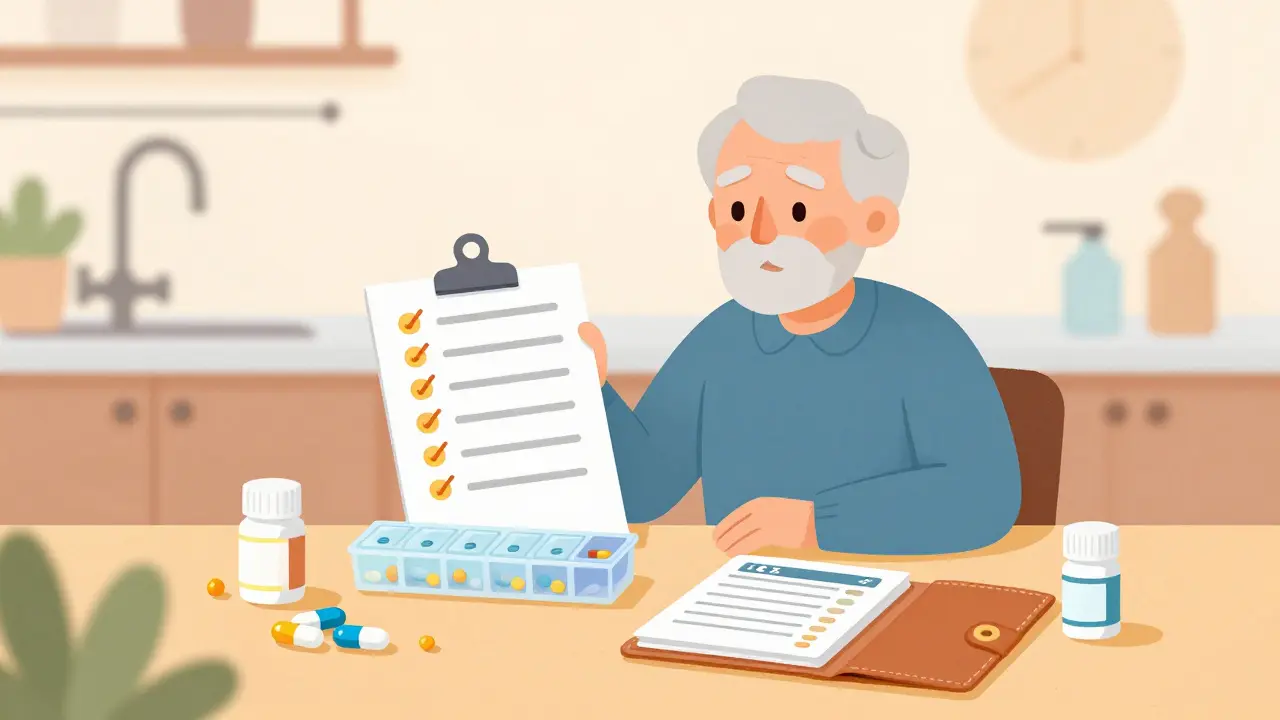
Write down every single thing you swallow, inject, or apply to your skin. That includes prescription drugs, over-the-counter painkillers, vitamins, herbal supplements, and even eye drops or creams. Most people forget the extras. A friend of mine took ginkgo biloba for memory and didn’t tell her doctor because she thought it was "just a supplement." It clashed with her blood thinner and nearly caused a stroke. Your list must be complete. Include the name of each medicine, the dose, how often you take it, and why you’re taking it. If you don’t know why, write "unknown" and ask at your next appointment.
Keep this list in your wallet or phone. Update it every time you start, stop, or change a medication. Don’t wait for your yearly check-up. If your pharmacist changes your prescription, update it right away. This isn’t paperwork-it’s your safety net.
Get clarity from your doctor or pharmacist
Bring your list to your next appointment. Ask three simple questions: "What is this for?", "How do I take it?", and "Could it interact with anything else I’m taking?" Don’t be shy. Pharmacists are trained to catch dangerous combinations. One study found that nearly half of all preventable drug reactions happen because patients weren’t told about interactions. For example, St. John’s Wort can make birth control, antidepressants, or heart meds stop working. Garlic supplements can thin your blood too much if you’re on warfarin. Your care team needs to know everything-even the stuff you think doesn’t matter.
Ask them to write down instructions in plain language. If you have trouble remembering, say: "Can you show me how to take this?" Some clinics now give patients printed cards with photos of pills and simple arrows showing morning, afternoon, or night doses. If yours doesn’t, ask for it. Clear instructions save lives.
Store your meds safely
Keep all your medications locked up. Not in the bathroom cabinet. Not on the kitchen counter. A locked box or cabinet is best-especially if you live with others, have kids around, or struggle with memory. A woman in Wellington took a double dose of her heart medication because she confused it with her blood pressure pill. Both were in unlabeled bottles next to her coffee maker. She ended up in the ER. That’s preventable.
Use original containers when possible. If you use a pill organizer, make sure each compartment is labeled with the day and time. Never mix pills from different bottles into one container without clear labels. And never keep expired or unused meds in your drawer. Take them to your pharmacy for safe disposal. Many pharmacies in New Zealand offer free disposal services.
Create a daily routine with tools that work for you
Use a pill box with separate compartments for morning, afternoon, and night. Buy one with big, easy-to-read labels. If you’re forgetful, set alarms on your phone. Use a checklist taped to your fridge. Some people use apps, but if you’re not tech-savvy, stick with paper. The goal isn’t to be fancy-it’s to be consistent.
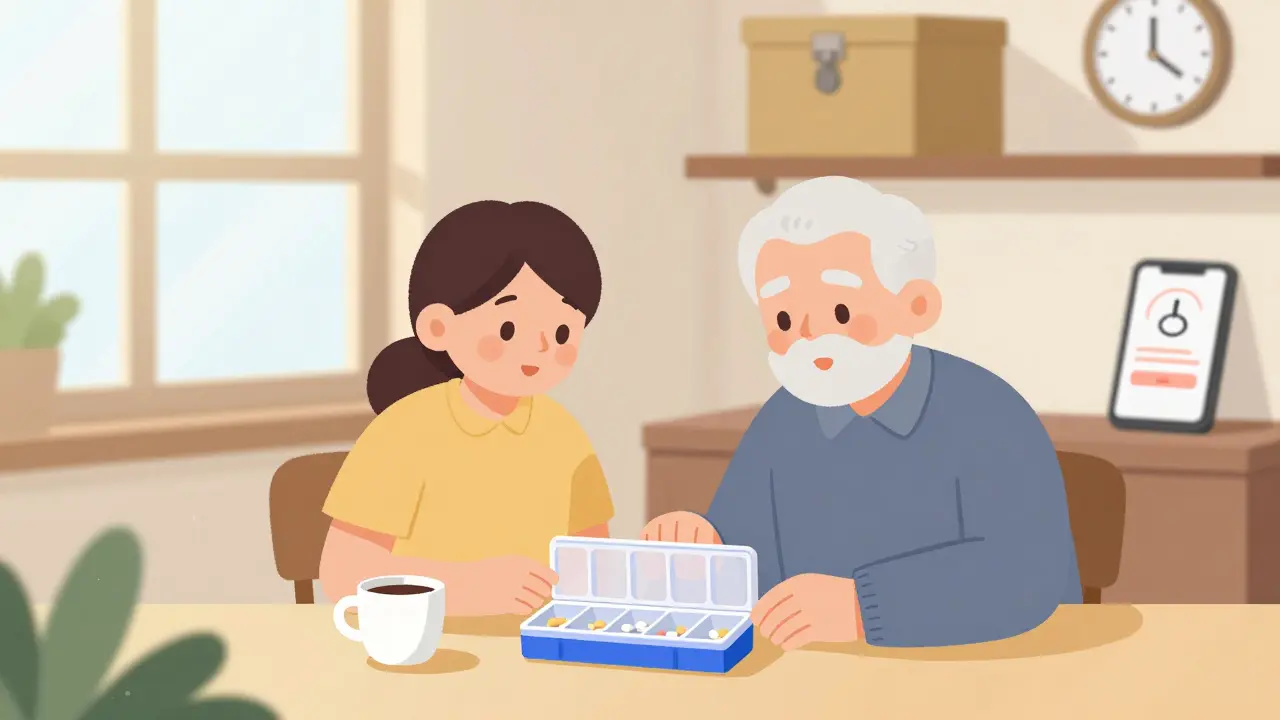
For people with dementia or memory issues, a caregiver should be part of the routine. Ask a family member or friend to help you fill the pill box once a week. Make it part of your weekly ritual-like laundry or grocery shopping. One caregiver told me she and her mother did it every Sunday after church. It became a quiet, normal part of their week. No stress. No confusion.

Set up regular check-ins with your care team
Don’t wait until something goes wrong to talk to your doctor. Schedule a medication review every six months, even if you feel fine. Bring your updated list. Ask: "Is this still the right dose?", "Are any of these no longer needed?", and "Have any new side effects shown up?"
Some meds become riskier as you age. Blood pressure pills can make you dizzy. Sleep aids can cause falls. Diabetic drugs can drop your sugar too low. Your body changes. Your meds should too. Your GP, pharmacist, or nurse can spot changes before they become problems. They’ll also check if new prescriptions from specialists match what you’re already taking. Too many people get meds from different doctors without anyone seeing the full picture. That’s how dangerous overlaps happen.
Plan for emergencies
Keep a printed copy of your medication list in your wallet, purse, and car. Give a copy to a trusted family member or neighbor. If you fall, pass out, or need an ambulance, first responders need to know what’s in your system. A 78-year-old man in Christchurch collapsed at home. The paramedics found his list taped to his fridge. They saw he was on three blood thinners and avoided giving him more. He lived because someone had taken the time to write it down.
Also, know the signs of a bad reaction: unusual drowsiness, confusion, rash, nausea, or sudden dizziness. If you notice these, call your pharmacist or GP. Don’t wait. If you’re alone, call a neighbor or use a medical alert system. In New Zealand, Healthline (0800 611 116) is available 24/7 for advice.
Use technology wisely
Apps and smart pill dispensers can help, but they’re not magic. If you’re not comfortable with them, don’t force it. A simple alarm or pill box works just as well. But if you like tech, try a reminder app that texts you or calls you when it’s time to take your pills. Some can even notify a family member if you miss a dose. The best tools are the ones you’ll actually use every day.
Don’t rely on apps to replace human checks. Technology can fail. Batteries die. Phones break. Your care team is the backup system that keeps you safe.
Who should be on your care team?
Your GP is the captain, but you need more than one person. Include:
- Your pharmacist-they know how drugs interact
- Your specialist (like a cardiologist or neurologist)
- A caregiver or trusted family member
- Your nurse or home care worker, if you have one
Make sure they all talk to each other. Ask your GP to send a summary of your meds to your pharmacist and specialist. Ask your pharmacist to flag any red flags to your GP. Communication gaps are where errors happen. A 2023 study found that 20% of medication errors came from poor handoffs between doctors, pharmacies, and patients. Don’t let that be you.
What if you’re worried about side effects?
Don’t stop taking a medicine just because you feel off. Call your doctor. Maybe the dizziness is from the pill, or maybe it’s from something else-like dehydration or a new infection. Your care team can test, adjust, or switch you to something safer. Many people quit meds because they’re scared. That’s riskier than sticking with a plan.
Keep a small notebook next to your meds. Write down how you feel each day: "Dizzy after lunch," "Sleepy after 2 p.m." That helps your doctor spot patterns. You don’t need to be perfect. Just consistent.
It’s not about being perfect. It’s about being prepared.
You don’t need to memorize every drug interaction. You don’t need to be a medical expert. You just need a plan, a list, and people who know what’s in it. Medication safety isn’t a one-time task. It’s an ongoing conversation. Every time you see a new doctor, take your list. Every time you refill a prescription, check the label. Every time you feel strange, speak up.
There’s no shame in asking for help. In fact, the safest people are the ones who know they can’t do it alone. Your care team is there to support you-not to judge you. Start small. Make one list. Talk to one person. Then build from there. Your health depends on it.
What should I do if I miss a dose of my medication?
Don’t double up unless your doctor says so. Check the medication’s label or call your pharmacist. Some meds can be taken late, others should be skipped. If you’re unsure, contact Healthline (0800 611 116) or your GP. Keep a note in your medication log about what happened so you can review it later.
Can I use a pill organizer if I have dementia?
Yes-but only if someone helps you fill it. A pill box alone won’t work if you forget how to use it. Pair it with a caregiver who fills it weekly and checks that you’re taking the right pills. Use boxes with big labels and separate compartments for each time of day. Some pharmacies offer pre-filled boxes with your name and dosage clearly printed.
Why should I tell my doctor about herbal supplements?
Herbal supplements aren’t harmless. St. John’s Wort can reduce the effect of antidepressants. Garlic and ginkgo can thin your blood and increase bleeding risk during surgery or if you’re on warfarin. Even common vitamins like vitamin E or K can interfere with your meds. Your doctor needs the full picture to keep you safe.
How often should I update my medication list?
Update it every time you start, stop, or change a medicine-even if it’s a one-time dose. Keep your list current at all times. If you’re unsure whether something changed, assume it did and check with your pharmacist. A 2023 study showed that patients who updated their lists monthly had 40% fewer medication errors than those who updated only yearly.
What if I can’t afford to store my meds in a locked cabinet?
You don’t need a fancy lock. A small, latched plastic box from the hardware store works. Put it on a high shelf, inside a locked drawer, or even in a locked suitcase. The goal is to keep it out of reach of children, pets, or anyone who might accidentally grab the wrong bottle. If you’re worried about theft or misuse, ask your community health nurse for help-they often have low-cost solutions.