
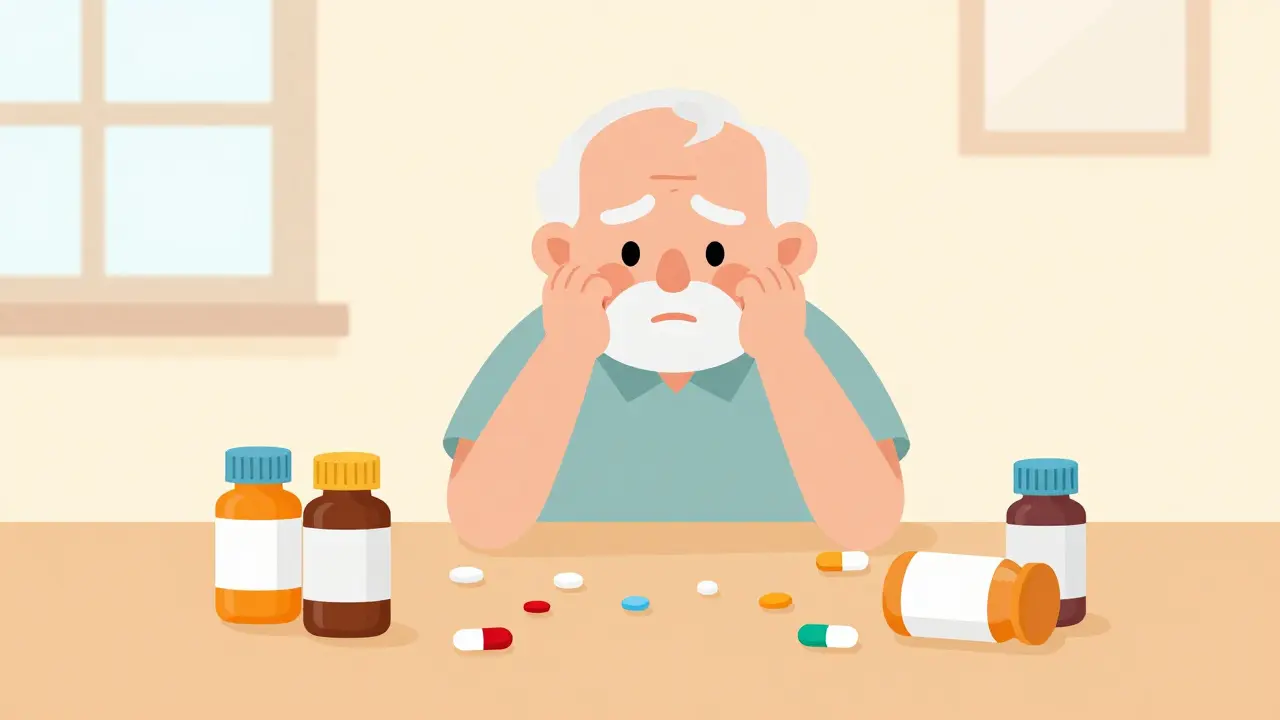
What is Pill Burden and Why It Matters for Seniors?
Pill burden is the total number of medications a person takes daily. For seniors, this often means juggling multiple pills for conditions like high blood pressure, diabetes, or arthritis. The CDC reports that 42% of U.S. adults have multiple chronic conditions, and many take 5+ pills daily. This isn’t just inconvenient-it can lead to missed doses, side effects, and even hospital stays.
Take Mr. Johnson, a 74-year-old managing hypertension, diabetes, and high cholesterol. His daily routine includes three separate pills for blood pressure, two for diabetes, and one for cholesterol. That’s six pills a day, each with different schedules. Over time, this complexity makes it easy to forget doses or take them incorrectly. Studies show this kind of regimen increases the risk of medication errors by 30% in older adults.
What Are Combination Medications?
Fixed-dose combination medications are single pills that combine two or more active ingredients. They’re designed to simplify treatment for conditions requiring multiple drugs. For example, a single pill might contain both a blood pressure medication and a cholesterol drug. This approach isn’t new-doctors have used them for decades-but they’ve become more common as senior populations grow.
These combinations must meet strict FDA standards. Each ingredient must prove it contributes to the treatment’s effectiveness. For instance, a combo pill for hypertension must show both components work together safely and effectively. This ensures you get the same benefits as taking separate pills, but in one convenient dose.

How Do They Improve Adherence?
A 2007 meta-analysis in the American Journal of Medicine found that patients taking fixed-dose combinations had 26% fewer missed doses compared to those taking separate pills. Why? Simpler routines. When you only need one pill instead of three or four, you’re less likely to forget. This isn’t just theory-real-world data shows it. For example, a 2023 study in the European Journal of Cardiology Practice tracked 12,000 seniors with hypertension. Those on single-pill combinations had blood pressure readings 3.99 mmHg lower on average than those taking separate pills.
Think about it: if you take one pill instead of three, you save time, reduce confusion, and avoid the stress of managing multiple schedules. For seniors with memory issues or busy caregivers, this simplicity makes a huge difference. The CDC explicitly recommends "choose once-a-day and combination medications" as part of their strategy to improve medication safety.
Benefits and Limitations of Single-Pill Combinations
| Metric | Single-Pill Combination | Multiple Pills |
|---|---|---|
| Pill count per day | Reduced (e.g., 1 pill instead of 3) | Higher (e.g., 3+ separate pills) |
| Medication adherence | 26% lower noncompliance rate (American Journal of Medicine, 2007) | Higher risk of missed doses |
| Cost | Lower co-pays and overall costs | Higher out-of-pocket expenses |
| Dosing flexibility | Less flexible; fixed doses | More adaptable to individual needs |
| Side effects | Lower risk of dose-related side effects | Potential for higher side effects |
While the benefits are clear, there are trade-offs. Combination pills can’t be adjusted easily. If your doctor needs to tweak one medication’s dose, you might need to switch back to separate pills. Also, some seniors have allergies or health issues that make certain combinations unsafe. Always discuss these details with your healthcare provider.
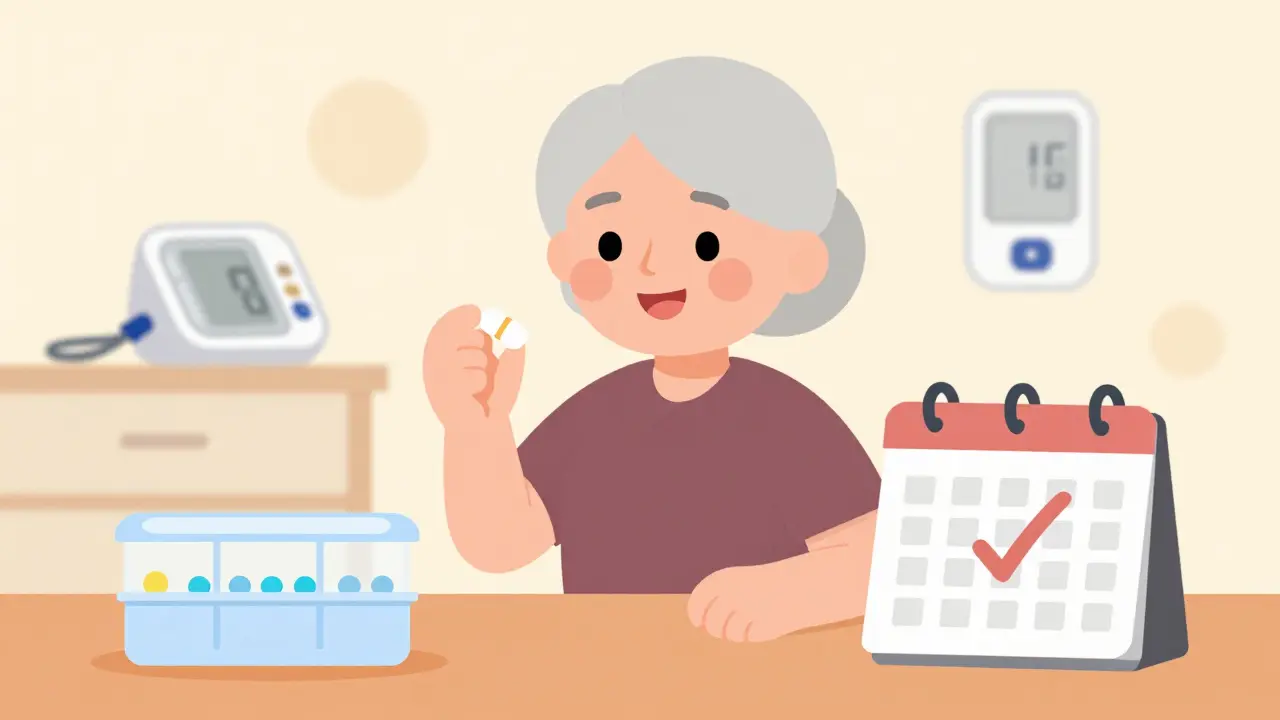
Practical Steps for Seniors
Switching to combination medications isn’t a DIY project. Here’s how to approach it:
- Review your current regimen with your doctor. Bring a list of all medications, including supplements. Ask: "Are there combination options that cover multiple conditions?"
- Check insurance coverage. Some combo pills have lower co-pays than buying separate drugs. Your pharmacist can help compare costs.
- Ask about timing. Many combination pills are designed for once-daily dosing. This fits better with daily routines and reduces confusion.
- Monitor side effects. When switching, watch for new reactions. Report them to your doctor immediately.
For example, Mrs. Lee, a 68-year-old with hypertension and type 2 diabetes, switched to a combo pill that included both a blood pressure and diabetes medication. Her pill count dropped from four to one daily. After three months, her blood sugar and blood pressure stabilized, and she no longer struggled to remember her schedule. "It’s been a game-changer," she said. "I feel more in control of my health now."
FAQs
Can combination medications replace all my current pills?
No. Combination pills only work for specific drug pairs or triples designed to be taken together. For example, a hypertension combo might include two blood pressure drugs, but you might still need separate pills for cholesterol or diabetes. Always consult your doctor before changing your regimen.
Are combination pills safe for seniors with kidney problems?
It depends. Some combination medications include drugs that affect kidney function. Your doctor will check your kidney health before prescribing them. For instance, certain blood pressure combos may not be safe if you have severe kidney disease. Always share your full medical history with your healthcare team.
Do combination medications have more side effects?
Not necessarily. In fact, lower-dose combinations often reduce side effects. For example, a single pill with a low dose of two blood pressure drugs might cause fewer dizziness issues than high doses of a single drug. However, new combinations can sometimes trigger reactions. Report any new symptoms to your doctor right away.
How do I know if a combo pill is right for me?
Your doctor will consider your health conditions, current medications, and lifestyle. If you struggle to remember doses, have high out-of-pocket costs, or experience side effects from multiple pills, a combination might help. They’ll also check for drug interactions and allergies. Never switch without professional guidance.
Can I split a combination pill if the dose is too high?
Never split combination pills unless your doctor specifically says it’s safe. Many are designed to release medication slowly, and splitting them can cause uneven dosing. If the dose is too high, ask your doctor about adjusting the prescription instead of altering the pill yourself.
12 Comments

Cole Streeper
February 7, 2026 AT 20:44 PM
Big Pharma is using these combo pills to control seniors' health. They don't care about us, just profits. America needs to wake up!

Arjun Paul
February 9, 2026 AT 10:47 AM
This approach is flawed. Seniors must take responsibility for their health. Combination pills are a crutch. Lifestyle changes are the real solution.

divya shetty
February 11, 2026 AT 10:40 AM
I must emphasize that medication management requires professional oversight. Self-adjusting regimens without consulting a doctor is dangerous. Many seniors lack the capacity to make such decisions.

Nancy Maneely
February 12, 2026 AT 18:38 PM
OMG this is sooo messed up! Big pharma is pushing pills on seniors. They don't care about us! I read somewhere that these combos cause more harm. Seriously, why? 🤦♀️

Thorben Westerhuys
February 13, 2026 AT 18:40 PM
Oh my goodness! This is such a critical issue! I've been so worried about my elderly mother's medication regimen! She's taking so many pills, and it's so stressful for her! We need to address this immediately! Please, someone help!

Laissa Peixoto
February 15, 2026 AT 09:51 AM
Combination medications do offer significant benefits for seniors by reducing the number of pills they need to take daily.
However, it's crucial to recognize that each individual's health situation is unique.
For instance, while a single pill may simplify the regimen for someone with hypertension and diabetes, it might not be suitable for another senior with multiple comorbidities.
Doctors must carefully assess each patient's specific needs before recommending combination therapy.
Additionally, there's a risk of drug interactions that could go unnoticed when using fixed-dose combinations.
It's also important to consider the potential for side effects, which might be different when medications are combined.
Some seniors might experience adverse reactions that wouldn't occur with separate medications.
Furthermore, the cost of these combination pills can vary significantly, and insurance coverage isn't always straightforward.
Patients should work closely with their healthcare providers to ensure the best outcome.
Regular monitoring is essential to catch any issues early.
It's also worth noting that not all conditions can be managed with combination pills-some still require multiple separate medications.
The key is to find the right balance between convenience and safety.
Patients shouldn't assume that fewer pills automatically mean better health; it's about the right combination for their specific case.
Ultimately, the decision should be made in consultation with a medical professional who knows the full picture.
This approach ensures personalized care rather than a one-size-fits-all solution.

Kate Gile
February 17, 2026 AT 06:11 AM
This is a great step forward for senior care! Reducing pill burden improves quality of life. Let's work together to make healthcare simpler for everyone!

Gregory Rodriguez
February 17, 2026 AT 22:59 PM
Well, isn't this just the bee's knees? Taking all your meds in one pill-sounds like magic! But seriously, this is a huge win for seniors. Less clutter, more clarity. Hooray for smart medicine!

lance black
February 19, 2026 AT 06:41 AM
One pill instead of six is a no-brainer.

Pamela Power
February 20, 2026 AT 04:06 AM
This is such a basic solution. Why isn't this standard practice everywhere? Seniors deserve better, but the healthcare system is still stuck in the past. Pathetic.

Dina Santorelli
February 21, 2026 AT 11:52 AM
Ugh, another 'solution' that ignores real issues. These combo pills probably have hidden side effects. Big pharma's playing games again. I'm done.
Write a comment
Popular Posts




anjar maike
February 6, 2026 AT 23:42 PM
Combination pills are a game-changer for seniors 😊