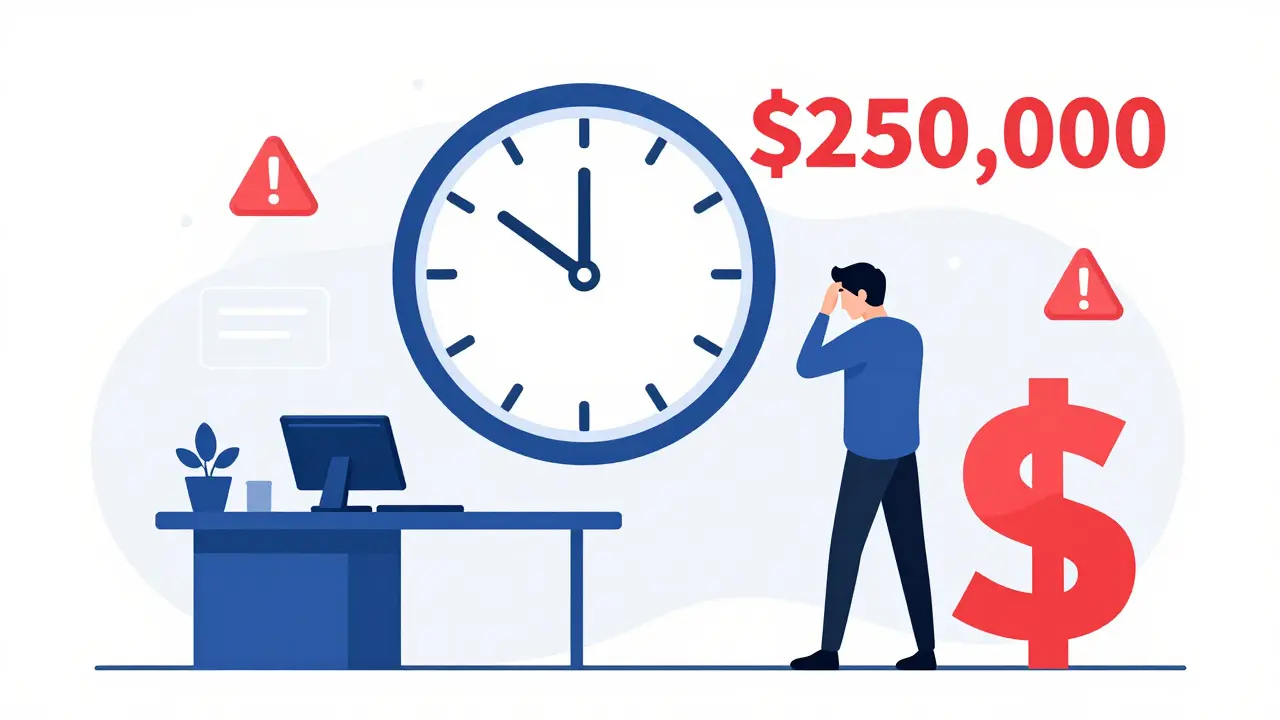
Imagine waking up to find your company facing a fine of over $250,000 simply because an employee in a different time zone didn't flag a product glitch fast enough. For many businesses, this isn't a nightmare-it's a real regulatory risk. Manufacturer reporting is the legal process where companies must tell government agencies when their products hurt someone or fail in a way that could be dangerous. It sounds straightforward, but the clock starts ticking the moment you "become aware" of an issue, and in some industries, you only have 24 hours to act.
Key Takeaways for Safety Compliance
- Deadlines vary wildly: From 24 hours (CPSC) to 30 days (FDA) depending on the product and agency.
- "Awareness" is the trigger: The clock starts when any employee who could reasonably report the info finds out about the problem.
- Documentation is non-negotiable: You must keep event files for at least two years after the product is made or distributed.
- Automation is the trend: AI is now being used to cut reporting prep time by over 60%.
Who Controls the Rules?
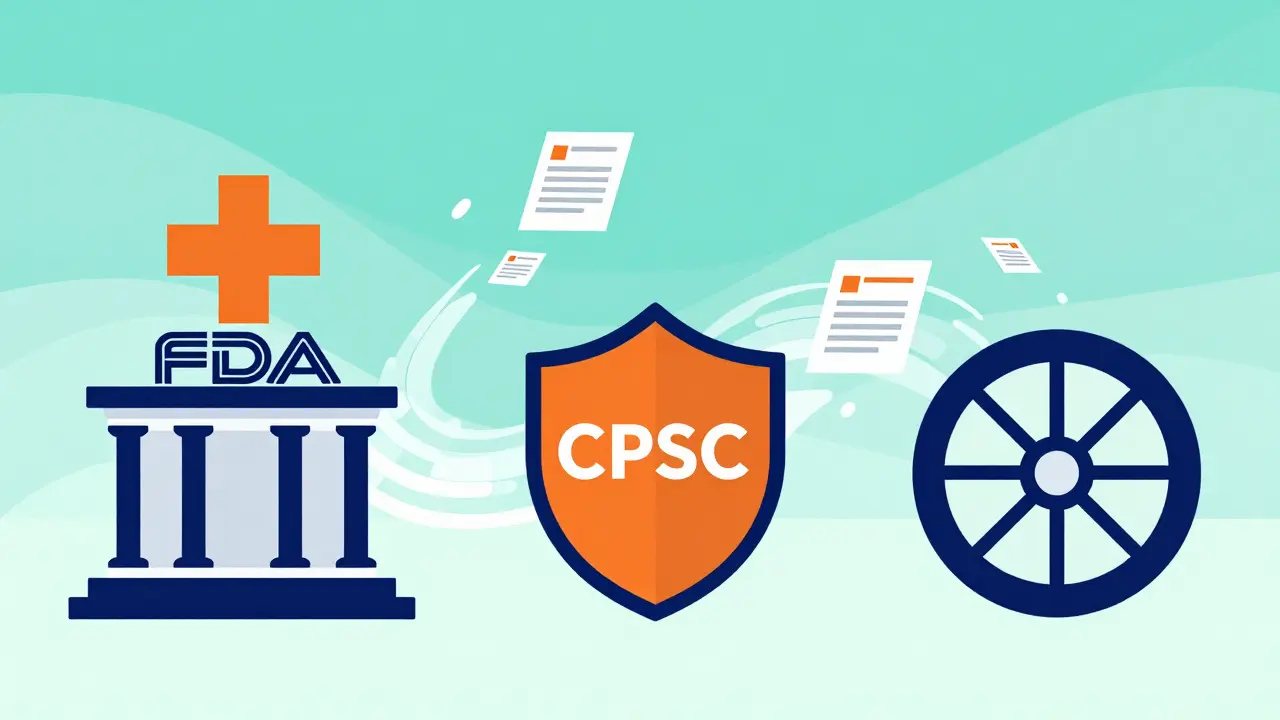
Depending on what you sell, you'll answer to different masters. In the US, three main agencies hold the keys to your compliance status. First, there's the FDA is the Food and Drug Administration, which oversees medical devices and pharmaceuticals . They use a system called Medical Device Reporting (MDR) to track deaths and serious injuries. Then you have the CPSC is the Consumer Product Safety Commission, responsible for general household and consumer goods . Finally, the NHTSA is the National Highway Traffic Safety Administration, which monitors vehicle and tire safety via Early Warning Reporting.
While they all want the same thing-to stop people from getting hurt-their methods differ. The FDA is very detailed and requires deep investigations into every event. The CPSC is more about speed, demanding rapid alerts for any "substantial risk" of injury, even if no one has actually been hurt yet. NHTSA takes a broader approach, asking for quarterly data dumps on crashes and injuries to spot patterns before they become catastrophes.
The Clock is Ticking: Reporting Timelines
The biggest pitfall for any quality manager is missing the reporting window. If you're in the medical device world, you generally have 30 calendar days to report a death or serious injury. However, if you're taking a "remedial action" (basically a quick fix to prevent a disaster), that window shrinks to just 5 working days. This is governed by 21 CFR Part 803, the specific regulation that spells out how the FDA handles these reports.
Compare that to the CPSC, where the pressure is intense. Under Section 15(b) of the Consumer Product Safety Act, you must report within 24 hours of getting "reportable information." This doesn't mean you need a full forensic report; it means as soon as you know there's a defect that could cause a risk, you call them. Many companies find this nearly impossible to manage without dedicated staff, leading to a high number of warning letters for late submissions.
| Agency | Trigger Event | Reporting Window | Requirement |
|---|---|---|---|
| FDA | Death, Serious Injury, Malfunction | 30 Days (5 Days for Urgent Fixes) | Detailed Investigation |
| CPSC | Substantial Risk of Injury/Defect | 24 Hours | Immediate Notification |
| NHTSA | Vehicle/Tire Incidents | Quarterly | Data Thresholds (e.g., 5+ deaths) |
Dealing with the "Awareness" Trap
One of the most debated phrases in regulatory law is "becoming aware." Does it mean the CEO knows? Or does it mean a customer service rep in a warehouse mentioned it in an email? The FDA's stance is clear: the clock starts when information reaches any employee who reasonably might provide that info to the people responsible for reporting. This is where most companies fail during audits.
To avoid this, you need a Quality Management System, often called a QMS, which is a formalized system of processes and procedures used to ensure product quality and safety . A good QMS doesn't just store documents; it creates a pipeline. For instance, a complaint comes in via email, it's tagged as "potential safety issue," and it's immediately routed to the regulatory lead. Without this, a report can sit in an inbox for three weeks, and by the time it hits the manager's desk, the legal deadline has already passed.
The Real Cost of Compliance
Reporting isn't free. Small businesses often feel the pinch more than the giants. A survey by the Medical Device Manufacturers Association found that smaller firms spend nearly 19% of their entire quality department budget just on reporting. For a large enterprise, you might be looking at a QMS investment of $750,000 or more. But the cost of not complying is higher. Civil penalties can exceed $250,000 per violation, and that's before you even consider the brand damage of a forced recall.
However, there is some relief. The FDA's Voluntary Malfunction Summary Reporting program, recently updated in August 2024, allows some companies to submit a summary of malfunctions instead of individual reports. This is a huge win for high-volume, low-risk devices. Some companies have reported a 63% drop in individual filings, allowing them to focus on actual safety analysis rather than filling out endless forms.

Modernizing the Process with AI
The old way of reporting involved a human reading a thousand complaint emails and manually deciding if any were "reportable." It's slow and prone to error. Now, the industry is shifting toward AI-powered adverse event detection. Some healthcare giants are already using machine learning to scan reports and flag risks. These systems can cut the time it takes to prepare an MDR from over eight hours down to about three and a half.
We're also seeing a push for better traceability. The Unique Device Identification or UDI system, which assigns a unique code to every medical device to track it throughout its lifecycle is being enhanced to make reporting more accurate. Instead of saying "a heart valve failed," companies can identify the exact batch and date of manufacture instantly, making recalls surgical rather than sweeping.
What happens if I miss a reporting deadline?
Missing a deadline can lead to severe consequences. For FDA violations, civil penalties can reach over $250,000 per violation. The CPSC is known for being even stricter with enforcement, often issuing warning letters to companies that fail the 24-hour window. Beyond fines, you risk mandatory recalls and damaged credibility with regulators.
Do I have to report an issue if no one was actually injured?
Yes, in many cases. Specifically, under CPSC Section 15(b), you must report if a product contains a defect that creates a "substantial risk" of injury, regardless of whether an accident has happened yet. Similarly, the FDA requires reporting for "malfunctions" that could cause death or serious injury if they were to happen again.
How long should I keep my safety records?
Under FDA rules (21 CFR 803.18), you must maintain MDR event files for at least two years after the date the device was manufactured or the date it was last distributed, whichever is later.
What is the Voluntary Malfunction Summary Reporting program?
It is an FDA initiative that allows eligible manufacturers to submit a single summary report for certain malfunctions instead of filing individual reports for every single incident. This reduces the administrative burden while still providing the FDA with the necessary safety data.
When is a company considered "aware" of a safety event?
A company is considered "aware" when any employee who could reasonably be expected to pass that information to the reporting officer becomes aware of the event. This means you cannot claim ignorance just because the information stayed in the customer service department.
Next Steps for Compliance
If you're just starting to build your reporting process, don't try to do it in a spreadsheet. Start by auditing your communication channels-where do complaints actually enter your company? Once you have a map of the data flow, implement a written procedure for reviewing and evaluating those complaints. If you're in a high-volume sector, look into the FDA's Electronic Submission Gateway to automate your filings. Finally, invest in specialized training for your quality team; interpreting these rules is a skill that usually takes 40 to 80 hours of dedicated study to master.
Popular Posts

The role of hydration in managing a cough
May, 8 2023