
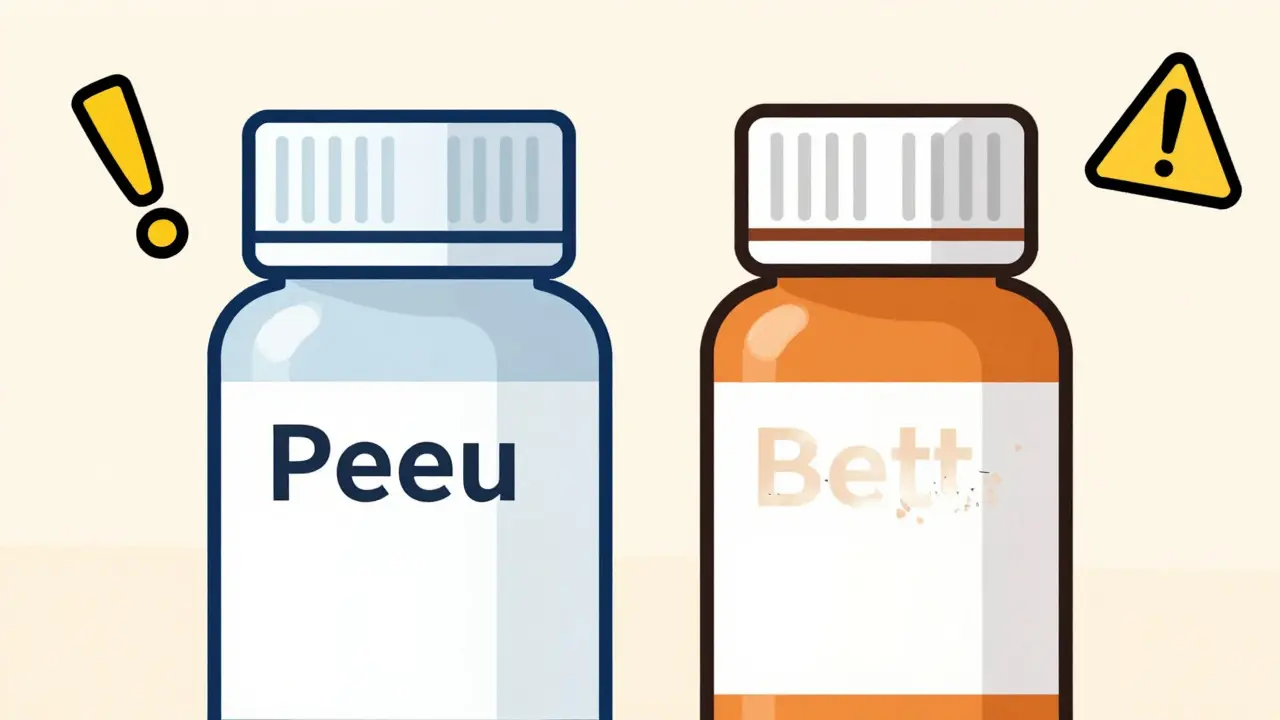
Every year, counterfeit medications kill an estimated 1 million people worldwide. These aren’t just poor-quality copies-they’re dangerous fakes, sometimes laced with rat poison, battery acid, or chalk, and sold as life-saving drugs. You might think this only happens in faraway countries, but it’s happening right here, right now. Fake versions of popular medications like Ozempic®, Mounjaro®, Xanax, and Adderall are flooding online pharmacies, social media, and even street markets. And the scariest part? They look identical to the real thing.
What Exactly Is a Counterfeit Medication?
A counterfeit medication isn’t just a cheaper version. It’s a deliberate fraud. According to the World Health Organization, falsified medicines are deliberately mislabeled with false identity or source. They might contain the wrong active ingredient, too little or too much of the right one, or none at all. Some have toxic substances like boric acid, methanol, or industrial dyes. Others are just sugar pills with no medicinal value. These aren’t made in labs with any standards. They’re churned out in hidden factories-sometimes in basements or garages-with no hygiene controls, no quality checks, and no accountability. The U.S. FDA calls them “fake, pirated, or illegally copied.” The DEA says criminal networks are flooding the market with fake pills that look exactly like prescription drugs. And they’re getting better at it.Warning Signs You Might Have a Fake
You can’t always tell by looking, but there are red flags that should make you stop and question what you’ve been given.- Pills look different. If your prescription pills suddenly changed color, shape, size, or markings-even slightly-that’s a major red flag. Legitimate pills are made with precision. If one looks cracked, crumbly, or has a bubbled coating, it’s not safe.
- Packaging is off. Check the label. Are there spelling mistakes? Faded ink? Wrong fonts? Mismatched capitalization? Real pharmaceutical companies don’t mess up basic printing. Fake packaging often has labels that are too thick, too thin, or feel cheap. The seal might be broken, or the tape looks like it was resealed.
- No lot number or expiration date. Every legitimate medicine box has a batch number and expiry date. If it’s missing, walk away. Some counterfeiters even reuse old labels from expired drugs and change the date with a marker.
- Unusual taste or smell. If your pill tastes metallic, bitter, or smells odd, that’s not normal. Real medications have consistent flavors. If you’ve been taking the same drug for months and suddenly notice a strange aftertaste, call your pharmacist.
- Side effects you’ve never had. Did you start feeling dizzy, nauseous, or have a rash after taking a pill you’ve used before? That’s not just coincidence. It could mean the active ingredient is wrong-or toxic.
- Price too good to be true. If someone’s selling Ozempic® for $50 when it normally costs $1,000, they’re not giving you a discount. They’re selling poison. Counterfeiters lure buyers with huge discounts, especially on high-demand drugs.
Even experts admit: you can’t be 100% sure just by looking. Pfizer’s Amy Callanan says only lab testing can confirm authenticity. But these signs? They’re your first line of defense.
Where Are These Fake Drugs Coming From?
The biggest source? Online pharmacies that don’t require a prescription. The National Association of Boards of Pharmacy (NABP) found thousands of websites selling fake GLP-1 agonists like Mounjaro® and Zepbound®. Many of these sites look professional-they even use fake seals and logos. But they’re not licensed. They don’t follow U.S. laws. Social media is another growing channel. Criminals use Instagram, Facebook, and encrypted apps like Telegram to sell fake pills directly to users. A young person searching for Adderall for studying might get a pill laced with fentanyl. One pill can be fatal. Even brick-and-mortar pharmacies aren’t immune. In 2023, the FDA found counterfeit versions of Bausch + Lomb’s Muro 128 eye drops in U.S. stores. These weren’t imported-they were slipped into the supply chain somewhere between manufacturer and shelf.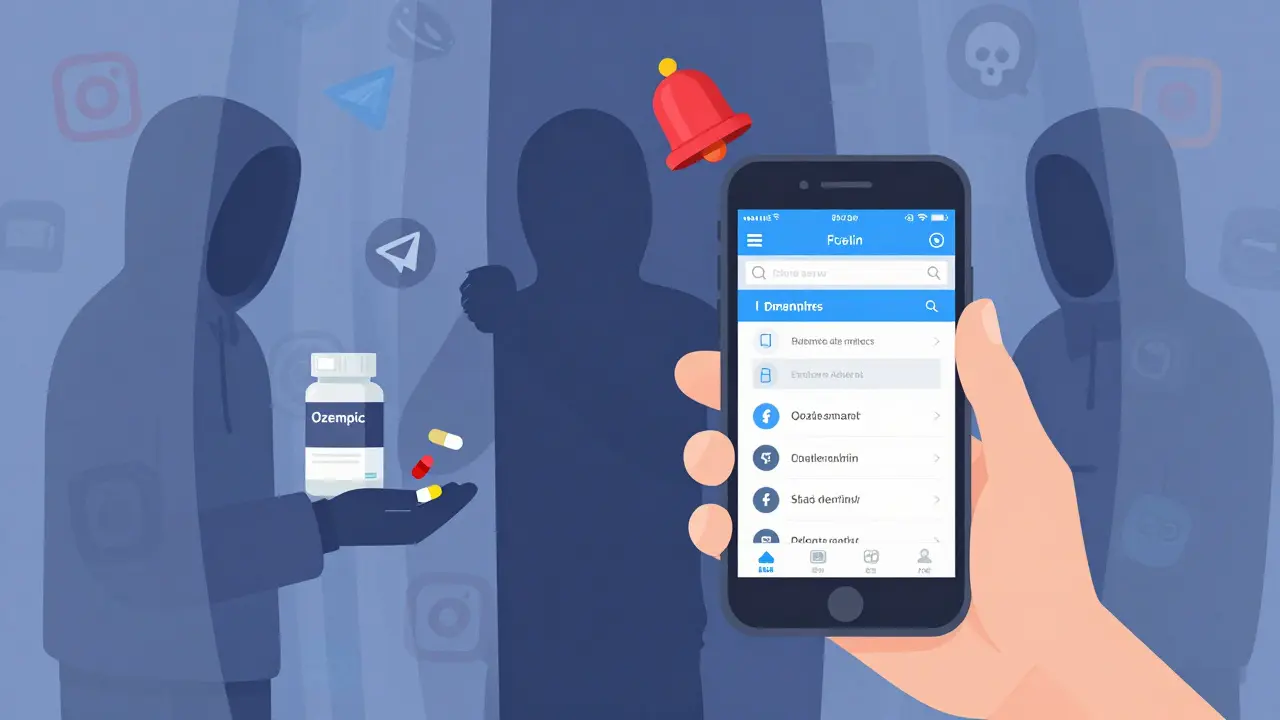
How to Protect Yourself
The only way to guarantee safety is to control where you get your meds.- Only use licensed pharmacies. In the U.S., that means pharmacies licensed by your state board of pharmacy. Ask if they’re VIPPS-certified (Verified Internet Pharmacy Practice Sites). You can check this at nabp.pharmacy. If they won’t tell you, walk out.
- Never buy without a prescription. Legitimate pharmacies require a valid prescription from a licensed doctor. If a website sells pills without one, it’s illegal-and dangerous.
- Talk to your pharmacist. If your pills look different, ask why. Pharmacists know what’s normal for your medication. They can check the batch number and contact the manufacturer.
- Don’t accept meds from friends or strangers. Sharing pills is risky. Even if they say it’s the same, it might not be. Fake pills are often passed around like candy.
- Call the manufacturer. If you suspect a fake, call the company. Pfizer, Eli Lilly, and others have hotlines to verify lot numbers. If the lot number doesn’t exist, it’s counterfeit.
Pharmaceutical companies track complaints. When enough people report the same fake batch, they issue public alerts. In June 2024, the WHO warned about falsified injectable diabetes drugs circulating in North America and Europe. If you’re using one of those, check the lot number.
What Happens If You Take a Fake Pill?
The consequences aren’t theoretical. In 2023, the DEA reported hundreds of overdose deaths linked to fake oxycodone pills containing fentanyl. People thought they were taking a painkiller. They got a lethal dose of a drug 50 times stronger than heroin. Other fake drugs have caused organ failure, seizures, and blindness. A woman in Texas took a counterfeit version of Muro 128 eye drops and lost vision in one eye. The fake solution contained toxic chemicals that burned her cornea. Even if you don’t have an immediate reaction, long-term exposure to incorrect dosages can make chronic conditions worse. A fake version of blood pressure medication might have too little active ingredient-letting your pressure spike unnoticed. Or it might have too much, causing a dangerous drop.
What Should You Do If You Find a Fake?
Don’t flush it. Don’t throw it in the trash. Report it.- Call the FDA’s MedWatch hotline at 1-800-FDA-1088.
- Report to the manufacturer. Eli Lilly has a dedicated safety line for counterfeit reports.
- Save the packaging and pills. Take photos. Note the lot number, where you bought it, and when.
- If you bought it online, report the website to the NABP.
Your report could stop others from being harmed. In 2024, a single report led to the recall of over 20,000 fake Ozempic® pens across seven states.
Final Reminder: Your Safety Is Your Responsibility
No government agency can monitor every pharmacy, every website, every package. You’re the last line of defense. If something feels off, trust your gut. Ask questions. Double-check. Don’t be embarrassed to call your pharmacist or doctor. They’ve seen this before.Counterfeit drugs aren’t just a crime-they’re a public health emergency. And the more people know the signs, the harder it is for fakes to spread.
8 Comments

THANGAVEL PARASAKTHI
February 10, 2026 AT 19:45 PM
In india, we see this a lot with diabetes meds. People buy from local shops because they’re cheaper. No one checks batch numbers. I work in a clinic and see patients come in with kidney damage from fake metformin. It’s not just a western problem. Governments need to crack down harder. Education is key. People need to know: if it’s too cheap, it’s poison.

Frank Baumann
February 12, 2026 AT 09:12 AM
You have NO IDEA how deep this goes. It’s not just some shady pharmacy-it’s a global syndicate. I read a report that said the Chinese government is literally turning abandoned factories into pill mills. These aren’t just counterfeit-they’re engineered to mimic the real thing at a molecular level. And the FDA? They’re overwhelmed. They inspect 0.01% of imports. Meanwhile, fentanyl-laced Adderall is being sold as ‘study aids’ to college kids. I’ve seen obituaries. Kids. 19 years old. One pill. One. And no one talks about this. Why? Because the corporations are too busy lobbying to let regulators touch the supply chain. It’s a war. And we’re losing.

Chelsea Deflyss
February 13, 2026 AT 13:02 PM
I can’t believe people still fall for this. You think you’re saving money? You’re gambling with your life. I work in a pharmacy. Last week, a guy came in asking for Xanax. Said he got it from a guy on TikTok for $10. I asked if he checked the imprint code. He said ‘what’s that?’ Bro. You’re not saving $990. You’re risking a trip to the morgue. Stop being lazy. Talk to your pharmacist. It’s not hard.

Marie Fontaine
February 14, 2026 AT 09:38 AM
This is so important!! 💯 I just started taking a new med and noticed the pill looked slightly off-smaller, different color. I called my pharmacist and they confirmed it was a batch recall! So glad I checked. Don’t be shy-ask questions! Your body will thank you 😊

Ryan Vargas
February 14, 2026 AT 22:57 PM
The real issue isn’t counterfeit drugs-it’s the systemic collapse of trust in institutions. The FDA, the DEA, the pharmaceutical monopolies-they’re all complicit. Why? Because they profit from the illusion of safety. They allow a 99.9% approval rate while knowing 0.1% of drugs are lethal. They don’t want to shut down the supply chains because then they’d have to admit they can’t regulate them. The counterfeiters are just symptoms. The disease is the regulatory capture. And you? You’re the sacrificial lamb. The system doesn’t care if you die. It just wants your insurance premiums.

Tasha Lake
February 15, 2026 AT 19:04 PM
I’ve been working in pharma logistics for 12 years. The supply chain is fragmented-hundreds of distributors, third-party warehouses, gray-market resellers. One fake batch can enter at any node. We use blockchain tracking now, but it’s not mandatory. The real fix? Mandate serialization at the unit level. Every pill, every vial, every box needs a unique digital fingerprint. That’s the only way to trace it back. Until then, we’re just playing whack-a-mole with poison.

Angie Datuin
February 16, 2026 AT 03:05 AM
I’m so glad someone finally made this post. My mom took a fake blood pressure pill and almost had a stroke. She didn’t even know. I’m sharing this with everyone I know.
Write a comment
Popular Posts
Jonah Mann
February 9, 2026 AT 04:56 AM
I got duped last year by some 'Ozempic' I bought off Facebook. Looked legit, same packaging, even had a barcode. Took it for two weeks, then started having heart palpitations. Called my doc, he said it was probably fake. Turned out the lot number didn't exist. Never buying online again. My bad for not checking VIPPS. Lesson learned the hard way.