Medication Recall: What It Means and How to Stay Safe
When a medication recall, a formal action by health authorities to remove unsafe or defective drugs from the market. Also known as a drug recall, it’s a critical safety step that protects patients from harm. These aren’t rare events—they happen every year, often because of contamination, incorrect labeling, or unexpected side effects that weren’t caught during initial testing.
A FDA recall, an official withdrawal of pharmaceutical products by the U.S. Food and Drug Administration is the most common type, but recalls can also come from manufacturers or international agencies. The reason matters: some recalls are for minor issues like misprinted expiration dates, while others involve life-threatening risks—like pills with toxic levels of a chemical, or antibiotics contaminated with bacteria. For example, recalls have happened for batches of blood pressure meds containing carcinogens, or diabetes pills with the wrong active ingredient. These aren’t hypotheticals—they’ve affected real people.
Not every recall means you need to panic. But you do need to act. If your medicine is on a recall list, don’t just toss it. Contact your pharmacy or doctor first. They’ll tell you whether to stop taking it immediately, switch to a different batch, or switch to a completely different drug. Some recalls only affect specific lot numbers, so checking the label is essential. Many people don’t realize they can look up recalls by drug name or lot number on the FDA website—though you shouldn’t wait for official alerts. If you notice something odd—like pills that look different, taste strange, or cause new side effects—trust your gut and call your provider.
drug safety, the practice of ensuring medications are effective and free from harmful risks isn’t just the job of regulators. It’s yours too. Keep your meds in their original bottles. Save the packaging and leaflets. Use one pharmacy so they can track all your prescriptions and catch dangerous interactions. And if you’re on long-term meds—like for high blood pressure, depression, or diabetes—know what your drug is supposed to look like. A change in color, shape, or size isn’t always a recall, but it’s always worth asking about.
Recalls often tie into bigger problems: antibiotic overuse leading to contaminated batches, or drug interactions that weren’t studied long enough. That’s why the posts here cover topics like opioid nausea, anticholinergic dementia risk, and chloramphenicol bans in food animals. They’re all connected. When a drug is pulled, it’s usually because someone noticed a pattern—patients getting sick, labs finding toxins, or pharmacies reporting errors. The system isn’t perfect, but staying informed gives you power.
Below, you’ll find real stories and guides about drugs that caused harm, how to spot warning signs, and what to do when your medicine isn’t what it claims to be. Whether you’re on a common painkiller, a mental health med, or something more specialized, this collection gives you the tools to protect yourself—not just when a recall happens, but before it ever does.
Medication Recalls: What Patients Should Do Immediately
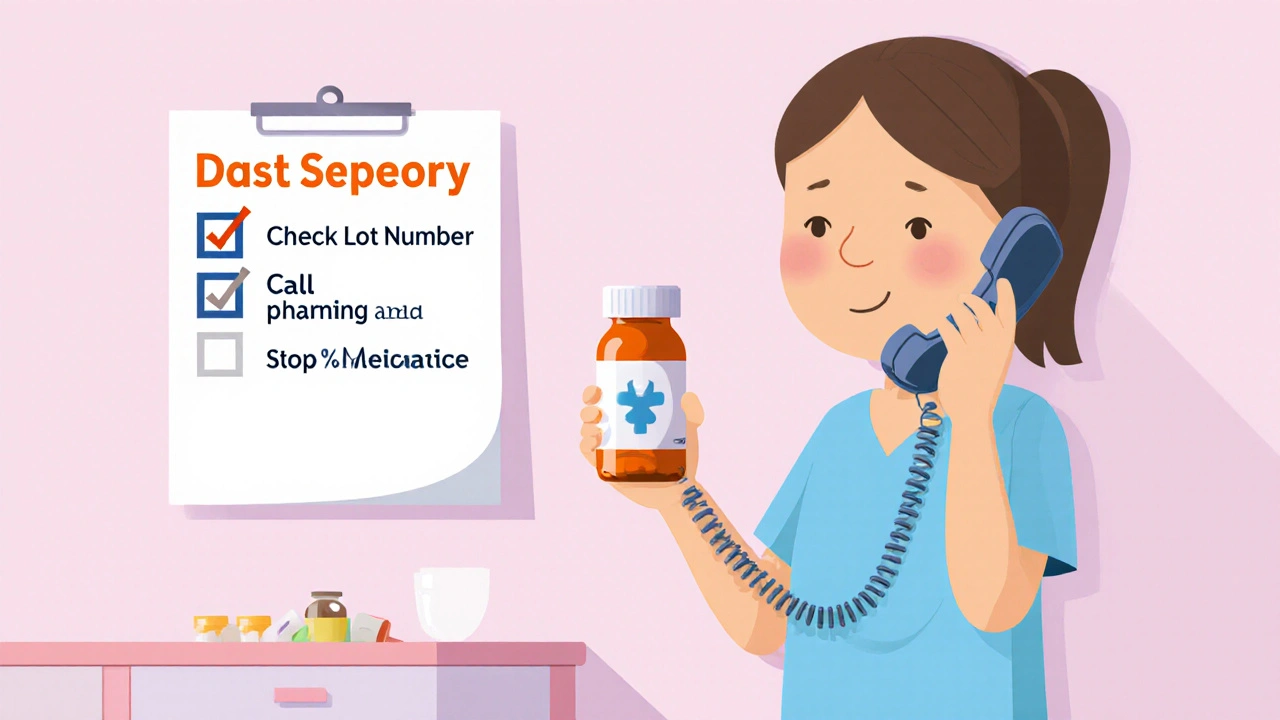
When a medication is recalled, stopping it abruptly can be dangerous. Learn what to do immediately - check lot numbers, call your pharmacy, and never quit your meds without professional advice.
View MorePopular Posts