Severe Drug Reaction: Signs, Risks, and What to Do When It Happens
When your body reacts badly to a medication, it’s not always just a rash or upset stomach. A severe drug reaction, a dangerous immune or physiological response to a medication that can threaten life. Also known as hypersensitivity reaction, it can strike within minutes or days after taking a drug — and it doesn’t always mean you’re "allergic" in the traditional sense. These reactions aren’t rare. Thousands end up in emergency rooms every year because of them. Some are caused by the drug itself, others by how your body breaks it down — and sometimes, even a drug you’ve taken safely for years can suddenly trigger a crisis.
One of the most dangerous types is anaphylaxis, a rapid, whole-body allergic reaction that can shut down breathing and circulation. It’s not just from penicillin or peanuts — even common painkillers, antibiotics, or contrast dyes used in scans can set it off. Another type is drug-induced liver injury, when a medication damages the liver so badly it fails. Then there’s Stevens-Johnson syndrome, a skin and mucous membrane reaction that looks like a severe burn. These aren’t side effects you can ignore. They demand immediate action.
What makes a reaction severe? It’s not the dose — it’s your body’s response. Some people react to tiny amounts. Others only react after repeated exposure. Certain drugs — like sulfa antibiotics, anticonvulsants, and NSAIDs — show up again and again in reports of serious reactions. And it’s not just the active ingredient. Sometimes, the fillers or dyes in generic pills trigger reactions too. That’s why switching brands can suddenly cause problems, even if the label says "same active ingredient."
Most people don’t know they’re at risk until it happens. But if you’ve had a rash, swelling, trouble breathing, or unexplained fever after starting a new med, you’re not just "sensitive." You’ve had a warning. Keep a list of every drug you’ve reacted to — including the name, what happened, and when. Share it with every doctor, pharmacist, and ER staff. Don’t assume they’ll check your file. Most don’t.
And here’s the thing: many severe reactions are preventable. Doctors don’t always test for them. You have to speak up. If you’re on a new drug and feel off — really off — don’t wait. Call your provider. Go to urgent care. If you’re having trouble breathing, swelling in your throat, or your skin is peeling — use epinephrine if you have it, and call 911. Seconds matter.
The posts below don’t just list reactions. They show you exactly how they happen, which drugs are most likely to cause them, and what to do when your body says "no." You’ll find real stories behind the medical terms, clear signs to watch for, and what to ask before your next prescription. This isn’t theory. It’s what keeps people alive.
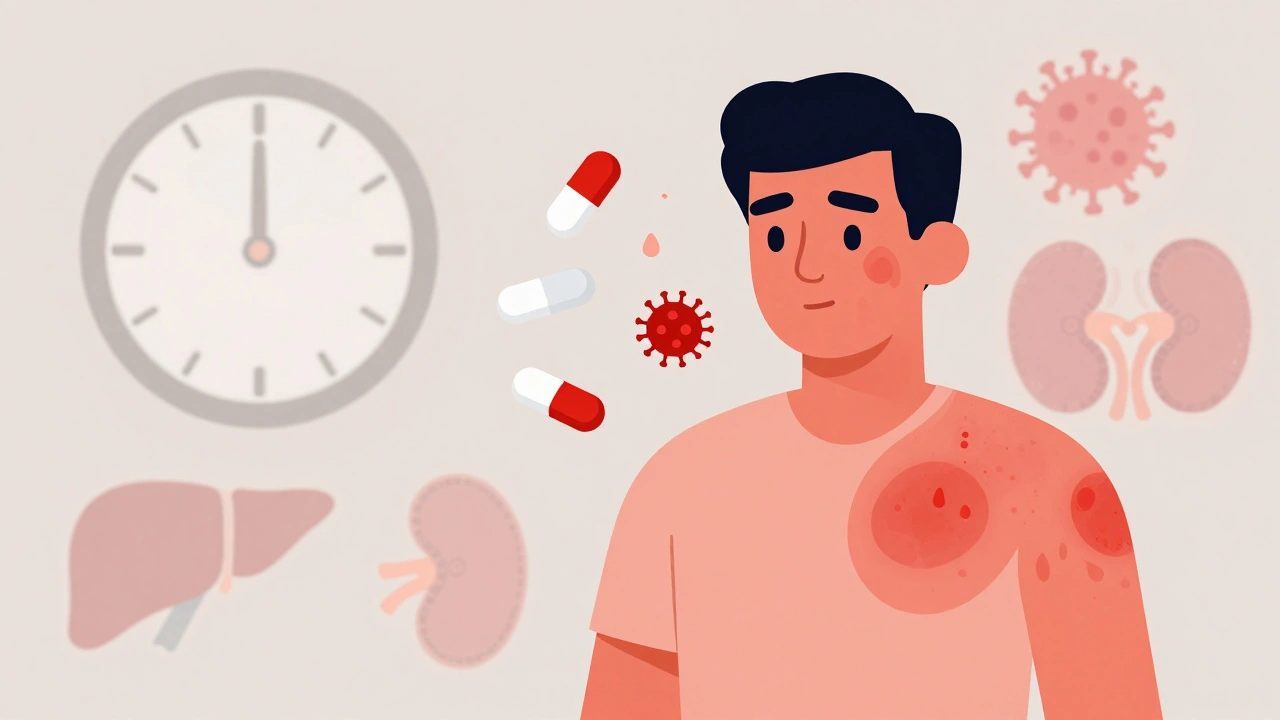
Drug Reaction with Eosinophilia and Systemic Symptoms (DRESS): What You Need to Know Now
DRESS syndrome is a rare but deadly drug reaction that strikes weeks after taking certain medications. Learn the signs, triggers, and how to get diagnosed before it’s too late.
View More