Trazodone for Sleep: How It Works, Risks, and What Else Works
When people struggle to fall asleep, doctors often reach for trazodone, a serotonin antagonist and reuptake inhibitor originally approved for depression. Also known as an antidepressant, it’s one of the most common off-label prescriptions for insomnia in the U.S. But it’s not a sleeping pill in the traditional sense. It doesn’t knock you out like benzodiazepines or z-drugs. Instead, it gently lowers brain activity by blocking certain serotonin receptors and increasing others—enough to make you drowsy without the next-day fog that comes with stronger sedatives.
Many patients start trazodone for depression and end up staying on it for sleep because the drowsiness kicks in faster than the mood improvement. That’s why you’ll see it listed in sleep aids, medications used to help people fall or stay asleep even though it’s not labeled for that use. But it’s not perfect. Dizziness, dry mouth, and next-day grogginess are common. Some people report vivid dreams or even a rare but serious condition called priapism—a painful, prolonged erection that needs emergency care. And if you’re taking other meds—like SSRIs, opioids, or even certain antibiotics—trazodone can interact dangerously. It’s not something you should start without talking to your doctor.
What’s more, trazodone isn’t the only option for sleep. antidepressants for insomnia, medications originally designed for depression but used to treat sleep problems like amitriptyline or mirtazapine work similarly but have different side effect profiles. Some people do better with non-drug approaches—cognitive behavioral therapy for insomnia (CBT-I), sleep hygiene, or even melatonin. And while trazodone is cheap and widely available, its long-term safety for sleep isn’t well studied. The FDA hasn’t approved it for this use, and most guidelines recommend it only after other options fail.
Below, you’ll find real patient experiences, doctor-backed comparisons, and clear breakdowns of how trazodone stacks up against other treatments. Whether you’re considering it, already taking it, or just curious why your doctor suggested it, you’ll find answers that cut through the noise—not marketing, not hype, just what actually matters for your sleep and safety.
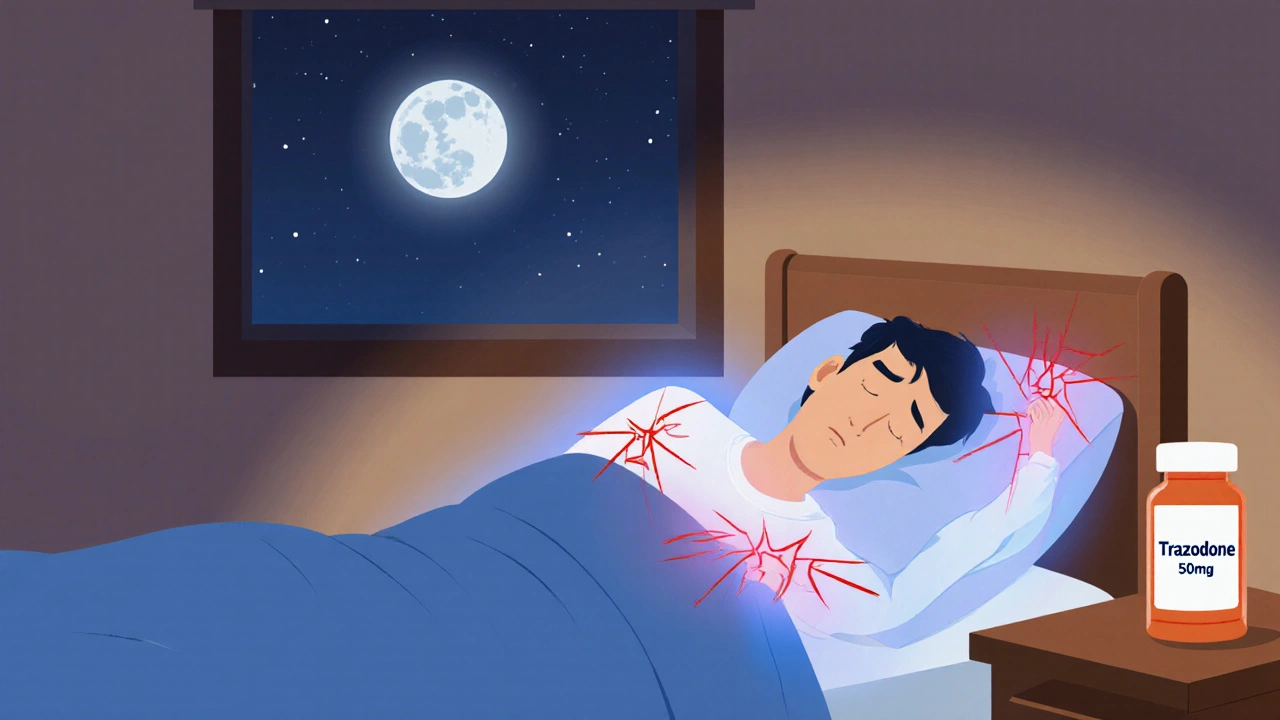
Trazodone for Fibromyalgia: How It Helps Sleep and Pain
Trazodone helps fibromyalgia patients sleep better and reduces pain sensitivity without addiction risk. Learn how low doses improve sleep quality, lower pain levels, and compare to other options like gabapentin and melatonin.
View More