
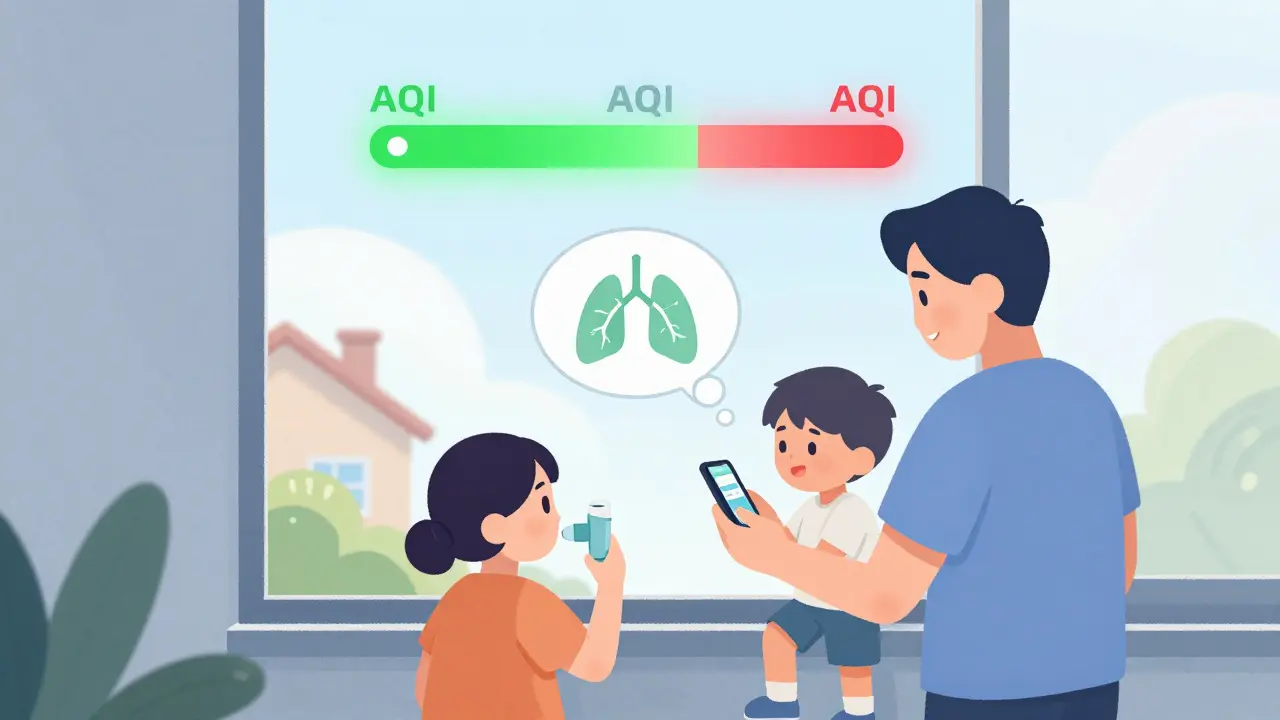
Every year, millions of people with asthma wake up wondering if today will be a good day to breathe. For many, the answer depends less on their inhaler and more on the air outside their window. Air pollution doesn’t just irritate the lungs-it actively triggers asthma attacks, increases emergency room visits, and makes daily life harder. If you or someone you care about has asthma, reducing exposure to polluted air isn’t optional. It’s essential.
How Air Pollution Makes Asthma Worse
Asthma isn’t just about allergies or genetics. It’s also deeply tied to the air we breathe. Pollutants like PM2.5 (tiny particles from traffic, fires, and factories), nitrogen dioxide from car exhaust, ozone from smog, and sulfur dioxide from industrial sources all inflame the airways. This inflammation causes tightening, coughing, wheezing, and shortness of breath-even in people who normally have well-controlled asthma.
A 2024 study tracked asthma patients over eight weeks and found that when pollution levels dropped-even temporarily-symptoms improved noticeably. People using air quality alerts saw their Asthma Control Test (ACT) scores jump from 20.0 to 21.5 on average. That might sound small, but for someone who used to need their rescue inhaler five times a week, that drop to two times can mean the difference between staying home and going to work.
During the pandemic lockdowns, researchers saw something remarkable: with fewer cars on the road and less industrial activity, asthma hospital visits dropped by nearly 40%. This wasn’t luck. It was proof that cleaner air directly improves health.
Check the Air Quality Index-Before You Step Outside
The Air Quality Index (AQI) isn’t just a number on a weather app. It’s your daily guide to whether it’s safe to go for a run, play outside with your kids, or open the windows. The EPA breaks it down clearly:
- AQI 51-100 (Moderate): Sensitive groups-including people with asthma-should cut back on long or heavy outdoor activity.
- AQI 101-150 (Unhealthy for Sensitive Groups): Everyone with asthma should avoid prolonged outdoor exertion.
- AQI 151-200 (Unhealthy): Avoid all outdoor exertion. Even walking to the mailbox can trigger symptoms.
- AQI 201+ (Very Unhealthy to Hazardous): Stay indoors. Close windows. Use your air purifier.
Free tools like AirNow.gov or apps like AirVisual give real-time AQI readings. Set up alerts so you don’t have to remember to check. One user in Ohio reported cutting her daughter’s rescue inhaler use in half after just six months of using these alerts. She didn’t change her meds-she just changed her timing.
Make Your Home a Clean Air Zone
You spend up to 90% of your time indoors. If your indoor air is polluted, your asthma has no safe haven. The good news? You can fix this.
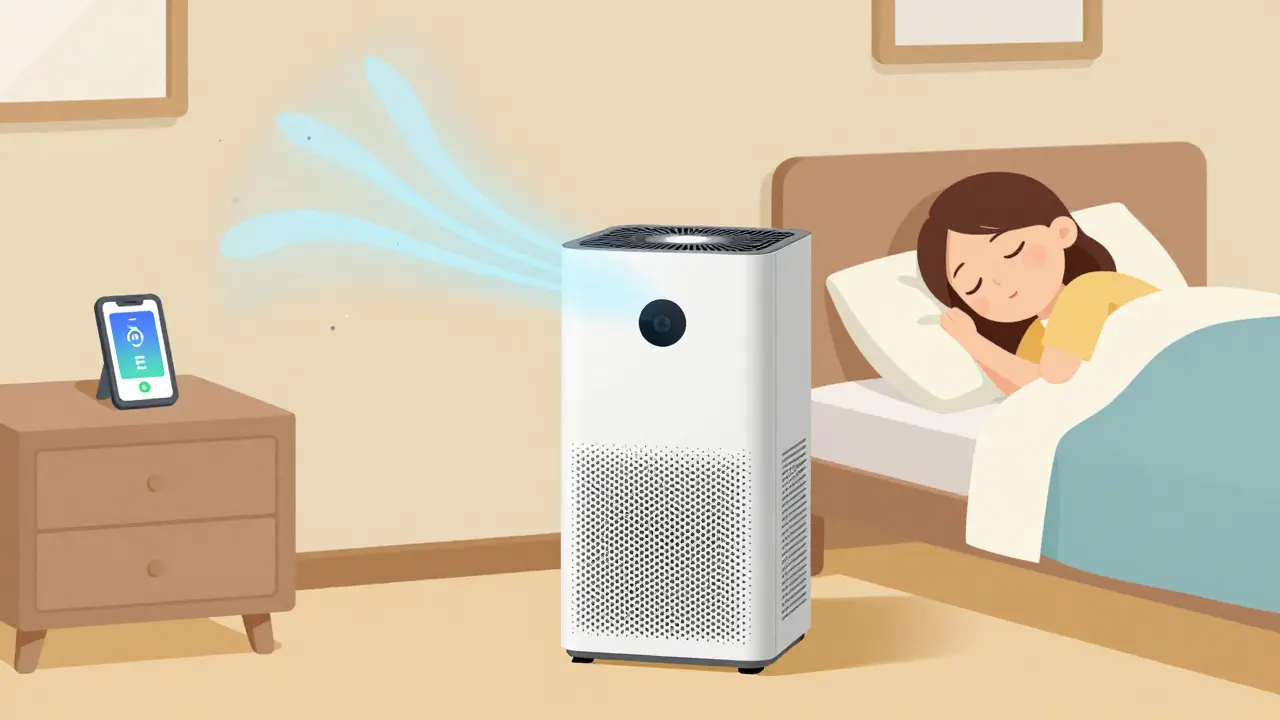
Start with a HEPA filter. These aren’t just fancy fans-they’re designed to capture 99.97% of particles as small as 0.3 microns, which includes most asthma-triggering dust, pollen, and smoke. Look for units with a MERV rating of 13-16 if you’re installing one in your HVAC system. For portable units, match the Clean Air Delivery Rate (CADR) to your room size. For a 300-square-foot bedroom, choose a purifier with a CADR of at least 200.
One Johns Hopkins study found homes with HEPA filters reduced indoor PM2.5 levels by 55-67%. That’s huge. But here’s the catch: 57% of people don’t replace their filters on time. Check the manufacturer’s schedule. Set a reminder on your phone. A dirty filter doesn’t clean air-it recirculates gunk.
Place your purifier where you spend the most time-usually the bedroom. Don’t tuck it against the wall. Energy Star says that cuts effectiveness by 30-50%. Keep it in the center of the room, away from curtains or furniture.
What About Masks and Respirators?
During wildfire season or high-pollution days, some people reach for N95 masks. They’re better than nothing, but they’re not a magic shield.
N95s block 95% of particles-if they fit perfectly. Most people don’t fit them right. Kids especially struggle. Dr. John Balmes from UCSF warns that masks can give a false sense of security. If your mask slips or you’re talking through it, you’re breathing in pollution anyway.
They’re best for short-term use: walking to the car, running a quick errand, or waiting for a bus. Don’t rely on them for all-day protection. And never use them instead of staying indoors when pollution is very high.
Schools, Workplaces, and Public Spaces
Asthma doesn’t stop when you leave home. Kids spend hours at school. Adults spend hours at work. And many of those places are near busy roads or poorly ventilated buildings.
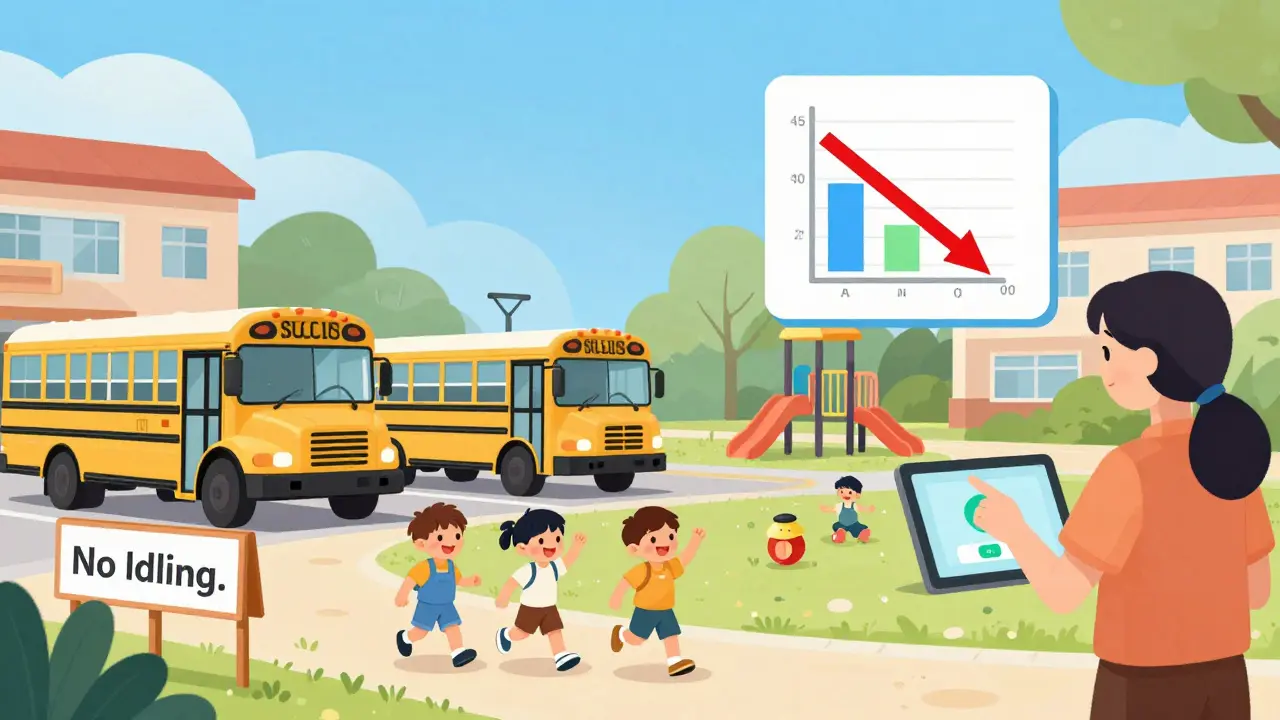
Massachusetts schools saw a 22-35% drop in indoor pollution after they moved bus parking away from playgrounds and banned idling. Parents reported 41% fewer asthma-related absences. Simple changes-like turning off engines while waiting for kids-make a measurable difference.
At work, ask about HVAC filters. If you’re in an office with no windows or poor ventilation, consider a small personal air purifier. The CDC recommends keeping indoor humidity between 30-50% to reduce mold and dust mites. A $150 dehumidifier can help with that.
And if you’re in construction, delivery, or any outdoor job? Talk to your employer. Some companies now offer air quality alerts and flexible scheduling during high-pollution days. If yours doesn’t, bring data. Show them the numbers. Healthier workers are more productive.
Policy Matters-And It’s Changing
Individual actions help. But real progress comes from policy. The EPA’s current annual PM2.5 standard is 12 μg/m³. The American Thoracic Society says it should be 8 μg/m³. Why? Because every 10 μg/m³ drop in PM2.5 leads to a 4.2% drop in asthma ER visits among children.
Big changes are happening. California is replacing all its diesel school buses with electric ones by 2035. Early results show a 60% drop in kids’ exposure to traffic pollution. London’s Ultra Low Emission Zone cut childhood asthma hospitalizations by nearly 12% in just two years.
The NIH is now testing wearable sensors that send personalized pollution alerts to parents of kids with asthma. Imagine getting a notification: “PM2.5 rising in your neighborhood. Keep your child indoors for the next 2 hours.” That’s not science fiction-it’s coming soon.
Why Most People Struggle to Act
Even with all this knowledge, only 32% of asthma patients consistently change their behavior based on air quality data. Why?
- 78% say they can’t skip work or school.
- 65% have childcare duties that make staying inside impossible.
- 52% say they can’t afford air purifiers or don’t know how to use them.
These aren’t excuses. They’re real barriers. That’s why solutions need to be practical, affordable, and supported by systems-not just individual willpower.
If you can’t afford a $700 purifier, look for sales, used units, or community programs. Some nonprofits give away HEPA filters to low-income families. Ask your doctor or local asthma foundation.
If you can’t stay indoors, wear a mask for short trips. Use your inhaler before going out. Plan errands for early morning or late evening when pollution is lower.
What Works Best-And What Doesn’t
Not all strategies are equal. Here’s what the data says:
| Strategy | Effectiveness | Cost | Ease of Use |
|---|---|---|---|
| Air Quality Alerts | High (15.8% ACT improvement) | Free | Easy |
| HEPA Filters | Very High (55-67% PM2.5 reduction) | $50-$800 | Moderate (requires maintenance) |
| Anti-Idling Policies | High (22-35% indoor reduction) | Free | Easy (community action) |
| N95 Masks | Moderate (only if fitted properly) | $1-$3 each | Hard (poor fit common) |
| Opening Windows | Low (indoor levels reach 60-80% of outdoor) | Free | Easy |
Bottom line: Alerts and HEPA filters are your best tools. Masks are a backup. Opening windows during high pollution? Don’t do it.
Start Small. Stay Consistent.
You don’t need to overhaul your life overnight. Pick one thing:
- Sign up for an air quality alert today.
- Buy a $60 HEPA purifier for your bedroom this week.
- Ask your child’s school if they have an anti-idling policy.
Track your symptoms. Notice if you use your inhaler less. That’s your proof it’s working.
Asthma control isn’t just about medication. It’s about the air you breathe. And that’s something you can change-starting today.
Can air pollution cause asthma, or just make it worse?
Air pollution doesn’t cause asthma in everyone, but it’s a major trigger-and a leading cause of new cases, especially in children. A 2019 study in The Lancet Planetary Health found that air pollution contributes to about 4 million new pediatric asthma cases every year worldwide. Long-term exposure to traffic-related pollutants like nitrogen dioxide and PM2.5 can damage developing lungs, making children more likely to develop asthma.
Do air purifiers really help with asthma?
Yes, if they’re the right kind and used correctly. HEPA filters remove 99.97% of airborne particles that trigger asthma, including dust, pollen, smoke, and pet dander. Studies show they can reduce indoor PM2.5 levels by more than half. But they must match your room size and have their filters replaced regularly. A poorly maintained purifier does more harm than good.
Is it safe to exercise outdoors if I have asthma?
It depends on the air quality. On days with AQI above 100, avoid prolonged or intense outdoor exercise. Even light activity like walking can trigger symptoms when ozone or PM2.5 levels are high. Check your local AQI before heading out. If it’s high, move your workout indoors-use a treadmill, do yoga, or follow a home workout video. Your lungs will thank you.
What’s the best time of day to go outside with asthma?
Early morning, before 10 a.m., is usually safest. Ozone builds up during the day as sunlight reacts with vehicle emissions. Pollution from traffic peaks during rush hours-7-9 a.m. and 4-7 p.m. Avoid those times. If you must go out, wear a mask and keep your rescue inhaler handy.
Can I use a humidifier to help my asthma?
Only if you keep it clean. Humidifiers add moisture, which can help with dry air-but they also breed mold and bacteria if not cleaned daily. The CDC recommends keeping indoor humidity between 30-50%. If you use one, clean it every three days with vinegar or bleach. Better yet, use a dehumidifier if your home is too damp. Mold is a common asthma trigger.
How do I know if my HEPA filter needs replacing?
Check the manufacturer’s guidelines-usually every 3 to 6 months. But if you live in a high-pollution area, or have pets, you may need to replace it sooner. Signs: your purifier sounds louder than usual, airflow feels weaker, or you notice more dust around the unit. Some models have filter replacement indicators. If yours doesn’t, set a calendar reminder. A clogged filter doesn’t clean air-it spreads it.
Are electric cars better for asthma sufferers?
Yes, significantly. Gas and diesel vehicles emit nitrogen dioxide and fine particles that worsen asthma. Electric vehicles produce zero tailpipe emissions. Studies show that switching to electric school buses reduces children’s exposure to traffic pollution by up to 60%. Even in cities with high pollution, cleaner transportation means cleaner air-and fewer asthma attacks.
What should I do if my asthma gets worse despite these steps?
Talk to your doctor. Poor asthma control despite exposure reduction may mean your medication needs adjusting. It could also signal exposure to something you missed-like mold, cleaning chemicals, or secondhand smoke indoors. An asthma educator can help you review your environment and create a personalized action plan. Don’t wait until you’re in the ER. Early action saves lives.
13 Comments

Lily Lilyy
January 7, 2026 AT 15:56 PM
This is so important. Every parent, teacher, and worker should read this. Small changes make big differences.
Start with one thing today. Maybe it’s turning off the car engine while waiting for school.
Every breath counts. You are not alone in this fight.
Thank you for sharing practical, doable steps. This gives hope.

Rachel Wermager
January 8, 2026 AT 13:15 PM
Let’s be precise: PM2.5 is a composite metric of organic carbon, elemental carbon, sulfates, nitrates, ammonium, and trace metals-each with distinct toxicokinetics.
The 55-67% reduction cited from HEPA filters assumes 0.3 micron particle capture efficiency under controlled conditions, which rarely reflects real-world airflow dynamics or filter saturation curves.
Moreover, the ACT score improvement from 20.0 to 21.5 is statistically significant (p<0.05) but clinically marginal-minimal clinically important difference (MCID) for ACT is 3 points.
And N95s? They’re not ‘better than nothing’-they’re suboptimal for prolonged use due to increased inspiratory resistance and CO2 rebreathing, which can induce hyperventilation in asthmatics.
Also, humidity control is critical-mold spores are IgE-mediated triggers, not just ‘common allergens.’
Bottom line: Individual mitigation is necessary but insufficient without structural policy shifts in urban planning and emissions regulation.

Tom Swinton
January 10, 2026 AT 10:39 AM
I just want to say-this article hit me right in the chest. Not literally, but emotionally. I’ve been managing asthma for 18 years, and I never realized how much my own habits were making it worse.
I used to open the windows every morning because ‘fresh air is good,’ but I live on a busy street. My daughter’s coughing fits at night? Totally tied to that.
Now I use an AirVisual app, I’ve got a HEPA filter in her room, and I check the AQI before I even let her out the door.
It’s not perfect, but it’s better. And honestly? I feel like I’m finally doing something real, not just relying on an inhaler like a crutch.
Also, I started asking the school about idling buses. They didn’t have a policy. Now they do. One person can make a difference.
And yes, the filter gets replaced on time now. I set a reminder. I even named it ‘BreatheEasy’ on my phone.
This isn’t just about health-it’s about dignity. The right to breathe without fear. Thank you for writing this.

Leonard Shit
January 10, 2026 AT 23:36 PM
so i bought a $40 purifier off amazon...
it makes a noise like a dying robot
and the filter says replace every 6 months
but i just... forgot
now it just blows dust around like a tiny tornado
oops
turns out i’m the problem
not the air
also i still open windows when it’s 180 aqi because i’m a rebel
and also i like the smell of exhaust
jk
but not really
jk
jk
ok fine i’ll replace the filter tomorrow
promise

Gabrielle Panchev
January 12, 2026 AT 18:17 PM
Everyone’s acting like this is revolutionary, but let’s be real-this is just common sense dressed up as a public health pamphlet.
Of course pollution affects asthma. We’ve known that since the 1950s London smog.
And yes, HEPA filters help-but only if you’re not one of the 57% who ignore maintenance schedules.
Meanwhile, we’re ignoring the root cause: car culture, suburban sprawl, and corporate lobbying that keeps diesel buses running.
So we tell people to buy $800 purifiers instead of demanding clean public transit?
That’s not empowerment-that’s victim-blaming with a side of consumerism.
Also, N95s? Please. Half the people wearing them are doing it wrong. And no, wearing one while biking 3 miles to work isn’t ‘safe’-it’s just a placebo with a strap.
Real change doesn’t come from apps and filters. It comes from shutting down coal plants and banning idling. Everything else is rearranging deck chairs on the Titanic.

Venkataramanan Viswanathan
January 13, 2026 AT 14:32 PM
Thank you for this clear, well-researched guide.
In India, we face even worse pollution, and asthma is often ignored due to lack of access to care.
Many families cannot afford HEPA filters, but they can use wet cloths over windows during peak hours, or stay indoors during 7–9 a.m. and 5–7 p.m.
Simple, low-cost actions matter.
Also, schools here rarely monitor air quality. I will share this with my nephew’s teachers.
Knowledge is the first step. Thank you for giving us the tools.

Matt Beck
January 14, 2026 AT 12:11 PM
we are all just atoms floating in a polluted sky 🌫️
but somehow we still believe we can control our breath?
the air doesn’t care if you’re rich or poor, asthmatic or not
it just is
and yet… we try
we set alerts
we buy purifiers
we whisper to our lungs: ‘please, just hold on’
maybe that’s the most human thing of all
not fixing the world
but holding on anyway 💙

Molly McLane
January 14, 2026 AT 13:30 PM
I used to think air purifiers were a scam until I got one for my bedroom.
My nighttime coughing stopped. My partner noticed.
Now I nag everyone I know to check their filters.
Also, I started a group chat with other asthma parents in my neighborhood.
We share AQI alerts, used filter deals, and vent about how tired we are of always planning around the weather.
It’s not a cure. But it’s community.
And sometimes that’s enough to keep going.

Katie Schoen
January 16, 2026 AT 07:30 AM
lol at the people who think masks are a real solution
like yeah, I’ll just wear an N95 while pushing a stroller to the grocery store
and then explain to my 3-year-old why her face is covered in plastic
and also why we’re not going to the park
and also why she can’t hug her grandma
thanks, I hate it
but also… I get it
because I’ve done it
and I still cry a little every time I see her wheezing after a walk
so yeah, masks are a band-aid
but so is my inhaler
and I’ll take the band-aid if it means she sleeps through the night
even if it’s dumb
even if it’s sad
even if it’s not enough

Tiffany Adjei - Opong
January 17, 2026 AT 19:37 PM
Let’s not pretend this is about asthma.
This is about privilege.
Only people with stable housing, flexible jobs, and disposable income can afford HEPA filters, air quality apps, and the luxury of staying indoors.
My cousin works two jobs, lives in a 500 sq ft apartment with no AC, and her kid’s asthma flares every time the AC unit cycles on.
She can’t ‘avoid outdoor exertion’-she has to walk to the bus stop.
She can’t ‘replace filters’-she’s choosing between rent and a new one.
So yes, the advice is technically correct.
But it’s also tone-deaf.
And that’s the real problem.
Not the air.
Us.

Ryan Barr
January 18, 2026 AT 15:57 PM
HEPA filters. Alerts. No windows.
Done.
Move on.

Cam Jane
January 19, 2026 AT 23:17 PM
Hey-if you’re reading this and thinking, ‘I can’t afford this,’ I hear you.
I’ve been there.
I bought my first HEPA filter secondhand for $35 off Facebook Marketplace.
It was dusty. I cleaned it. I replaced the filter with a $20 generic one from Costco.
It still works.
I use a free app. I don’t need the fancy one.
I asked my doctor about free programs-there’s one in my county that gives filters to low-income families.
You don’t need perfection.
You just need to start.
One thing.
Today.
And if you mess up? That’s okay.
Try again tomorrow.
You’re not failing.
You’re learning.
And your lungs? They’re already grateful.
You’ve got this.
Write a comment
Popular Posts

How Diet and Nutrition Influence Alopecia
Oct, 1 2025
Dana Termini
January 5, 2026 AT 16:19 PM
Just signed up for AirNow alerts after reading this. My kid’s inhaler use dropped from 4x/week to 1x in two weeks. No magic, just timing.
Don’t overcomplicate it. Check the index. Stay inside when it’s bad. That’s it.