
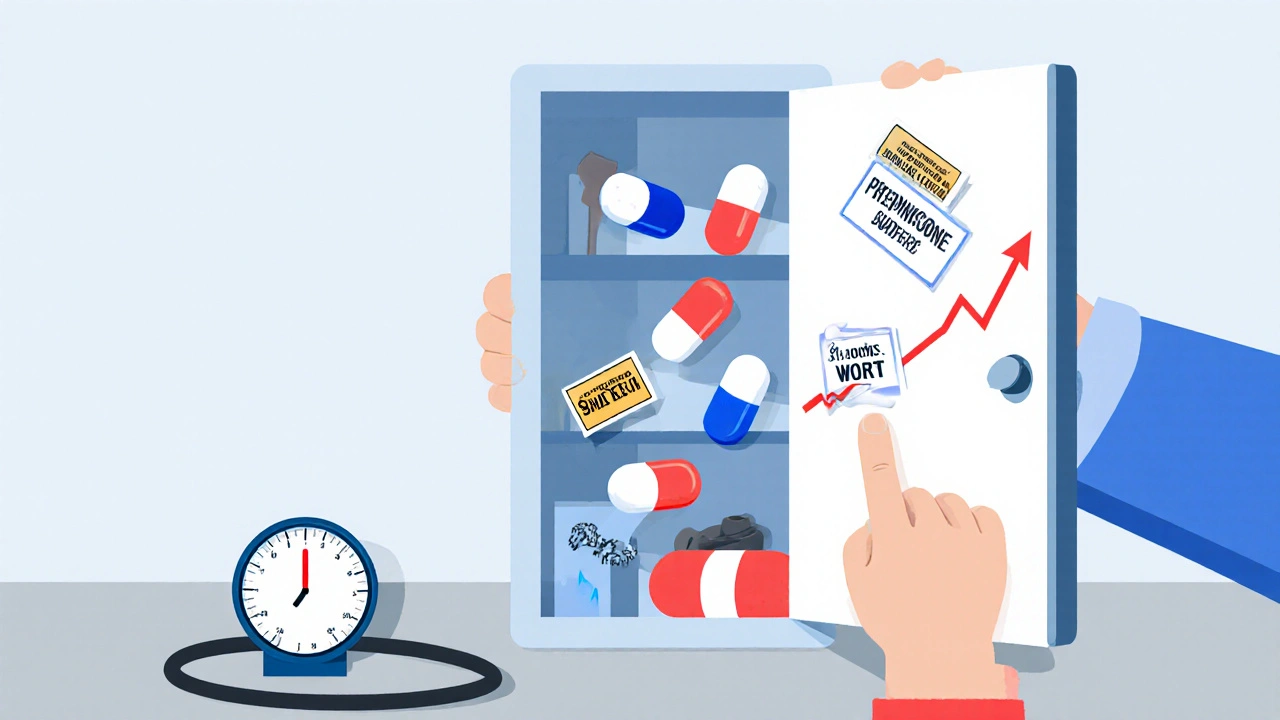
Medication-Blood Pressure Checker
Check Your Medications
Enter the medications you're taking (prescription, OTC, or supplements). This tool will identify any that may raise blood pressure and suggest alternatives.
Most people assume high blood pressure is just something that comes with age, stress, or poor diet. But what if your meds - the ones you’re taking to feel better - are actually making it worse? It’s not rare. In fact, medication-induced hypertension is behind 2-5% of all high blood pressure cases, and many of those cases go undiagnosed because no one connects the dots between the pill in your medicine cabinet and the number on your monitor.
What Medications Are Actually Raising Your Blood Pressure?
You might be surprised. It’s not just the big, scary drugs. Some of the most common ones you can buy over the counter are quietly pushing your blood pressure up.- NSAIDs like ibuprofen (Advil, Motrin) and naproxen (Aleve) are the most common culprits. Even at normal doses, ibuprofen can bump your systolic pressure up by 5-10 mm Hg in people who already have high blood pressure. That’s enough to push someone from controlled to dangerous territory.
- Corticosteroids - prednisone, dexamethasone - used for asthma, arthritis, or autoimmune conditions, are even more potent. At doses over 20 mg/day for more than 4 weeks, up to 60% of patients develop high blood pressure. Some see spikes of 15 mm Hg in just 24 hours.
- Antidepressants, especially SNRIs like venlafaxine (Effexor), increase blood pressure in 8-15% of users. The higher the dose, the worse it gets. At 225 mg/day, norepinephrine levels can triple, tightening blood vessels and forcing the heart to work harder.
- Decongestants like pseudoephedrine (Sudafed) and phenylephrine can spike your systolic pressure by 5-10 mm Hg within an hour. That’s why your blood pressure reading might look fine one day and then shoot up after you take a cold tablet.
- ADHD stimulants like Adderall and Ritalin raise BP in 10-25% of users. Dextroamphetamine has the highest risk - nearly 25% of patients on it develop hypertension.
- Herbal supplements like St. John’s Wort, licorice root, and ephedra aren’t regulated like drugs, but they can still cause dangerous spikes. One patient reported a hypertensive crisis after taking St. John’s Wort for depression - and no one warned them.
What’s worse? Many of these meds are taken together. A 2022 FDA analysis found that 28% of people with treatment-resistant hypertension were taking two or more BP-raising drugs at once. Your doctor might know about your blood pressure meds. But did they ask about your ibuprofen? Your cold pills? Your sleep aid?
How These Drugs Actually Work Against You
It’s not magic. Each of these drugs has a clear, measurable way of raising blood pressure.- NSAIDs block prostaglandins - chemicals your kidneys use to keep blood vessels open and flush out salt. Without them, your kidneys hold onto sodium and water. Your blood volume goes up. Your pressure follows.
- Corticosteroids act like aldosterone, a hormone that tells your kidneys to keep salt and dump potassium. That increases plasma volume by 10% in just three days. More fluid. More pressure.
- Decongestants stimulate alpha-receptors in your arteries, making them squeeze shut. That’s why your nose clears - but your arteries tighten too.
- Antidepressants like venlafaxine prevent your brain from reabsorbing norepinephrine. That chemical stays in your system longer, keeping your heart racing and your vessels constricted.
These aren’t side effects you can ignore. They’re physiological changes - measurable, predictable, and often reversible.
How to Know If Your Meds Are the Problem
You don’t need to guess. There are clear signs your blood pressure might be drug-induced.- Your BP was fine until you started a new medication - even if it was months ago.
- Your BP suddenly spiked after increasing the dose of a drug you’ve been on for a while.
- You have high blood pressure but no other risk factors (no obesity, no family history, no diabetes).
- Your BP drops after you stop a medication - even if you didn’t change anything else.
Doctors miss this all the time. A 2023 study found only 22% of primary care providers routinely ask hypertensive patients about NSAID or decongestant use. That’s a huge gap. If your doctor didn’t ask, it’s on you to bring it up.
How to Monitor Your Blood Pressure Properly
If you’re on any of these meds, you need to track your BP - not just once a year at the clinic.- Baseline before starting: Get your BP checked before you begin any new medication - especially NSAIDs, steroids, or antidepressants.
- Check at 1-2 weeks: That’s when most drugs start affecting pressure. Don’t wait.
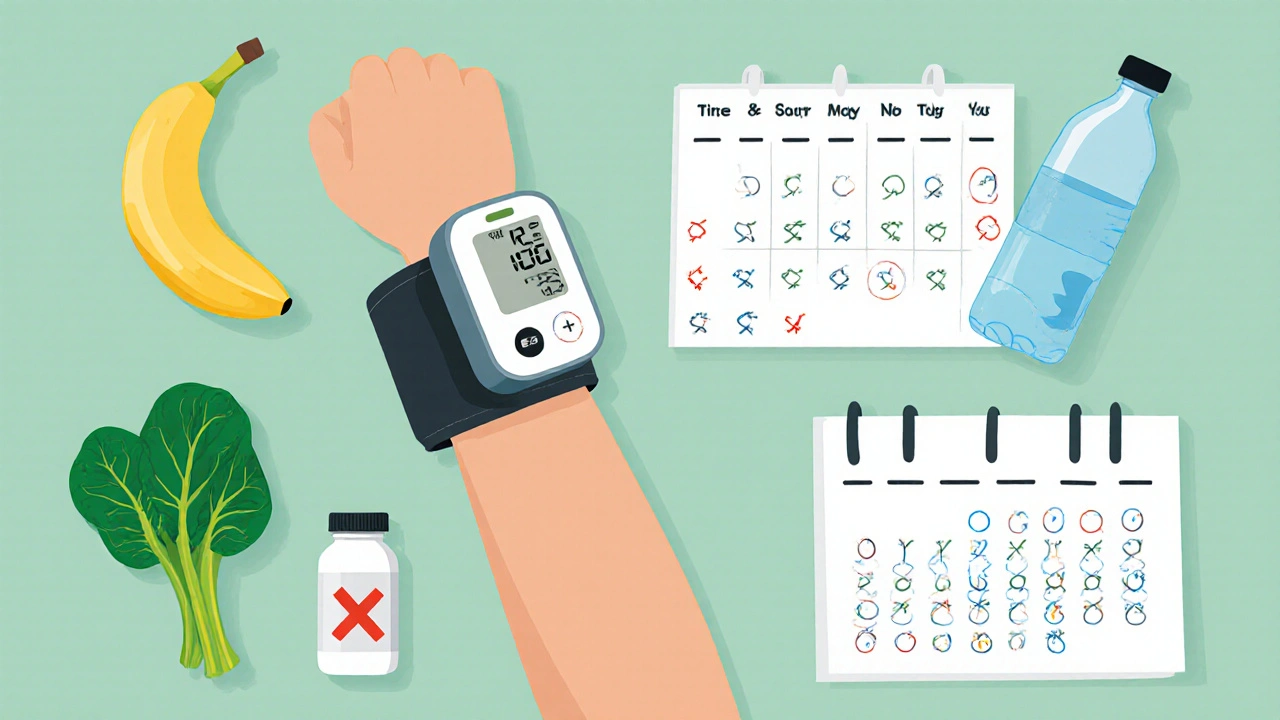
- Home monitoring: Take two readings in the morning and two at night, seven days in a row. Average the last six days. This gives a real picture - not a one-time snapshot at the doctor’s office.
- For high-risk cases: If you have kidney disease, diabetes, or are on multiple BP-raising drugs, ask about ambulatory blood pressure monitoring (ABPM). It tracks your pressure 24 hours a day. The diagnostic threshold? A daytime average over 135 mm Hg systolic.
- For steroid users: Check your BP daily for the first month. Watch for orthostatic changes - if your standing BP is more than 20/10 mm Hg lower than your sitting BP, that’s a red flag.
Don’t rely on the machine at the pharmacy. Those are often inaccurate. A validated home monitor - the kind that wraps around your upper arm - is your best tool.
What to Do If Your Meds Are Causing High Blood Pressure
The good news? In most cases, this is fixable.- Stop or reduce the offender: If you can safely stop the drug, hypertension often resolves in 2-4 weeks. For NSAIDs, 60-70% of cases clear up with discontinuation. For decongestants, it’s even faster - sometimes within days.
- Switch to safer alternatives: Need pain relief? Try acetaminophen (Tylenol) - it doesn’t raise BP. Need an anti-inflammatory? Celecoxib (Celebrex) has a much smaller effect - only a 2.4 mm Hg average rise compared to 5.7 mm Hg for ibuprofen.
- Don’t stop steroids cold: If you’re on prednisone for an autoimmune disease, never quit without your doctor’s help. But work with them to find the lowest effective dose. Sometimes, switching to a topical steroid or biologic can cut the systemic dose.
- Use the right BP meds: If you need to keep the offending drug, treat the high BP with calcium channel blockers (like amlodipine) or thiazide diuretics (like hydrochlorothiazide). Beta-blockers? Avoid them. They’re weak against vasoconstriction. One trial showed only 45% response rate vs. 72% for calcium blockers.
Lifestyle Changes That Help - Even With Meds
You don’t have to wait for your doctor to fix everything. Small changes make a big difference.- Reduce sodium to under 1,500 mg per day. That’s about two-thirds of a teaspoon of salt. Most of it comes from packaged food, not your salt shaker.
- Boost potassium. Aim for 2,500-3,500 mg/day from bananas, spinach, sweet potatoes, beans, and yogurt. Potassium helps your body flush out sodium.
- Move daily. 150 minutes of brisk walking per week - just 30 minutes, five days a week - can drop your BP by 5-8 mm Hg.
- Limit alcohol and avoid stimulants. Even one drink can raise BP in people on certain meds.
These aren’t just "nice to have" tips. In drug-induced hypertension, they’re part of the treatment plan.
What Your Doctor Should Be Doing
You shouldn’t have to be the one catching this. Your doctor should have a system.- Ask about every medication - OTC, herbal, supplements, even eye drops.
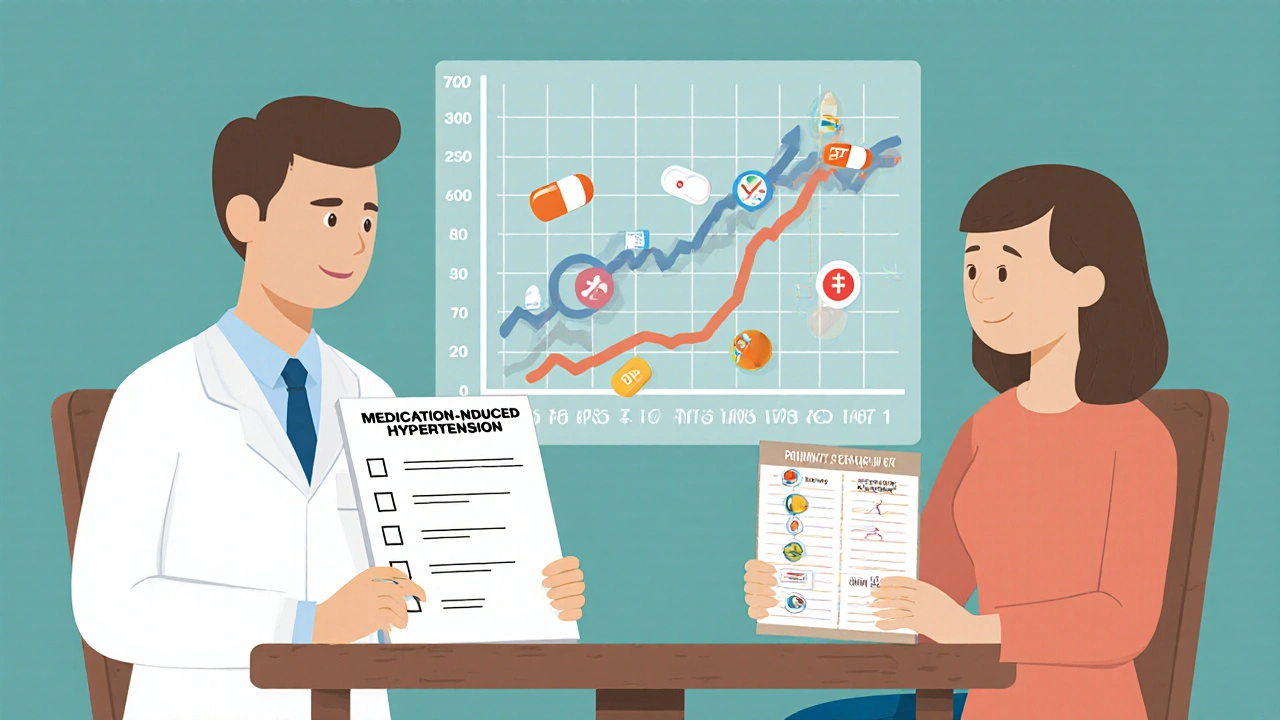
- Use a checklist - like the American Heart Association’s Medication-Induced Hypertension Checklist - at every visit.
- Review your meds every time you refill a prescription.
- Know the 12 most common BP-raising drugs - and their alternatives.
Right now, only 38% of U.S. hospitals have formal screening protocols. That’s unacceptable. If your doctor doesn’t ask, ask them. Bring a list. Write it down. Show them the research.
Real Stories, Real Consequences
On Reddit’s r/Hypertension, over 280 people shared stories like this:"I took ibuprofen for my back pain for years. My BP was 150/95. My doctor said it was just aging. I stopped the ibuprofen, switched to Tylenol, and within three weeks, my BP dropped to 120/78. No other changes. I was never warned."
Another patient on Zocdoc wrote:
"My doctor caught that my sinus med had pseudoephedrine. Switched me to a non-decongestant version. My BP went from 160/100 to 122/76 in three weeks. Why didn’t anyone tell me?"
These aren’t outliers. They’re common. And they’re preventable.
What’s Changing - And What’s Next
The tide is turning. In 2022, the FDA required stronger warnings on NSAID labels. In 2023, the American College of Cardiology launched a free online calculator that predicts your BP risk based on your meds. A major NIH trial is testing pharmacist-led medication reviews in 45 clinics - early results show a 28% drop in uncontrolled hypertension.By 2024, the AHA/ACC guidelines will include specific algorithms for managing BP spikes from NSAIDs, steroids, and antidepressants. The message is clear: medication-induced hypertension isn’t a footnote. It’s a core part of hypertension care.
Can over-the-counter painkillers really raise blood pressure?
Yes. NSAIDs like ibuprofen and naproxen are among the most common causes of medication-induced hypertension. Ibuprofen can raise systolic blood pressure by 5-10 mm Hg in people with existing high blood pressure. Even people with normal BP can see a 3-5 mm Hg increase after just two weeks of regular use. Acetaminophen (Tylenol) is a safer alternative for pain relief.
How long does it take for blood pressure to drop after stopping a medication that causes hypertension?
It varies. For NSAIDs and decongestants, blood pressure often normalizes within 2 to 4 weeks after stopping the drug. For corticosteroids, it can take longer - up to 6-8 weeks - especially if they were taken for months. Antidepressants may require a gradual taper, and BP changes can occur over several weeks. Always consult your doctor before stopping any medication.
Are herbal supplements safe for people with high blood pressure?
No, not all are. Supplements like St. John’s Wort, licorice root, and ephedra can significantly raise blood pressure. Many people don’t realize these are active substances - they’re not regulated like prescription drugs. Always tell your doctor about every supplement you take. If you have high blood pressure, avoid these unless approved by your provider.
Should I stop taking my blood pressure medication if I start a new drug that raises BP?
No. Never stop prescribed blood pressure medication without medical advice. Instead, talk to your doctor about the new drug you’re starting. They may adjust your current BP meds - for example, switching to a calcium channel blocker - or recommend a safer alternative to the new medication. The goal is to manage both conditions safely together.
Can I use a home blood pressure monitor to track medication effects?
Absolutely. Home monitoring is the best way to catch medication-induced hypertension. Take readings twice daily for seven days before and after starting a new drug. Average the last six days’ readings. This gives you a clear picture of whether the medication is affecting your pressure - and helps your doctor make better decisions.
Why don’t doctors always warn patients about this?
Many doctors simply don’t think about it. A 2023 study found only 22% of primary care providers routinely screen for NSAID use in hypertensive patients. OTC meds are often seen as "harmless." But the data shows they’re a major cause of uncontrolled blood pressure. It’s up to you to speak up - bring your full medication list to every appointment, including supplements and cold remedies.
Is there a test to confirm my high blood pressure is caused by medication?
There’s no single blood test. Diagnosis is based on timing and response. If your BP rose after starting a new drug and dropped after stopping it - with no other changes - that’s strong evidence. Ambulatory blood pressure monitoring (ABPM) can help confirm patterns. The key is a careful review of your meds and BP history - not a lab result.
What’s the safest pain reliever for someone with high blood pressure?
Acetaminophen (Tylenol) is generally the safest choice, with no significant effect on blood pressure at doses up to 3,000 mg per day. Celecoxib (Celebrex), a COX-2 inhibitor, is a better NSAID option than ibuprofen - it raises BP by only 2.4 mm Hg on average, compared to 5.7 mm Hg for ibuprofen. But even celecoxib should be used at the lowest dose for the shortest time possible.
Next Steps: What You Can Do Today
- Write down every medication, supplement, and OTC product you take - even the ones you use once a month.
- Check your blood pressure at home if you haven’t already. Use a validated upper-arm monitor.
- Bring your list to your next doctor’s visit. Ask: "Could any of these be raising my blood pressure?"
- If you’re on long-term NSAIDs, corticosteroids, or antidepressants, ask if there’s a safer alternative.
- Start tracking your sodium intake. Cut processed foods. Add more potassium-rich foods.
High blood pressure doesn’t always come from what you eat or how you live. Sometimes, it comes from what you’re taking to feel better. But if you know the signs, monitor smartly, and speak up - you can fix it. Your blood pressure doesn’t have to be a side effect of your treatment.
11 Comments

j jon
October 29, 2025 AT 11:23 AM
This is the kind of info no one talks about. My grandma’s on prednisone and her BP spiked overnight. No one warned us. Glad someone’s putting this out there.

Kathryn Conant
October 30, 2025 AT 06:57 AM
If you’re on meds and your BP’s out of whack, don’t just accept it. Track it. Write it down. Bring it to your doctor with a printout of this post. You’re not being annoying-you’re saving your life. This isn’t just advice, it’s survival.

Patrick Ezebube
November 1, 2025 AT 01:27 AM
Big Pharma doesn’t want you to know this. They profit off you being sick and on more pills. NSAIDs? Steroids? They’re all part of the system. They even hide the risks in tiny print because they know you won’t read it. Wake up. The system is rigged.

Sabrina Bergas
November 2, 2025 AT 10:53 AM
Actually, most of this is overstated. The studies show NSAIDs only affect people with preexisting renal issues. And let’s be real-your ‘home monitor’ is probably inaccurate as hell. The real issue is overdiagnosis. People panic over 135 systolic like it’s a death sentence.

Melvin Thoede
November 4, 2025 AT 08:01 AM
Thank you for this. I’ve been taking Effexor for 3 years and never knew it was raising my BP. Just got my home monitor last week. First reading was 158/92. I’m scheduling an appointment with my doc to talk about alternatives. You’re not alone.

matt tricarico
November 4, 2025 AT 23:02 PM
The data here is superficial at best. You cite FDA analyses and AHA guidelines like they’re gospel, but you ignore confounding variables-salt intake, sleep apnea, cortisol rhythms. The real issue is the medical community’s obsession with pharmacological reductionism. You reduce complex physiology to a list of drugs and call it ‘management.’ That’s not science. That’s a PowerPoint slide.
And don’t get me started on home monitors. Most are calibrated for middle-aged white men. The validation studies? Flawed. You think your 122/76 is accurate? It’s probably 135/85. You’re optimizing a measurement error.
Also, St. John’s Wort causes serotonin syndrome in 2% of cases. You mention hypertension but omit the 17% of patients who develop hepatotoxicity. That’s not transparency. That’s cherry-picking.
And why no mention of beta-blockers’ role in masking hypoglycemia in diabetics on these drugs? Or the fact that calcium channel blockers can cause gingival hyperplasia? You’re not informing. You’re performing.
This isn’t patient empowerment. It’s performative health literacy for people who think ‘checking BP’ is a substitute for critical thinking.

Rachel Marco-Havens
November 6, 2025 AT 01:15 AM
People need to stop blaming the system and start taking responsibility. If you’re taking ibuprofen every day for a headache you got from stress you created by not sleeping or eating right then maybe the problem isn’t the drug it’s your lifestyle. You don’t get to be lazy and then demand the system fix your choices. This post reads like a victim narrative wrapped in medical jargon.
And don’t get me started on supplements. If you’re taking licorice root because you think it’s ‘natural’ then you deserve what you get. Nature doesn’t care if you’re healthy it just kills you slower.
Doctors aren’t the enemy. Ignorance is. And you’re all just waiting for someone else to fix your problems instead of reading the damn label.

Jules Tompkins
November 7, 2025 AT 03:22 AM
Bro I took Sudafed for a cold last month and my BP went from 118/76 to 160/100. I thought I was having a heart attack. Turned out it was the decongestant. I’ve been scared to take anything OTC since. This post saved me from a stroke.

Suzanne Lucas
November 7, 2025 AT 12:56 PM
I just found out my antidepressant was raising my BP and I cried for an hour. Not because I was scared-because I felt so stupid for not asking. Why does no one tell you this stuff? I feel like I’ve been lied to my whole life.

jerry woo
November 7, 2025 AT 22:52 PM
Let’s cut the crap. The real scandal isn’t the meds-it’s the fact that primary care is a drive-thru. You get 12 minutes a year to explain your entire existence and somehow they’re supposed to catch that your Tylenol PM habit is causing nocturnal hypertension? Please. The system is designed to fail you. The only reason this post even exists is because someone had to Google their symptoms after their doctor shrugged and said ‘it’s just aging.’ We’re not patients-we’re data points with insurance cards.
And don’t even get me started on the ‘check your BP at home’ advice. You think a $40 monitor from Walmart is going to outperform a 24-hour ABPM done by a trained technician? You’re not monitoring. You’re performing self-surveillance because the system abandoned you. The real fix? Universal healthcare with continuity of care. Not another damn checklist.
Meanwhile, I’m still on 40mg of prednisone for my lupus. My BP’s 170/105. My doctor says ‘we’ll adjust your amlodipine.’ But guess what? He didn’t ask about my OTC melatonin or the turmeric gummies I take because ‘they’re natural.’ So yeah. We’re all just rats in a maze with a blood pressure cuff on our arm.
Write a comment
Popular Posts

Top 9 Alternatives to Canadapharmacy.com in 2025
Feb, 2 2025
Jillian Fisher
October 29, 2025 AT 04:44 AM
I never realized how many OTC drugs could mess with BP. I’ve been taking ibuprofen for migraines for years and just found out my BP’s been creeping up. I switched to Tylenol last week and already feel different.