
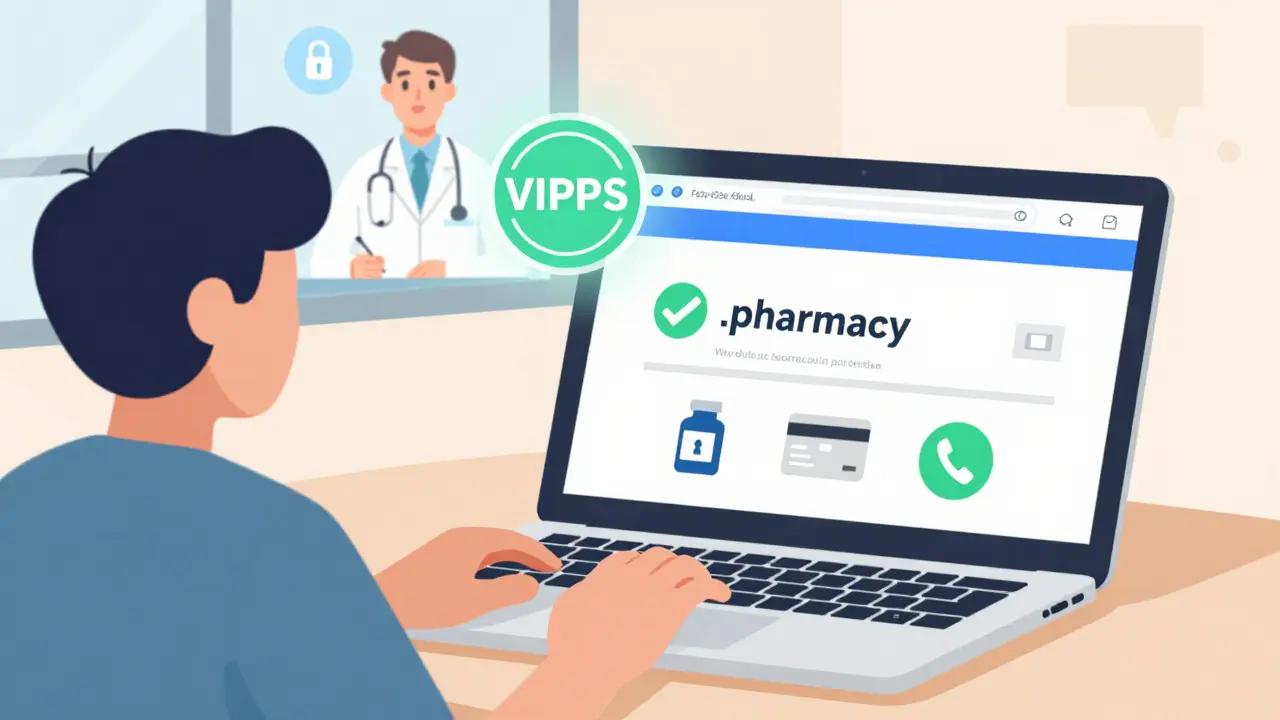
Buying medicine online sounds convenient-until you realize how many fake websites are out there. In 2023, the FDA estimated that 96% of online pharmacies are illegal. These sites sell fake, expired, or toxic drugs. Some pills labeled as Viagra contained 200-300% more active ingredient than they should. Others had no medicine at all. The risk isn’t theoretical-it’s real, and it’s growing. But there’s a way out. Licensed online pharmacies exist. They’re legal, safe, and regulated. The problem isn’t online pharmacies themselves. It’s knowing which ones to trust.
What Makes an Online Pharmacy Licensed?
A licensed online pharmacy doesn’t just look professional. It follows strict rules set by health regulators. In the U.S., that means being accredited by the Verified Internet Pharmacy Practice Sites (VIPPS) program, run by the National Association of Boards of Pharmacy (NABP). To earn this seal, a pharmacy must meet 17 specific requirements. That includes having a physical address in the U.S., employing licensed pharmacists, requiring a valid prescription before shipping, and using secure encryption (HTTPS) on their website.Legitimate pharmacies also let you talk to a real pharmacist. Not a chatbot. Not a script. A licensed professional who can answer your questions about side effects, interactions, or dosage. If a site says, "No prescription needed," walk away. That’s the biggest red flag. Even in countries with looser rules, like Canada, you still need a prescription from a licensed doctor. Websites claiming to be Canadian but operating from elsewhere are scams.
How to Spot a Fake Pharmacy
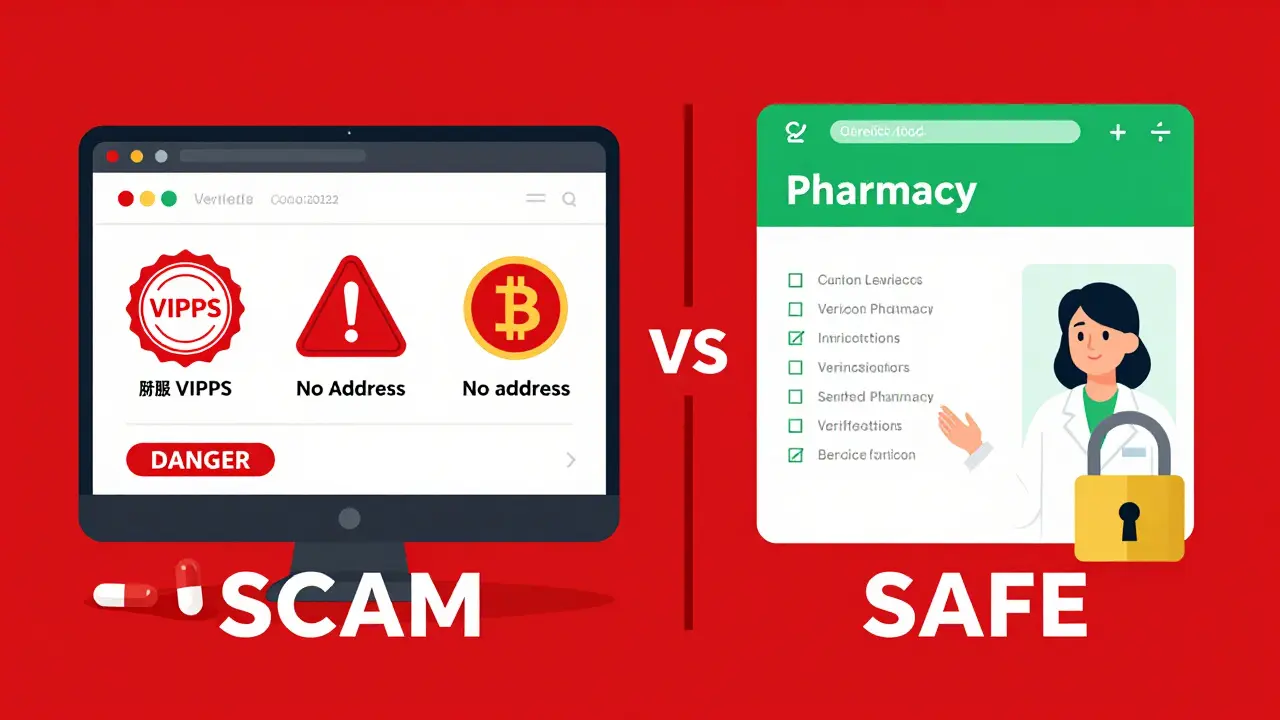
Fake pharmacies are good at copying real ones. They use similar logos, fake reviews, and even counterfeit VIPPS seals. But they always slip up. Here’s what to look for:- No physical address or phone number listed
- Only accepts cryptocurrency or wire transfers
- Offers "miracle cures" or unapproved drugs
- Claims to ship from Canada but has no Canadian pharmacy license
- Doesn’t require a prescription-or lets you upload a fake one
One common trick: fake websites use URLs that look real. Like "pharmacy24.com" or "canadapharmacy.net." But real VIPPS pharmacies use clean domains, often ending in .com or .pharmacy. The .pharmacy domain is especially important. Only licensed pharmacies can get it. You can check if a site owns one by visiting NABP’s website and searching their directory.
Another warning sign: prices that are too good to be true. A 30-day supply of Lipitor for $5? That’s not a deal. It’s a trap. Legitimate pharmacies don’t undercut prices this way because they pay for licensing, staff, inspections, and compliance. If a site’s price is half of what your local pharmacy charges, it’s likely selling counterfeit drugs.
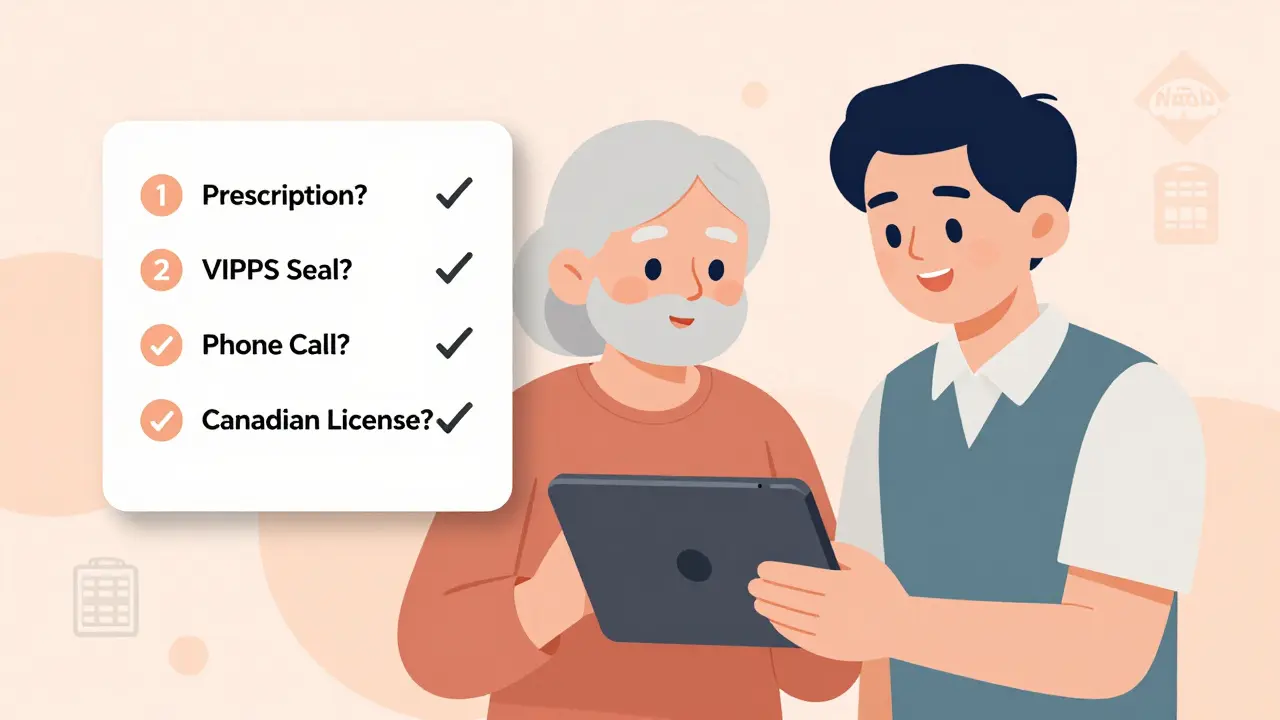
Verify Before You Buy: The 4-Step Checklist
Don’t guess. Don’t trust. Verify. Here’s how:- Check for a prescription requirement - If they don’t ask for one, it’s illegal. Legitimate pharmacies verify your prescription with your doctor before shipping.
- Look for the VIPPS seal - Click on it. It should link directly to NABP’s official VIPPS directory. If it goes to a random page or doesn’t work, it’s fake.
- Use the BeSafeRx tool - Go to BeSafeRx.com, a free FDA-backed site. Enter the pharmacy’s name or URL. It checks if they’re licensed in any U.S. state.
- Call them - If they have a phone number, call. Ask to speak to a pharmacist. If they can’t connect you, or if the person sounds like they’re reading from a script, walk away.
For Canadian pharmacies, check with your provincial pharmacy regulator. For example, if you’re told it’s a British Columbia pharmacy, go to the College of Pharmacists of BC’s website and search for the pharmacy’s name. If it’s not there, it’s not real.
What About PharmacyChecker?
PharmacyChecker is another trusted resource. They started in 2003 with just five verification rules. Now they use 86 criteria, including mystery shopper visits and onsite inspections. Their list includes pharmacies from the U.S., Canada, the UK, Australia, and India. But here’s the catch: not all are approved for every drug. Some are excluded because they ship controlled substances or temperature-sensitive medications that can’t be safely mailed.PharmacyChecker’s verification is more detailed than VIPPS, but it’s not a replacement. Use both. If a pharmacy is on PharmacyChecker’s list and has the VIPPS seal, you’re looking at one of the safest options.
What If You Already Bought From a Fake Site?
If you’ve already ordered from a suspicious site, stop using the medication immediately. Don’t throw it away. Take a photo and report it. The FDA’s MedWatch program tracks adverse events from fake drugs. In 2022 alone, they received over 1,800 reports linked to online pharmacies-67% involved counterfeit pills.Also, check your bank statement. Did you pay with a credit card? Dispute the charge. Legitimate pharmacies accept major cards. If they only took a wire transfer or Bitcoin, you have little recourse. Report the site to the FTC at ReportFraud.ftc.gov. And tell your doctor. They need to know if you’ve taken something unsafe.
Why This Matters More Than Ever
In 2022, the U.S. online pharmacy market hit $105 billion. By 2025, McKinsey predicts nearly half of all prescriptions will be filled online. That’s not going away. But if you don’t know how to verify a pharmacy, you’re gambling with your health.Legitimate online pharmacies offer real benefits: lower prices, home delivery, and access for people in rural areas. But those benefits only exist if you pick the right one. The same site that delivers your blood pressure meds safely could also deliver a pill that stops your heart. There’s no middle ground.
What to Do Next
Start today. If you use an online pharmacy, go back to their site and verify them using the steps above. If you’ve never used one before, don’t rush. Pick one that’s on both the VIPPS and PharmacyChecker lists. Call them. Ask questions. See how they respond.And if you’re helping an older relative order meds online? Sit with them. Show them how to check the VIPPS seal. Teach them to spot fake websites. They’re the most vulnerable group-and the most targeted.
Safety isn’t complicated. It just takes a few minutes of verification. That’s all it takes to avoid a life-threatening mistake.
How do I know if an online pharmacy is licensed in the U.S.?
Look for the VIPPS seal from the National Association of Boards of Pharmacy (NABP). Click on the seal-it should link to NABP’s official directory. You can also use the FDA’s BeSafeRx tool to search the pharmacy’s name or website. Licensed U.S. pharmacies must have a physical address, a licensed pharmacist on staff, and a valid state pharmacy license.
Can I trust online pharmacies based in Canada?
Some can, but many fake sites claim to be Canadian. Always verify the pharmacy’s license through the provincial regulatory body-like the College of Pharmacists of Ontario or British Columbia. Don’t trust website claims. Also check if they have a .pharmacy domain or VIPPS accreditation. Canadian pharmacies must still require a valid prescription.
What payment methods should I avoid?
Avoid wire transfers, cryptocurrency, or prepaid cards. Legitimate pharmacies accept credit cards, debit cards, or secure payment platforms like PayPal. If a site only offers risky payment options, it’s a red flag. These methods make it nearly impossible to get your money back if something goes wrong.
Do licensed online pharmacies sell all types of medications?
No. Even licensed pharmacies may not ship certain drugs. Controlled substances like opioids or stimulants often require special handling and are excluded from mail-order programs. Temperature-sensitive medications like insulin may also be restricted unless the pharmacy has special packaging. Always check the pharmacy’s list of available drugs before ordering.
What should I do if I received fake medicine?
Stop taking the medication immediately. Take a photo of the pills and packaging. Report it to the FDA through MedWatch and to the FTC at ReportFraud.ftc.gov. Contact your doctor to discuss any side effects. If you paid with a credit card, dispute the charge. Fake medicine can be dangerous-even deadly.
Is it safe to use a pharmacy recommended by a friend?
Not necessarily. Even trusted friends can be misled by fake websites. Always verify the pharmacy yourself using official tools like VIPPS or PharmacyChecker. A recommendation doesn’t replace due diligence. The same site that worked for someone else could be a scam today.
Why do some websites have fake VIPPS seals?
Scammers copy real seals to appear legitimate. The VIPPS seal is easy to steal but hard to verify without checking NABP’s official directory. Always click the seal to confirm it links to the real NABP website. If it goes to a different page or doesn’t work, it’s fake. NABP warns that counterfeit seals are becoming more common.
11 Comments

Vicky Zhang
January 15, 2026 AT 01:22 AM
I just want to say thank you for writing this. My mom is 78 and she's been buying her blood pressure meds from some "discount pharmacy" she found on Google. I was terrified. I sat down with her last weekend, showed her the VIPPS seal, called the pharmacy, and we verified everything together. She cried. Not because she was mad - because she finally felt safe.
It’s not about being tech-savvy. It’s about being cared for. And you just gave us the map to get there. Thank you. Seriously.
Everyone reading this - if you have an older parent, grandparent, or neighbor - do this with them. It takes 10 minutes. It could save their life.

Allison Deming
January 16, 2026 AT 17:33 PM
It is profoundly disturbing that the American public has been conditioned to treat pharmaceuticals like fast fashion - cheap, disposable, and unexamined. The commodification of health has reached a point of moral bankruptcy. We have allowed the erosion of institutional trust to be replaced by algorithmic convenience. The FDA’s warning is not a suggestion - it is a last cry from a dying system of accountability.
When you choose to purchase medication without verification, you are not merely risking your life - you are surrendering your dignity to a marketplace that profits from your ignorance. The .pharmacy domain exists for a reason. Use it. Or perish.
This is not hyperbole. This is epidemiology.

Susie Deer
January 18, 2026 AT 14:58 PM
Foreign pharmacies are a joke. USA only. No exceptions. If you're not buying from a US-licensed pharmacy you're asking for trouble. End of story. No Canadian, no Indian, no "international" BS. Your life is worth more than a few bucks. Stop being a sucker.
Buy local. Pay more. Live longer.

TooAfraid ToSay
January 18, 2026 AT 16:56 PM
Wow. So the real threat isn’t the fake pharmacies - it’s the government pushing you to trust only the ones they approve. Who even is NABP? Who funds them? Why do they get to decide what’s "safe"? What if the whole VIPPS thing is just a cartel to keep prices high and control the market?
I bought my insulin from a site in Pakistan for 1/10th the price. I’m alive. The FDA says I’m lucky. I say they’re scared of competition.
Wake up people. This isn’t safety. It’s control.

Dylan Livingston
January 18, 2026 AT 19:33 PM
Oh honey. You really think a seal on a website is going to stop someone from selling you rat poison labeled as Adderall? Please. The entire system is rigged. The "licensed" pharmacies? They’re owned by the same conglomerates that own your insurance, your doctor’s office, and your local Walmart. They just want you to buy from them instead of the shady ones. The difference is branding, not safety.
And don’t get me started on PharmacyChecker. They’re funded by Big Pharma. They’ll tell you a site is "verified" while quietly excluding the ones that actually undercut prices. It’s all theater.
Just don’t buy anything online. Ever. Go to a clinic. Pay $400 for a 30-day supply. That’s the real safety protocol - financial torture disguised as healthcare.

Sarah -Jane Vincent
January 20, 2026 AT 01:06 AM
They’re all scams. Every single one. The VIPPS seal? Fake. The .pharmacy domain? Bought by the same people who run the fake ones. The FDA? They’re in bed with the big pharma companies. I’ve seen the documents. They don’t want you safe - they want you dependent. Why? Because if you’re buying from a real pharmacy, you’re paying $300 for insulin. But if you’re buying from a "fake" one? You’re paying $15 - and you’re not dying. You’re surviving.
They call it counterfeit. I call it justice.
And if you think I’m crazy, go check the death stats. More people die from prescription drugs approved by the FDA than from "fake" ones. But you won’t hear that on CNN, will you?

Henry Sy
January 21, 2026 AT 01:01 AM
Man I used to be the guy who bought pills off Instagram. Thought I was slick. Bought "Xanax" from a guy named "DadJokes420" for $5 a pill. Turned out it was just crushed aspirin and glitter. I had a panic attack for three hours. Didn’t even know why.
Then I found a real pharmacy through BeSafeRx. Paid a little more. Got a real pharmacist on the phone who asked me about my anxiety meds. Actually listened. Didn’t rush me.
Turns out real healthcare doesn’t scream "BUY NOW" in neon letters. It whispers. And it waits.
Don’t be the guy who buys glitter.

Anna Hunger
January 21, 2026 AT 02:56 AM
It is imperative that individuals exercise due diligence when procuring pharmaceuticals through digital channels. The presence of a Verified Internet Pharmacy Practice Sites (VIPPS) accreditation, coupled with a verifiable physical address and the employment of licensed pharmacists, constitutes the minimum standard for legitimacy. Furthermore, the absence of a requirement for a valid prescription constitutes a clear violation of federal and state regulatory frameworks.
It is also noteworthy that the use of cryptocurrency or wire transfers as primary payment methods is an indicator of noncompliance with established financial and consumer protection protocols. One must not confuse convenience with compliance.
Verification is not optional. It is a non-negotiable component of responsible self-care.

Jason Yan
January 21, 2026 AT 16:28 PM
There’s something beautiful about the fact that you can order medicine from your couch - if you know how to do it right. It’s not about being lazy. It’s about being smart. But we’ve turned safety into a checklist instead of a mindset.
That VIPPS seal? It’s not magic. It’s proof someone cared enough to jump through hoops so you wouldn’t have to. The pharmacist who answers your call? That’s not a script. That’s a human being who’s seen what happens when people skip the steps.
It’s not about trust. It’s about respect. Respect for the science. Respect for the people who made it possible. Respect for your own life.
Take five minutes. Verify. Then breathe easy.

shiv singh
January 23, 2026 AT 16:23 PM
Why do we even need licensed pharmacies? The government controls everything. If you want to live, you pay. If you want to die, you buy online. That’s the system. And now they want us to worship their seals and domains like some kind of digital religion.
I’m from India. We’ve been buying medicine online for 15 years. People live. People thrive. The FDA doesn’t own the truth. They own a monopoly.
Stop being afraid. Start being free.
Write a comment
Popular Posts
How to Find Safe Licensed Online Pharmacies
Jan, 14 2026


Sarah Triphahn
January 14, 2026 AT 11:40 AM
People still fall for this crap? I saw a guy on TikTok buy "Viagra" for $3 a pill. He ended up in the ER with a heart attack. No prescription? No pharmacist? No brain? Just click and hope. We're not talking about a bad pizza delivery here. We're talking about poison in a capsule.
And don't even get me started on the "Canadian" pharmacies. Half of them are run by some dude in a basement in Moldova with a .pharmacy domain he bought for $2.99.
Stop being lazy. Walk into a pharmacy. Talk to a human. It's not 1999 anymore.