Ashwagandha Thyroid Impact Estimator
Simulate Hormone Shift
Based on a clinical study of 600mg daily doses, this tool estimates how your markers might shift. Note: This is a simulation for educational purposes and not a medical diagnosis.
Combining these estimated increases with Levothyroxine or Synthroid may lead to iatrogenic hyperthyroidism. Please consult your endocrinologist immediately.
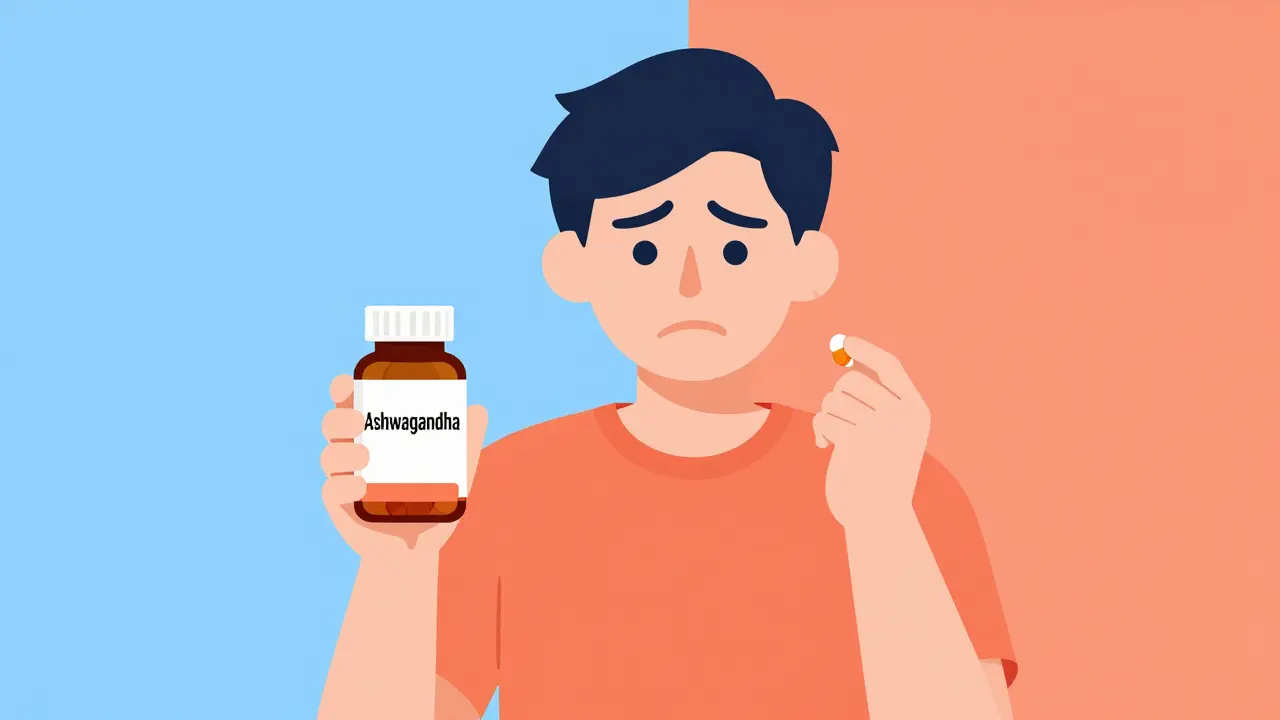
The core problem is that ashwagandha doesn't just "relax" you; it actively stimulates your thyroid. When you combine a medication designed to raise your hormone levels with a supplement that does the same, you risk over-replacement. This is essentially like pressing the gas pedal and the turbo boost at the same time-you're likely to overshoot your target and land in a state of medically induced hyperthyroidism.
How Ashwagandha Messes With Your Hormones
To understand why this happens, we have to look at the chemistry. Ashwagandha contains bioactive compounds called withanolides, which are steroidal lactones that influence the hypothalamic-pituitary-thyroid (HPT) axis. Two of the most potent ones are withaferin A and withanolide D. These compounds aren't just passive; they can actually stimulate thyroid peroxidase (TPO) activity by up to 38%.
In a double-blind study involving 50 people with subclinical hypothyroidism, those taking 600 mg of standardized extract daily saw a significant jump in their levels: T3 increased by 41.5%, T4 by 19.6%, and TSH by 17.5%. For someone not on medication, this might seem like a win. But for someone taking a precise microgram dose of Levothyroxine, which is a synthetic form of thyroxine (T4) used to treat hypothyroidism, these jumps are dangerous.
| Marker | Average Increase | Normal Range (Approx.) |
|---|---|---|
| Triiodothyronine (T3) | +41.5% | Varies by lab |
| Thyroxine (T4) | +19.6% | 4.5 - 12.0 mcg/dL |
| Thyroid Stimulating Hormone (TSH) | +17.5% | 0.4 - 4.0 mIU/L |
The Danger Zone: Iatrogenic Hyperthyroidism
When your thyroid levels get too high because of an external source (like a drug or supplement), it's called iatrogenic hyperthyroidism. The American Association of Clinical Endocrinologists (AACE) has documented cases of thyrotoxicosis-dangerously high hormone levels-specifically linked to using ashwagandha and levothyroxine together. In some of these cases, serum T4 levels soared above 25 mcg/dL, more than double the upper limit of normal.
What does this actually feel like? It isn't just "extra energy." Patients often report heart palpitations, severe insomnia, and sudden anxiety. One user on a thyroid forum described their TSH dropping from a stable 1.8 mIU/L to a crashing 0.08 mIU/L after just six weeks of adding 500 mg of ashwagandha. This isn't a minor tweak; it's a systemic failure that can lead to cardiac arrhythmias and, in severe cases, hospitalization.

The Supplement Wild West: Why Brands Matter
If you're thinking, "I'll just take a small dose," you're ignoring a massive variable: purity. The FDA is the federal agency responsible for protecting public health by ensuring the safety and efficacy of medications does not regulate supplements for potency. This means the 300 mg capsule you buy from Brand A might be totally different from Brand B.
ConsumerLab.com tested 15 commercial ashwagandha products and found that withanolide content varied wildly, from a meager 1.2% to a potent 7.8%. If you're relying on a precise dose of medication like Synthroid (which is calibrated down to the microgram), adding a supplement with unpredictable concentrations is like trying to calibrate a scale while someone is randomly throwing weights on it.
Managing the Risk: Practical Steps
If you are currently taking thyroid medication, the safest bet is to avoid ashwagandha entirely. The Endocrine Society's 2023 guidelines are clear: the risk of serious over-replacement outweighs the stress-relief benefits. However, if you and your doctor decide to try it, there are strict rules you must follow.
- Biweekly Testing: You cannot wait for your six-month checkup. You need TSH, free T4, and free T3 tests every two weeks to catch a spike before it becomes a medical emergency.
- The 30-Day Rule: If you're planning a thyroid function test, stop taking ashwagandha at least 30 days prior. Otherwise, your results will be skewed, and your doctor might lower your medication dose based on a "fake" high reading.
- Timing Separation: Some clinicians suggest a 4-hour gap between your thyroid medication and the supplement. While this might help with absorption, it does not stop the long-term hormonal stimulation caused by withanolides.
Keep in mind that ashwagandha has a half-life of about 12 days. This means even after you stop taking it, the effects on your thyroid can linger for two to three weeks. You won't snap back to your baseline overnight.

Alternatives for Stress Management
You don't have to suffer through stress just because you have a thyroid condition. There are plenty of ways to manage anxiety that don't mess with your HPT axis. Consider cognitive behavioral therapy (CBT), mindfulness-based stress reduction, or mild exercise. If you want a supplement, talk to your endocrinologist about options that don't have known endocrine-stimulating properties.
Can I take ashwagandha if I have hypothyroidism but am not on medication?
Yes, in some medication-free cases, ashwagandha may actually help increase thyroid hormone levels. However, this should still be done under medical supervision to ensure you don't accidentally push yourself into hyperthyroidism.
Does ashwagandha interact with methimazole?
Absolutely. Since methimazole is used to lower thyroid hormone levels in hyperthyroidism, and ashwagandha can increase them, the supplement can actively counteract your medication, making your condition harder to control.
What are the first signs of over-replacement?
Watch for heart palpitations, sudden insomnia, unexplained weight loss, excessive sweating, and a feeling of "jitteriness" or heightened anxiety that feels different from your usual stress.
How long does it take for ashwagandha to affect my TSH levels?
Clinical trials have shown significant changes in T3 and T4 levels within eight weeks, but some patients report symptoms of over-replacement much sooner, sometimes within a few weeks of starting a daily dose.
Is there a "safe" dose of ashwagandha for thyroid patients?
Because of the variability in supplement potency and the narrow therapeutic window of thyroid meds, there is no universally "safe" dose. Even a low-dose supplement can trigger over-replacement in sensitive individuals.
Next Steps and Troubleshooting
If you are currently taking both: Do not stop your prescription medication abruptly. Instead, schedule an urgent appointment with your endocrinologist for a full thyroid panel. Bring the bottle of ashwagandha with you so they can see the exact concentration of withanolides.
If you are experiencing palpitations: Seek medical attention immediately. Hyperthyroidism can put significant strain on the heart, and it's crucial to determine if your symptoms are from a medication imbalance or another cardiac issue.
For the future: Whenever you start a new supplement, search for "[Supplement Name] endocrine interactions." Many herbs that claim to "boost energy" or "balance hormones" can interfere with the highly precise dosing required for thyroid health.