
What Are Over-the-Counter (OTC) Medications?
OTC medications are drugs you can buy without a prescription. They’re meant for common, short-term issues like headaches, colds, heartburn, or sore muscles. These aren’t just random pills on the shelf-they’re regulated by the FDA, tested for safety, and labeled clearly so you know what you’re taking. In the U.S., there are over 800 different active ingredients in more than 100,000 OTC products. That’s a lot of choices, and not all of them are right for everyone.
Some products you might not think of as medicine actually count as OTC. Fluoride toothpaste, dandruff shampoos with selenium sulfide, eye drops for dry eyes, and even antibiotic ointments for cuts are all classified as OTC. That means they’ve been reviewed and approved for safe use without a doctor’s order. But just because they’re easy to get doesn’t mean they’re harmless.
How OTC Medications Are Regulated
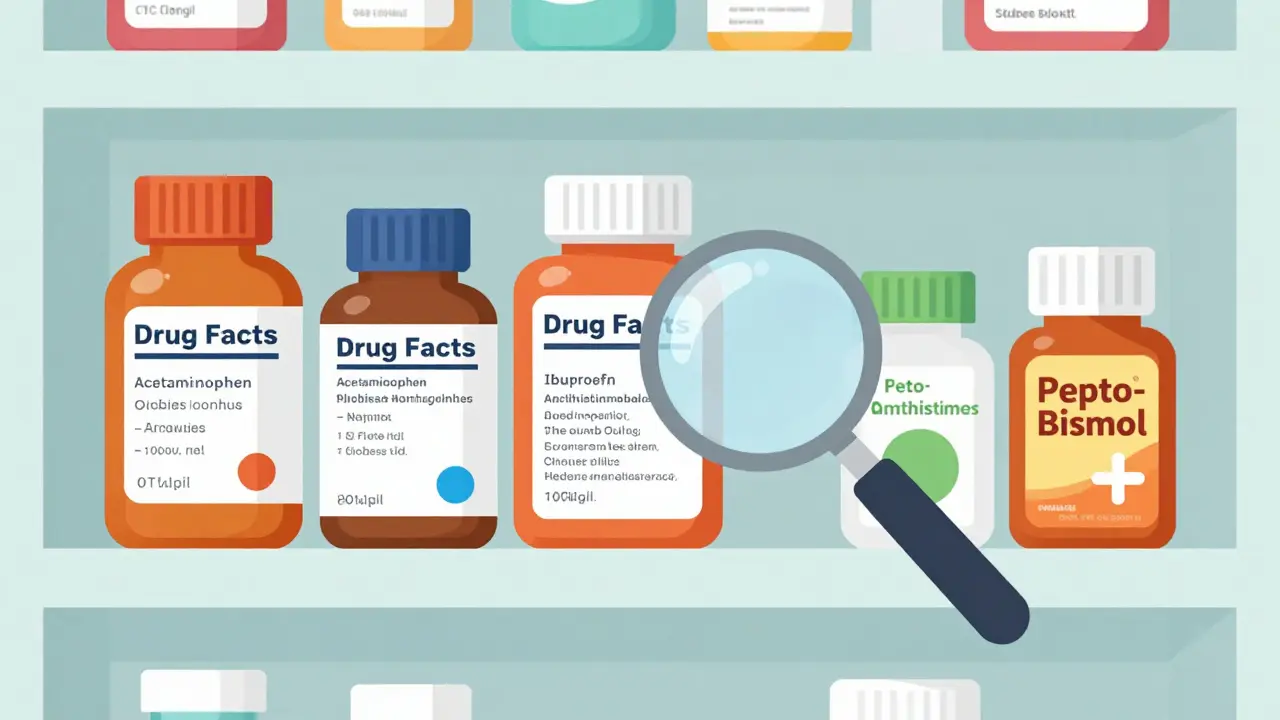
The FDA set up the OTC Drug Review in 1972 to make sure these products are safe and work as claimed. Back then, a lot of products were sold with no proof they actually helped. Today, every OTC medicine must follow a strict label format called the Drug Facts label. It’s required by law and includes 11 key sections: active ingredients, what it’s used for, warnings, directions, other information, and inactive ingredients.
In 2020, the CARES Act updated how OTC drugs are reviewed. It created a faster process to fix safety issues and bring new treatments to market. By 2026, the FDA plans to review 250 pending OTC ingredients to decide if they’re still safe or should be pulled. That means today’s shelf might look different in a few years-some products will disappear, and new ones may appear.
Most Common OTC Medications and How They Work
Not all pain relievers are the same. The two most common types are acetaminophen and NSAIDs. Acetaminophen (Tylenol) is often the first choice for headaches or fever because it doesn’t irritate the stomach. But it’s hard on the liver. The maximum daily dose is 3,000 mg-just six extra-strength pills. Go over that, and you risk serious liver damage. In fact, acetaminophen overdose causes over 56,000 ER visits every year in the U.S.
NSAIDs like ibuprofen (Advil, Motrin) and naproxen (Aleve) reduce both pain and inflammation. They’re better for muscle aches, arthritis, or menstrual cramps. But they’re not for everyone. If you have high blood pressure, asthma, kidney problems, or a history of stomach ulcers, these can be dangerous. NSAIDs also carry a black-box warning from the FDA: long-term or high-dose use can raise your risk of heart attack or stroke. Since April 2023, all NSAID labels must include this warning.
For digestion, bismuth subsalicylate (Pepto-Bismol) helps with nausea, heartburn, and diarrhea. Guaifenesin (Mucinex) thins mucus for coughs. Antihistamines like diphenhydramine (Benadryl) relieve allergies but make you drowsy. And don’t forget about combination products-those cold medicines with 4 or 5 ingredients. They’re popular, but they often contain hidden duplicates of what you’re already taking.
Reading the Drug Facts Label Like a Pro
The Drug Facts label is your best friend. But most people only glance at it. Only 22% of Americans read the whole thing, according to the FDA. Here’s what to look for:
- Active ingredients: This is the real medicine. If two products have the same active ingredient, you’re doubling up.
- Purpose: What is this for? A headache? A runny nose? Make sure it matches your symptoms.
- Uses: What conditions does it treat? If your symptom isn’t listed, don’t use it.
- Warnings: This is critical. Check for allergies, drug interactions, pregnancy, age limits, and conditions like high blood pressure or liver disease.
- Directions: How much? How often? Never exceed the daily limit. More isn’t better.
- Inactive ingredients: These are fillers, dyes, or flavors. If you’re allergic to gluten, red dye, or lactose, check here.
One big mistake? Taking two OTC meds with the same active ingredient. For example, many cold medicines contain acetaminophen. If you take one for a cold and another for a headache, you could easily hit 4,000 mg in a day-over the safe limit. That’s how accidental overdoses happen.

Who Should Be Extra Careful?
OTC meds aren’t one-size-fits-all. Some groups are at higher risk:
- People over 65: 24% take five or more prescription drugs. Adding an OTC pain reliever can cause dangerous interactions. One in six older adults has an adverse reaction from OTC use.
- People with chronic conditions: High blood pressure, diabetes, liver disease, or kidney issues change what’s safe. NSAIDs can raise blood pressure. Acetaminophen can overload a damaged liver.
- Pregnant or breastfeeding women: Some OTC meds are risky. Always check with a provider before taking anything.
- Children: Liquid dosing is tricky. A teaspoon isn’t a tablespoon. Use the syringe that comes with it. Never give aspirin to kids-it can cause Reye’s syndrome.
Also, watch out for hidden ingredients. Sudafed (pseudoephedrine) is sold behind the counter in many places because it’s used to make meth. You need to show ID to buy it. And some cough syrups contain alcohol or codeine-yes, even OTC ones.
Storage and Expiration
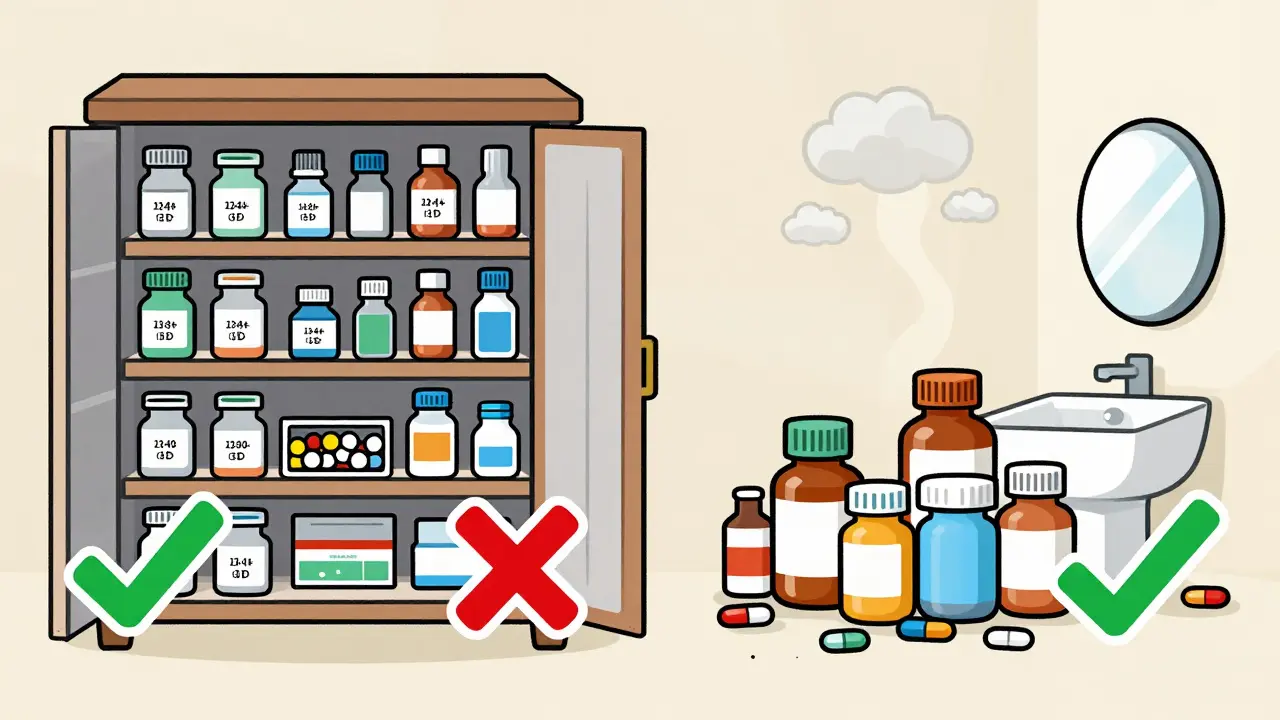
Store OTC meds in a cool, dry place. Bathroom cabinets? Bad idea. Heat and moisture break down the medicine. Keep them below 77°F (25°C). A bedroom drawer or kitchen cabinet away from the stove is better.
Check the expiration date. Most OTC drugs last 2-3 years. After that, they might not work as well. Some, like liquid antibiotics or eye drops, can become unsafe. Never use a medicine past its date. And if it smells weird, looks discolored, or the pills are crumbling-throw it out.
When to Stop Self-Care and See a Doctor
OTC meds are great for short-term relief. But they’re not a substitute for medical care. Here’s when to call your doctor:
- Your symptoms don’t improve after 7 days
- You have a fever over 102°F (39°C) that lasts more than 2 days
- You’re having chest pain, trouble breathing, or swelling
- You notice unusual bruising, bleeding, or dark stools
- You’ve been taking OTC pain relievers daily for more than 10 days
- You’re confused about what to take or how much
Many people wait too long. They think, “It’s just a headache,” or “I’ll take another pill.” But persistent symptoms can signal something serious. Don’t let OTC meds delay real care.
Pharmacists Are Your Secret Weapon
You don’t need to figure this out alone. Pharmacists are trained experts in OTC meds. In 2022, 78% of pharmacists provided counseling on OTC products. They check for interactions, verify doses, and spot hidden risks. And 89% of chain pharmacies now offer free medication reviews.
Ask them: “I’m taking X, Y, Z. Is this OTC medicine safe with them?” Or: “I’ve had this symptom for a week. Should I keep trying OTC or see a doctor?” Most of these services are free, no appointment needed. Use them.
Common Mistakes and How to Avoid Them
Here are the top 5 errors people make with OTC meds:
- Doubling up on active ingredients. Always check the label. If two products say “acetaminophen,” don’t take both.
- Ignoring age and weight limits. Kids’ doses aren’t just smaller-they’re different formulas. Never guess.
- Using expired or old meds. If it’s been sitting in a drawer since 2021, toss it.
- Assuming “natural” means safe. Herbal supplements aren’t regulated like OTC drugs. Some interact badly with prescriptions.
- Not reading the warnings. That tiny print? It’s there for a reason. If you have asthma, high blood pressure, or liver disease, skip NSAIDs and talk to a pharmacist.
One Reddit user shared how they took nighttime cold medicine for three days thinking it was just for sleep. It had diphenhydramine-causing dizziness, confusion, and a fall. They didn’t realize the label said “may cause drowsiness.” Always read the whole thing.
What’s Changing in the OTC Market?
The OTC industry is growing fast. Sales hit $114 billion in 2022 and are projected to hit $142 billion by 2027. But change is coming.
- AI tools are helping people choose the right OTC product based on symptoms and meds they’re already taking.
- Pharmacists in 27 states can now prescribe certain OTC items like emergency contraception or nicotine patches without a doctor’s note.
- More scrutiny on combination products. The FDA may remove products that combine too many ingredients, since they increase overdose risk.
- Store brands now make up nearly a quarter of the market. They’re cheaper and often have the same active ingredients as name brands.
The bottom line? OTC meds are powerful tools. But they’re not toys. Treat them like medicine-because they are.
14 Comments

Brad Ralph
February 12, 2026 AT 20:15 PM
OTC = ‘Oh That’s Cool’ 🤷♂️

christian jon
February 14, 2026 AT 10:48 AM
I CAN’T BELIEVE PEOPLE STILL DON’T READ LABELS!!! I MEAN, COME ON!! 😤 You think it’s ‘just a headache’? Nah, it’s a liver-destroying, heart-attack-waiting-to-happen, ‘I’M IN THE ER BECAUSE I TOOK THREE DIFFERENT COLD MEDS’ situation!!!
And don’t get me started on ‘natural’ supplements-those aren’t regulated, so they could be laced with rat poison and you’d never know!!! I read a study once-wait, no, I saw a Reddit post that linked to a blog that quoted a guy who worked at a pharmacy-ANYWAY, the point is: YOUR BODY ISN’T A LAB EXPERIMENT!!!
Also, why is Sudafed behind the counter?! Because some people are meth-makers, obviously. But also, why is it even legal?! Shouldn’t we just ban pseudoephedrine?! I’m serious. Who needs a runny nose more than they need to not turn into a meth lab?!!!

steve sunio
February 14, 2026 AT 20:20 PM
this guide is too long n no one reads it anyway lmao. people just grab whatever’s cheapest or whatever their friend says. also who cares about the fda? they’re just here to make money. i took tylenol for 3 days straight once. still alive. so whatever.

Ernie Simsek
February 16, 2026 AT 00:25 AM
I took a ‘non-drowsy’ cold med last winter and ended up napping for 14 hours. Turns out ‘non-drowsy’ just means ‘drowsy if you’re 5’11’ and weigh 110 lbs’. 🤦♂️
Also, I now keep a spreadsheet of everything I take. Because I don’t trust my brain anymore.

Jack Havard
February 16, 2026 AT 22:33 PM
The FDA doesn’t ‘regulate’ anything. They just rubber-stamp whatever Big Pharma pays them to. The ‘Drug Facts’ label? A marketing tool disguised as safety. You think they care about you? They care about liability. That’s why the warnings are so long-so you can’t sue them later. And don’t even get me started on ‘store brands’. Same active ingredient? Sure. But the fillers? Totally different. Probably laced with microplastics. Or worse.

Gloria Ricky
February 17, 2026 AT 13:55 PM
I’m so glad this was written. I used to think OTC meant ‘harmless’. Then my mom took a bunch of Advil for her back pain and ended up with stomach bleeding. She didn’t know she had a history of ulcers.
Now I print out the Drug Facts sheet for every new med and stick it on the fridge. I even color-code: red = danger, yellow = watch out, green = okay. My family thinks I’m weird. I don’t care. Better weird than dead.

Stacie Willhite
February 19, 2026 AT 04:33 AM
This made me feel less alone. I’ve been terrified to take anything OTC since I had a bad reaction to Benadryl years ago. I didn’t realize it could cause confusion and dizziness in older adults. I’m 68 and now I always ask my pharmacist before I buy anything. It’s not that I’m scared-I just want to be safe. Thank you for reminding people this matters.

Sonja Stoces
February 20, 2026 AT 14:06 PM
I’ve been taking Pepto-Bismol for years because ‘it helps my digestion’. But now I’m reading this and realizing-wait, it’s BISMUTH SUBSALICYLATE. That’s aspirin. I’m allergic to aspirin. I’ve been poisoning myself. 😳
Also, why is no one talking about how OTC meds are just gateway drugs? First you take Advil, then you get prescribed opioids, then you’re on fentanyl. It’s a slippery slope. The system is designed to make you dependent.

Annie Joyce
February 20, 2026 AT 20:29 PM
One thing I wish more people knew: OTC doesn’t mean ‘no side effects’. It means ‘low risk if used correctly’. And ‘correctly’ includes not mixing, not exceeding, and not ignoring your health history.
I work in a pharmacy, and 7 out of 10 people who come in for ‘something for a cold’ are already on 3+ prescriptions. I’ve had to stop people from combining warfarin with NSAIDs, or metformin with high-dose vitamin C (yes, that happened).
And honestly? I love when people ask, ‘Is this okay with my meds?’ It’s not a dumb question. It’s the smartest thing you can do.

Rob Turner
February 22, 2026 AT 01:59 AM
I’m from the UK and we don’t have the same OTC culture here. ‘Medicines’ are more tightly controlled-even paracetamol is limited to 32 tablets per purchase. We’ve got ‘pharmacy-only’ meds too. But I’ve noticed more Americans are starting to ask questions. That’s good.
Also, I once took a ‘natural’ sleep aid that had melatonin AND valerian AND chamomile. Woke up at 3 a.m. convinced I was being watched by a raccoon. 🦝 Not sure if it was the herbs or my sanity. Either way-read the label.

Luke Trouten
February 23, 2026 AT 16:30 PM
The real issue isn’t the meds-it’s the lack of health literacy. We treat pharmaceuticals like snacks because we’ve been conditioned to believe that every discomfort has a quick fix. But pain, fever, congestion-they’re signals. Suppressing them without understanding why they exist is like silencing the alarm on your smoke detector.
OTC drugs are tools. Tools require knowledge. Knowledge requires curiosity. Curiosity is dying. And that’s the real epidemic.

Gabriella Adams
February 23, 2026 AT 22:22 PM
I just want to say-thank you for writing this with such clarity. I work in public health, and I’ve seen too many ER visits caused by OTC misuse. This guide is exactly what we need: accurate, practical, and free of fearmongering.
Also-store meds in a drawer. Not the bathroom. Not the car. Not the nightstand next to your coffee maker. A drawer. That’s it. Simple. Effective. And I’m telling everyone I know.

Jason Pascoe
February 24, 2026 AT 01:21 AM
I just saw someone say they took Pepto-Bismol for years and didn’t know it contained aspirin. That’s terrifying. I’m going to send this guide to my whole family. Maybe print it out and put it on the fridge next to my color-coded sheet.
Also, I just realized-I’ve been using the same bottle of ibuprofen since 2020. Time to toss it.


Jason Pascoe
February 11, 2026 AT 22:41 PM
I’ve been using OTC meds for years and never realized how much goes into their regulation. The Drug Facts label is honestly a game-changer if you actually read it. I started checking inactive ingredients after I had a reaction to red dye 40 in a cough syrup. Now I keep a note in my phone with what I’m allergic to. Also, never thought about how heat ruins meds-I used to store everything in the bathroom. Not anymore.
Pharmacists are underrated. I asked one about mixing ibuprofen with my blood pressure med and she flagged it immediately. Free advice? Yes please.