Finding out you have Gestational Diabetes is a condition where carbohydrate intolerance leads to high blood sugar levels first recognized during pregnancy can feel like a lot to handle. You're already dealing with the whirlwind of pregnancy, and now you're handed a glucose monitor and a list of foods to avoid. But here is the good news: for about 70% of women, a structured meal plan is all it takes to keep blood sugar in check without needing medication. The goal isn't just about numbers on a screen; it's about keeping you and your baby safe by reducing the risk of macrosomia (babies weighing over 4,500g) and lowering the chances of a C-section.
Knowing Your Numbers: Blood Sugar Targets
Before you change what's on your plate, you need to know what you're aiming for. Blood sugar targets for Gestational Diabetes Mellitus (GDM) are stricter than for non-pregnant adults because the stakes are higher for fetal development. According to the International Association of Diabetes and Pregnancy Study Groups, you generally want to see these numbers:
- Fasting (first thing in the morning): Below 95 mg/dL.
- 1-hour after a meal: Below 140 mg/dL.
- 2-hours after a meal: Below 120 mg/dL.
If your fasting numbers are consistently high, it's often due to hepatic glucose overproduction-basically, your liver pumping out sugar while you sleep. This is why spreading your food intake across three meals and three snacks is a game-changer; it keeps your levels steady and prevents those morning spikes.
The Plate Method: Simple and Visual
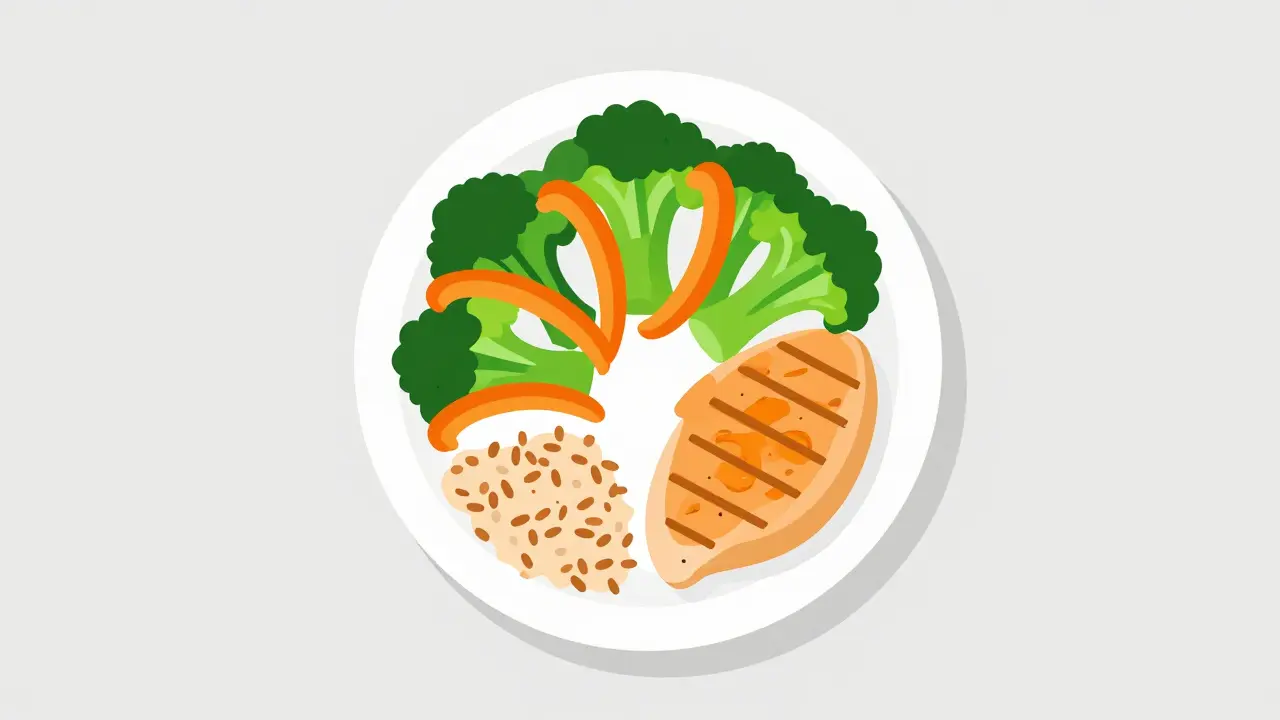
If the idea of counting every single gram of carbohydrate makes you want to cry (especially if you're dealing with morning sickness), the Plate Method is your best friend. It's a visual tool recommended by the CDC that removes the math and focuses on proportions. Imagine a nine-inch plate:
- Half the plate: Fill this with non-starchy vegetables like broccoli, spinach, peppers, or cauliflower. These add bulk and nutrients without spiking your sugar.
- One-quarter of the plate: Lean protein. Think grilled chicken, fish, tofu, or eggs.
- One-quarter of the plate: Carbohydrate sources. This is where your brown rice, quinoa, or a slice of whole-grain bread goes.
This approach is a favorite for many because it's intuitive. Instead of weighing your food, you're just looking at the balance. Research shows it's just as effective as strict counting but much easier to stick to over nine months.
Carbohydrate Counting: The Precision Approach
For some, the visual guide isn't enough, especially if you had insulin resistance before pregnancy. In these cases, Carbohydrate Counting provides the precision needed to hit those targets. The American Diabetes Association (ADA) suggests a specific distribution to avoid glucose excursions:
- Main Meals: Aim for 45 to 60 grams of net carbohydrates.
- Snacks: Keep these around 15 grams of net carbohydrates.
To calculate net carbs, you subtract the fiber from the total carbohydrates. This is a critical step because fiber slows down the absorption of sugar into your bloodstream. A good rule of thumb is to ensure your carb sources have at least 6g of fiber per serving. For a concrete example, one serving of carbs is roughly 50g of cooked brown rice (about two heaped tablespoons) or 75g of potatoes.
| Feature | Plate Method | Carb Counting | Mediterranean Approach |
|---|---|---|---|
| Complexity | Low (Visual) | High (Mathematical) | Medium (Culinary) |
| Precision | General | Very High | Moderate |
| Adherence | Highest | Lower | Moderate |
| Best For | Beginners / Nausea | High Insulin Resistance | Heart Health / Plant-based |
The Mediterranean Twist: A Heart-Healthy Option
If you're looking for something more flavorful, the Mediterranean Diet focuses on healthy fats like olive oil, nuts, and plenty of plant-based proteins. Clinical trials have shown this approach can reduce post-meal glucose spikes by about 15% more than standard plans. It emphasizes whole foods over processed options, which is vital because "diabetic-friendly" processed foods often sneak in extra sodium.
However, this path requires a bit more time in the kitchen. If you're exhausted in your third trimester, you might find yourself reverting to the Plate Method. The key is flexibility; you can use Mediterranean ingredients (like avocado and salmon) within the Plate Method's proportions.
Adjusting for Your Trimester
Your body's needs change as your baby grows, and your diet should too. You can't eat the same amount of protein in month four as you do in month eight. Based on clinical guidelines, here is how to shift your intake:
- Second Trimester: Focus on steady growth. Typically, this means about 1 ounce of lean protein and 2 carbohydrate servings per meal.
- Third Trimester: Your baby is growing rapidly now. Increase your intake to about 2.5 ounces of lean protein and 4 carbohydrate servings per meal.
Don't be afraid of the increased calories in the third trimester. As long as you're choosing high-fiber, low-glycemic index foods, the extra nutrition is necessary. Be careful not to restrict calories too aggressively-dropping below 1,700 kcal/day can actually increase the risk of nutrient deficiencies, like low folate or iron, which are critical for the baby's neural tube development.

Practical Tips for Daily Success
The biggest hurdle isn't knowing what to eat; it's the execution. Many women struggle with measuring portions correctly. For example, it's common to underestimate a serving of cooked rice by 20 or so grams, which adds unexpected carbs to your total. Use visual cues instead: a half-cup of cooked grains is roughly the size of a tennis ball.
Another pro tip is the "protein-first" snack approach. Instead of eating a piece of fruit on its own, pair it with a protein, like a piece of cheese or a handful of almonds. This slows down the digestion of the fruit's sugar and prevents a sharp spike in your glucose levels. For example, pairing an apple with a string cheese is far better for your numbers than the apple alone.
Can I eat fruit with gestational diabetes?
Yes, you can! However, the key is portion control and pairing. Stick to lower-glycemic fruits like berries or green apples and always pair them with a protein or healthy fat (like Greek yogurt or almond butter) to keep your blood sugar stable.
What is the difference between total carbs and net carbs?
Total carbohydrates include all sugars, starches, and fibers. Net carbs are the carbohydrates that your body actually digests. To find the net carbs, subtract the grams of fiber from the total carbohydrate count. Fiber doesn't raise blood glucose, which is why high-fiber foods are preferred.
Why are my fasting numbers high even when I diet?
Fasting hyperglycemia in late pregnancy is often caused by the liver releasing glucose overnight. To combat this, try eating a small, protein-rich snack before bed, such as a piece of cheese or a few nuts, to keep your levels steady through the night.
Is the Plate Method really as effective as counting carbs?
Yes. Research indicates that the Plate Method achieves similar glycemic control to carbohydrate counting but has a significantly higher adherence rate because it is less stressful and easier to implement in real-world scenarios.
What should I do if I have a blood sugar spike after a healthy meal?
First, don't panic-occasional spikes happen. Take a 10-15 minute brisk walk, as light activity helps muscles use up the glucose. If spikes are frequent, review the meal to see if the carb portion was too large or if you lacked enough protein and fiber.
Next Steps and Troubleshooting
If you're feeling overwhelmed, start with the Plate Method for one week. Don't worry about grams; just focus on the 50/25/25 split of vegetables, protein, and carbs. If your numbers are still high, then move toward the precision of carbohydrate counting.
For those struggling with cultural food preferences, remember that you can adapt any cuisine to fit these rules. Instead of white rice, try brown rice or cauliflower rice. Instead of white flour tortillas, try corn tortillas or lettuce wraps. The goal is to find a balance that feels like home while keeping your glucose in the target range.