

Managing medications gets complicated fast when you see more than one doctor. One prescribes a painkiller, another adds a blood pressure pill, and a third throws in an antidepressant. None of them know what the others ordered. By the time you get home, you’re holding a handful of pills with no idea if they’re safe together. This isn’t rare-it happens to 68% of patients who get care from multiple providers. And it’s not just confusing. It’s dangerous.
Why Medication Communication Breaks Down
Healthcare isn’t one person. It’s a team: your primary doctor, specialists, pharmacists, nurses, even home care workers. But most of them don’t talk to each other. Electronic health records (EHRs) were supposed to fix this. Instead, many systems still can’t share data. A 2023 report found only 38% of providers can access a full medication history across different clinics or hospitals.Specialists often prescribe without checking your primary care doctor’s notes. In one study, 57% of patients said specialists changed their meds without telling their main doctor. Meanwhile, pharmacists-who are trained to spot dangerous combinations-are rarely included in the conversation until you pick up your prescription.
And patients? Most assume their doctors are talking. A 2022 study found 83% of people with multiple providers thought their care team was coordinating their meds. They weren’t.
The Four Essentials of a Medication List
You don’t need a fancy app or a clinic portal. You need a simple, updated list. Every time you see a provider, bring it. Every time a new med is added or changed, update it. Here’s what it must include:- Name of the medication (brand and generic, if known)
- Dosage (e.g., 10 mg, 500 mg)
- Frequency (e.g., once daily, twice a week, as needed)
- Purpose (why you’re taking it-e.g., "for high blood pressure," "for anxiety")
This isn’t optional. A Tulane University study showed patients who kept this exact list had 37% fewer medication errors. It’s the single most effective tool you have.
How to Make Providers Actually Talk
You can’t force doctors to call each other. But you can create the conditions where they have to.Start by naming your primary care provider as your medication coordinator. Say something like: "I’m seeing Dr. Lee for my diabetes and Dr. Patel for my heart. Can you please ask them to send me a summary of what they’ve prescribed?" If they hesitate, remind them: "I don’t want to end up in the ER because of a drug interaction. I need you to help me avoid that."
Bring your list to every appointment-even if it’s just a nurse visit. Ask: "Does this match what’s in your system?" If it doesn’t, insist on a correction. Don’t let them say "We’ll update it later." Get it done right then.
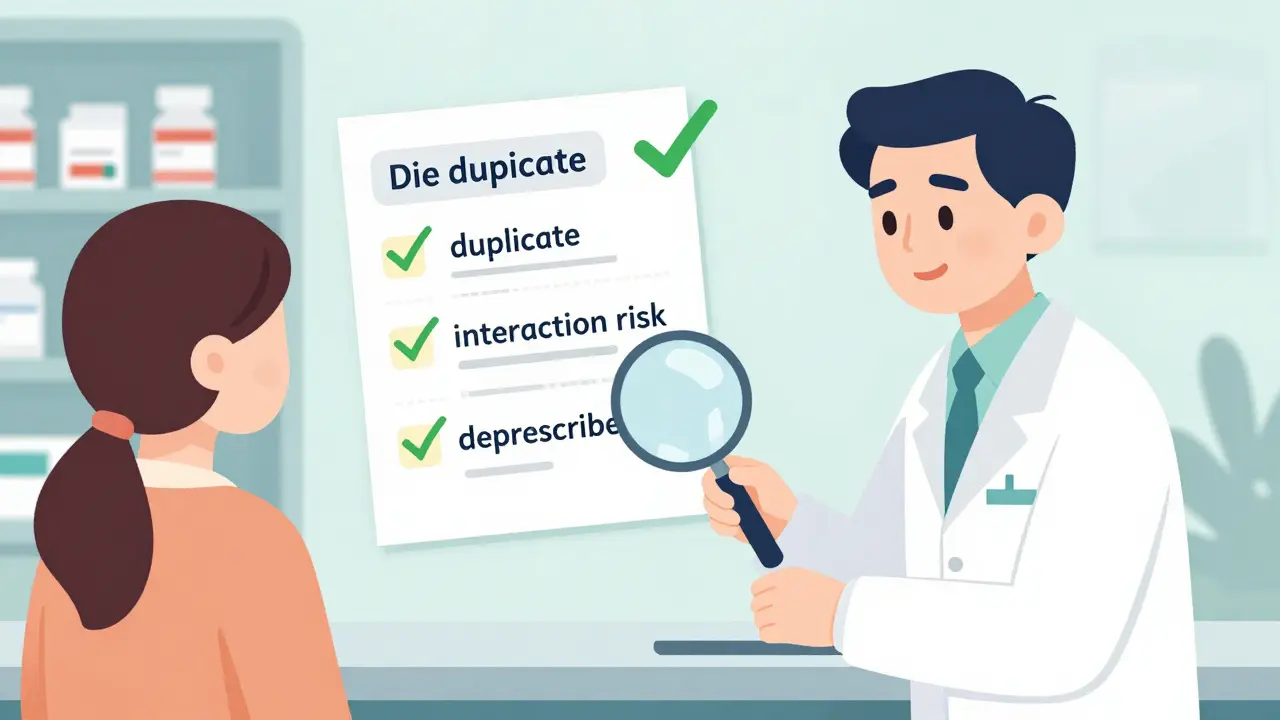
Ask your pharmacist to review your list. Most independent pharmacies now offer free Medication Therapy Management (MTM) services. They’ll check for interactions, duplicates, and unnecessary drugs. In one 2023 study, patients who used this service had 32% higher adherence and 63% more confidence in their regimen.
The Teach-Back Method: Don’t Just Listen-Repeat
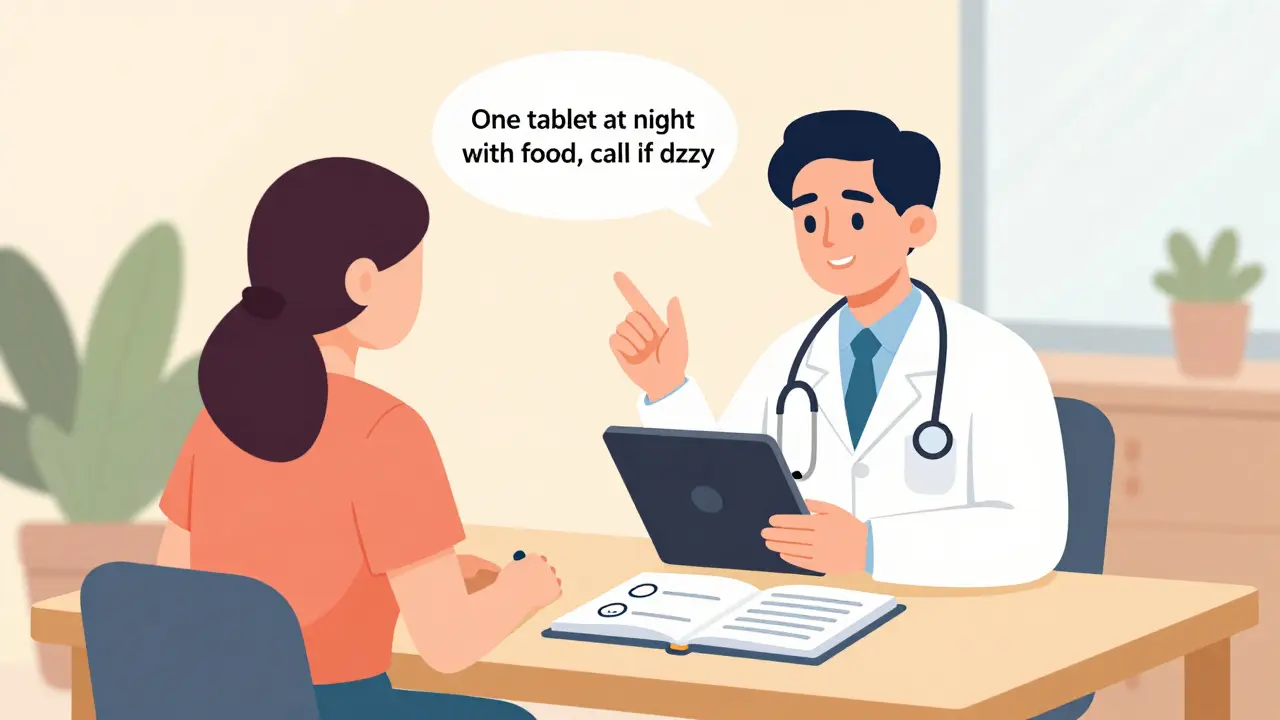
Doctors talk fast. You’re nervous. You nod along. Later, you realize you have no idea how to take the pill.Use the Teach-Back Method. After your provider explains a new medication, say: "Just to make sure I got this right-I’m supposed to take one tablet at night with food for my cholesterol, right? And I should call if I feel dizzy or have muscle pain?"
This isn’t about testing them. It’s about catching misunderstandings before they cause harm. The Agency for Healthcare Research and Quality found this simple trick reduces errors by 45%.
Track Your Body’s Response
Medications don’t just work or not work. They change how you feel. You might not connect fatigue, nausea, or trouble sleeping to a new drug unless you’re watching for it.Keep a short health journal. For a week after starting or changing a med, write down:
- Any new symptoms (headache, rash, dizziness)
- Changes in sleep or appetite
- Mood swings or confusion
- Whether you took the pill as directed
University of California San Francisco found patients who did this had 22% fewer adverse drug events. When you go back to your doctor, you’re not guessing-you’re reporting.
When You Have Three or More Providers
The risk skyrockets. A 2022 NIH study showed patients with three or more providers were 3.2 times more likely to have conflicting prescriptions. Specialists often add meds without realizing you’re already on something similar.Here’s what to do:
- Ask your primary doctor to lead a medication review every 3-6 months.
- Request that each specialist send a summary of changes to your primary doctor.
- Ask your pharmacist to flag any duplicates or overlaps.
- If you’re on five or more meds, ask if any can be stopped. This is called deprescribing-and it’s not just safe, it’s often necessary.
One Medicare beneficiary told CMS her care team found five dangerous interactions across her three specialists. "They caught what I didn’t even know to look for," she said. "It saved me from a hospital stay."
Why ACOs Work Better
If you’re in an Accountable Care Organization (ACO), you’re already in a better system. ACOs are groups of providers who get paid to keep you healthy-not just to treat you when you’re sick. That changes everything.ACO patients had 27% fewer hospital readmissions due to medication errors in 2022 CMS data. Why? Because they’re incentivized to talk. They share records. They hold regular care coordination meetings. They include pharmacists.
If you’re not in an ACO, ask if your provider is part of one. If not, ask why. And if you’re on Medicare, you’re likely already enrolled in one-just check your plan documents.
What’s Changing in 2026
The system is slowly fixing itself. The CMS Primary Care First model now requires all participating practices to do structured medication reconciliation at every transition of care-starting January 1, 2024. That means every time you move from hospital to home, or from specialist to PCP, someone has to sit down and compare every med you’re on.AI tools are emerging too. At Mayo Clinic, a new system cuts medication review time from 15 minutes to under a minute. It flags interactions, missing doses, and outdated prescriptions. These aren’t science fiction-they’re in use now.
And pharmacists? By 2025, 78% of independent pharmacies will offer formal medication management services. That means you can walk in, hand over your list, and get a full safety check-not just a prescription filled.
What You Can Do Today
You don’t need to wait for the system to catch up. Start now:- Write down your current meds using the four essential elements.
- Bring it to your next appointment-even if it’s a quick visit.
- Ask your pharmacist to review it.
- Use the Teach-Back Method every time you’re given a new drug.
- Start a simple journal: note side effects, sleep, mood, appetite.
- Ask your primary doctor: "Who else is managing my meds? Can you make sure they’re all on the same page?"
Medication safety isn’t about having the best doctor. It’s about being the most informed patient. You’re the only one who sees all the pieces. If you don’t connect them, no one will.
8 Comments

Stacey Marsengill
January 17, 2026 AT 14:02 PM
Oh sweet jesus. I’ve been screaming into the void for years. My cardiologist prescribed metoprolol. My neurologist gave me amitriptyline. My PCP had no clue. I nearly died from serotonin syndrome. And no one apologized. Just shrugged. ‘Oops.’
They treat your body like a vending machine. You insert symptoms, out comes a pill. No conversation. No coordination. Just corporate profit with a stethoscope.
Don’t trust them. Trust your list. And your journal. And your gut.

Naomi Keyes
January 17, 2026 AT 17:51 PM
It is absolutely imperative, and I cannot stress this enough, that patients take proactive ownership of their medication regimens-because, as the data clearly indicates, systemic failures are rampant, and relying on providers to ‘coordinate’ is, frankly, a fantasy.
Moreover, the Teach-Back Method? Non-negotiable. If your provider doesn’t appreciate that you’re repeating their instructions back to them for clarity, they’re not doing their job properly.
And yes-I’ve done this with six different specialists. It works. Every. Single. Time.

Danny Gray
January 19, 2026 AT 03:54 AM
What if the real problem isn’t the doctors… but the system that turns human beings into data points?
You’re told to ‘manage’ your meds like a spreadsheet. But what about the fact that you’re exhausted? Scared? Overwhelmed?
They give you a list. Not a lifeline.
And then they act surprised when you forget a pill.
Maybe we’re not broken.
Maybe the system just doesn’t care enough to fix itself.
So you fix it. Because who else will?

Tyler Myers
January 20, 2026 AT 02:23 AM
Let me guess-the government’s ‘EHR interoperability’ initiative is just another tax-funded boondoggle.
They’ve been talking about this since 2009. And yet, your doctor still prints your meds on a sticky note?
It’s not incompetence. It’s intentional. They want you confused. So you keep coming back. So they keep billing.
And now they’re pushing ‘AI tools’? Please. The same companies that built these broken systems are now selling you the ‘fix’.
Wake up. This isn’t a healthcare crisis.
This is a profit crisis.
And you’re the product.

Wendy Claughton
January 20, 2026 AT 12:47 PM
❤️ I just printed out the 4 essentials list and taped it to my fridge. My 72-year-old mom started using it too. We’re both crying happy tears. I didn’t realize how much anxiety I was carrying until I saw her say, ‘I finally feel like I’m not alone in this.’
And the teach-back thing? I used it yesterday. My doctor paused. Looked me in the eye. Said, ‘You’re right. I didn’t explain that well.’
That’s the moment I knew change is possible.
You’re not just a patient. You’re the CEO of your own health.
And you’re doing amazing.

Aysha Siera
January 21, 2026 AT 18:18 PM
They are watching. Always. Your meds. Your records. Your heart rate. Your sleep. The AI isn’t helping you. It’s learning you.
Who owns that data? Who sells it? Who controls the algorithm that decides if you’re ‘non-compliant’?
They’ll give you a list. But they’ll also flag you. Deny you insurance. Raise your premiums.
They want you to think you’re safe because you’re writing things down.
But you’re just feeding the machine.
They’re not fixing the system.
They’re monetizing your fear.

Praseetha Pn
January 22, 2026 AT 15:46 PM
YOU THINK YOU’RE IN CONTROL? HA.
THEY’RE STILL NOT TALKING TO EACH OTHER. YOUR ‘LIST’? THEY IGNORE IT. YOUR PHARMACIST? THEY’RE OVERWORKED AND UNDERPAID. YOUR ‘TEACH-BACK’? THEY’LL SMILE AND MOVE ON.
THEY DON’T CARE ABOUT YOU. THEY CARE ABOUT THEIR QUOTAS.
THEY’LL PUT YOU ON 12 MEDS, THEN BLAME YOU FOR THE SIDE EFFECTS.
AND WHEN YOU DIE? THEY’LL SAY ‘IT WASN’T US.’
YOU THINK YOUR JOURNAL SAVES YOU?
IT’S JUST A TINY CANDLE IN A HURRICANE.
THE SYSTEM IS BROKEN. AND IT’S DESIGNED TO BE.
STOP BELIEVING THE NARRATIVE.
YOU’RE NOT THE PROBLEM.
THEY ARE.



kenneth pillet
January 17, 2026 AT 00:48 AM
Been there. Took me three ER visits before I started writing everything down. Now I keep a laminated card in my wallet. Doctors glance at it, nod, and actually change their notes. No drama. Just facts. Works every time.
Also, pharmacists are your real heroes. Don't skip the free MTM check.
Simple. Done.