
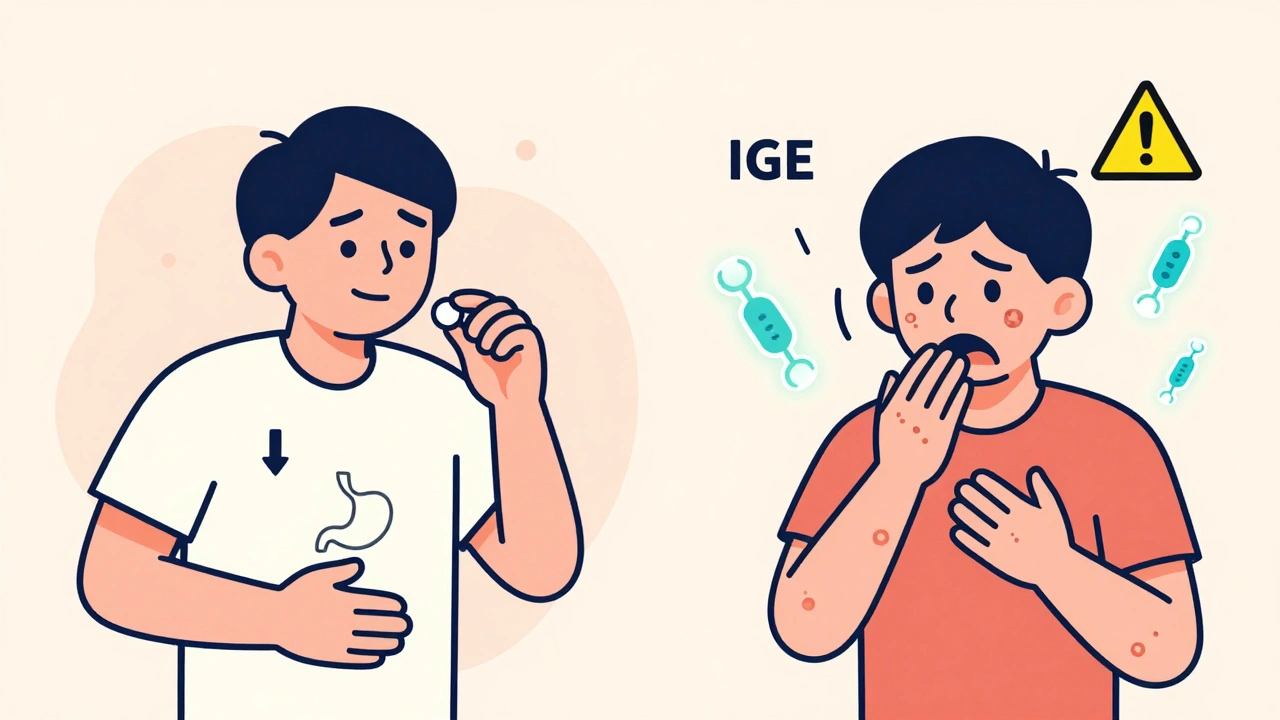
Most people think if they feel sick after taking a pill, they’re allergic. But here’s the truth: drug allergy is rare. Only 5 to 10% of bad reactions are true allergies. The rest? Side effects. And mixing them up can cost you more than just a stomachache-it can limit your treatment options, raise your risk of infection, or even put you in danger.
What’s Really Happening in Your Body?
A true drug allergy means your immune system sees the medicine as an invader. It’s like your body’s alarm system going off for no reason. You make IgE antibodies-special proteins that trigger histamine release. That’s what causes hives, swelling, trouble breathing, or worse. These reactions aren’t about the drug’s purpose. They’re about your body overreacting. A side effect? That’s just how the drug works. Aspirin thins your blood-that’s why it helps with heart issues. But it also irritates your stomach lining. Nausea from antibiotics? That’s because they mess with gut bacteria. Headaches from blood pressure meds? That’s the drug doing exactly what it’s supposed to do, just in a place you didn’t expect. The difference isn’t just semantics. It’s life-or-death.Timing Tells the Story
When did the reaction happen? That’s your first clue. If you broke out in hives 20 minutes after taking amoxicillin? That’s likely an allergy. Immediate reactions happen within minutes to an hour. That’s IgE in action. Anaphylaxis? That’s a full-body alarm-low blood pressure, throat closing, wheezing. It’s rare, but it’s real. And it needs emergency care. Now, if you felt dizzy or nauseous after your first dose of a new painkiller? That’s probably a side effect. These show up fast too-but they’re predictable. You might get them every time you take it. They don’t get worse with repeated doses. In fact, they often fade as your body adjusts. Delayed reactions are trickier. A rash that shows up 10 days after starting an antibiotic? That could be a T-cell-mediated allergy. It’s not IgE, but it’s still immune-driven. Conditions like DRESS or Stevens-Johnson Syndrome fall here. These are serious. They need immediate stopping of the drug and specialist care.Symptoms: One System or Many?
Side effects usually stick to one area. Stomach upset? That’s one system. Dizziness? Just your nervous system. Headache? Just your brain. True allergies? They rarely stay put. If you have a rash and swelling and trouble breathing and vomiting? That’s a red flag. Multiple systems firing at once? That’s the immune system going haywire. A 2023 study of 10,000 patients found that 87% of true allergies involved at least two body systems. Only 22% of side effects did. Here’s a common mistake: thinking nausea means allergy. A 2022 JAMA study found 68% of people who called themselves penicillin-allergic were just getting stomach upset. That’s a side effect. But because they thought it was an allergy, they avoided penicillin for years-leading doctors to give them stronger, costlier antibiotics that increase the risk of deadly infections like C. diff.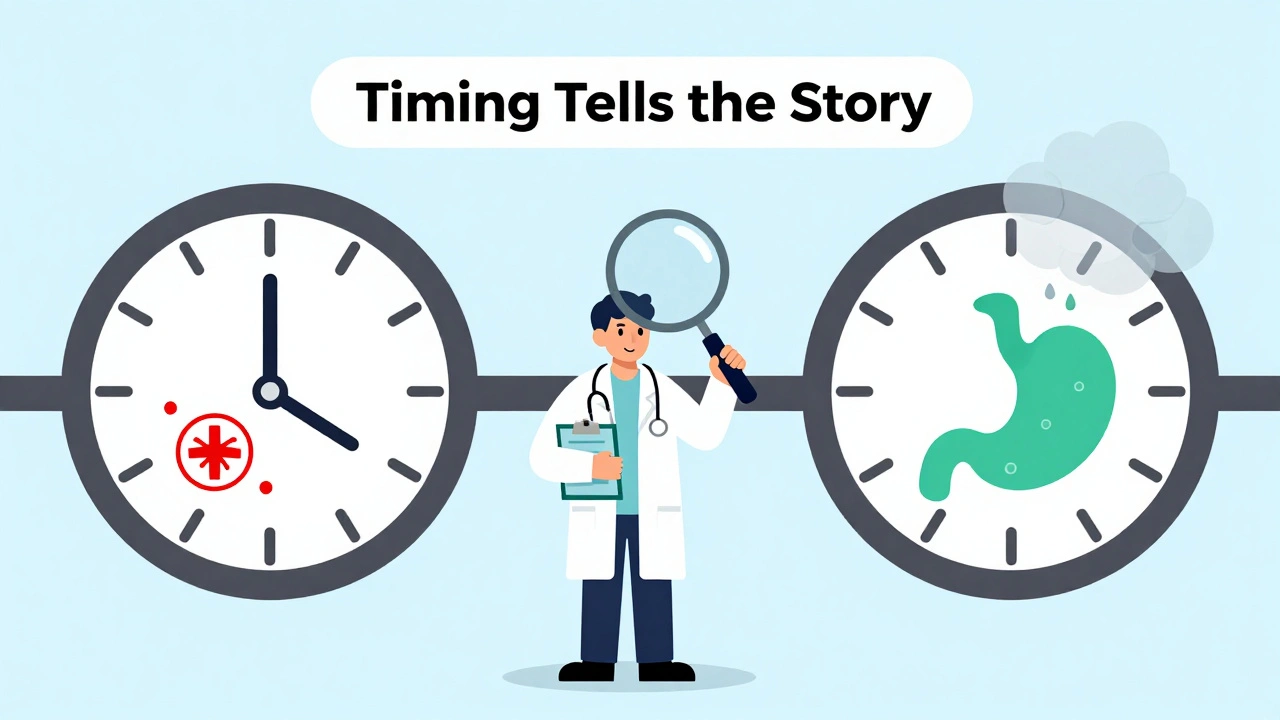
What Happens When You Take It Again?
This is a key test. Side effects? They usually don’t get worse. You might feel the same nausea each time. Sometimes, it gets better. Allergies? They get worse. Every time you’re exposed, your immune system remembers. The next reaction could be more severe. That’s why doctors never re-challenge a suspected allergy without testing. That’s why so many people who think they’re allergic to penicillin aren’t. About 90% of them can take it safely after proper testing. Yet 7% of Americans still avoid it because of a mislabelled reaction from 10 years ago.How Doctors Tell the Difference
There’s no blood test you can buy at the pharmacy. Diagnosis needs professional tools. For immediate allergies (hives, swelling, anaphylaxis), skin testing is the gold standard. A tiny drop of the drug is placed under the skin. If you’re allergic, you’ll get a raised bump-like a mosquito bite. Penicillin skin tests are 95% accurate. For delayed rashes? Patch tests or blood tests for T-cell activity are used. These are more complex and take longer. But they’re necessary to confirm a real immune reaction. The Drug Allergy Clinical Assessment Score (DACA) helps doctors weigh symptoms: 1 point for hives, 2 for breathing trouble, 3 for full anaphylaxis. A score of 3 or higher? You need an allergist. And here’s the big shift: hospitals are now actively de-labeling allergies. Pharmacists review patient records. They ask: Did you have a rash? When? Did you need epinephrine? If the answer is no, they recommend testing. Mayo Clinic’s program has de-labeled 92% of low-risk patients-with zero bad reactions.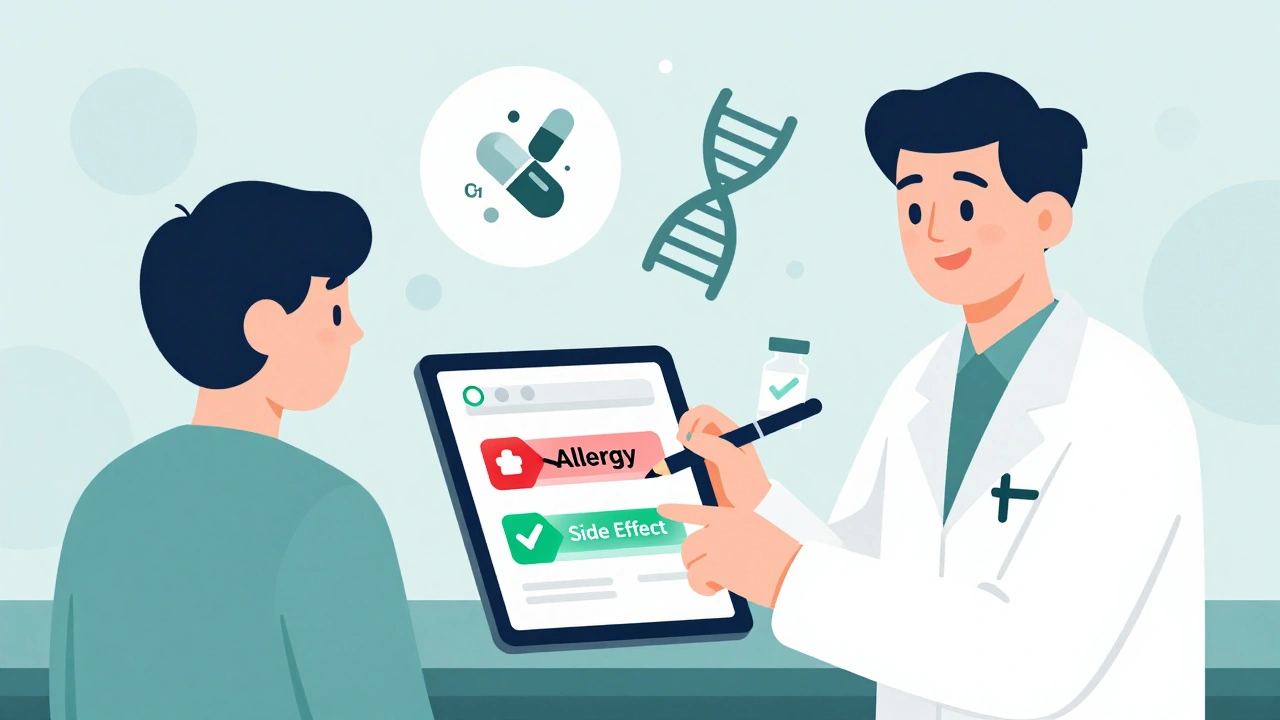
Why This Matters More Than You Think
Mislabeling an allergy isn’t just inconvenient. It’s expensive and dangerous. Patients with a false penicillin allergy are 69% more likely to get a C. diff infection. Their hospital stays are 30% longer. They’re given broader-spectrum antibiotics-drugs that kill more good bacteria, drive resistance, and cost $500 to $1,000 extra per person. The CDC estimates false penicillin labels cost the U.S. $1.1 billion a year. And it’s not just penicillin. Same goes for sulfa drugs, NSAIDs, even some cancer meds. Every time a doctor avoids a safe, effective drug because of a misdiagnosed allergy, they’re choosing a riskier alternative.What You Can Do
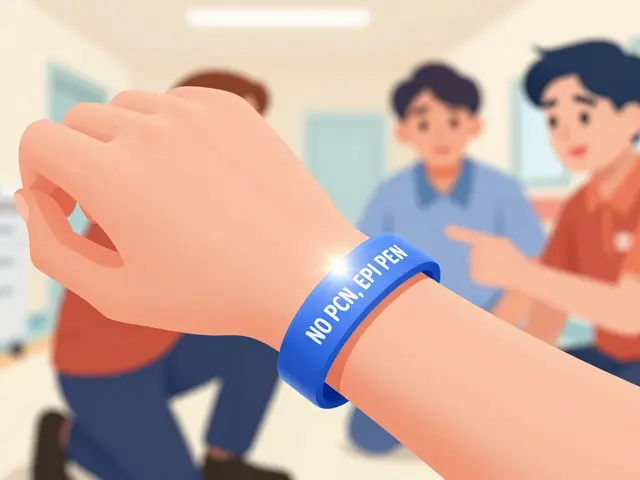
If you’ve been told you’re allergic to a drug:- Write down exactly what happened: What drug? When? What symptoms? How long did they last?
- Did you need an EpiPen? Were you hospitalized? Did you have trouble breathing or swelling?
- Did you get a rash, or just an upset stomach?
What’s Coming Next
The FDA approved the Penicillin ImmunoCAP test in 2023. It’s a blood test that finds specific IgE antibodies with 97% accuracy. More tests like this are on the way. Researchers are also hunting for genetic markers that predict who’s at risk for severe reactions. A $2.5 million NIH study is tracking DNA patterns linked to drug hypersensitivity. Results are expected in late 2025. The goal? To stop guessing. To stop avoiding safe drugs. To stop wasting money and risking lives because of a label that doesn’t fit. You don’t need to be a doctor to tell the difference. Just pay attention. Ask questions. Don’t let a mislabelled reaction control your health for the rest of your life.Can you outgrow a drug allergy?
Yes, especially with penicillin. Up to 80% of people who had a true allergy as a child lose it within 10 years. But you shouldn’t assume you’ve outgrown it. Always get tested before taking the drug again. Symptoms can return worse than before if you’re re-exposed without confirmation.
If I had a rash after taking amoxicillin, does that mean I’m allergic?
Not necessarily. A non-itchy, flat rash that appears 7-10 days after starting amoxicillin is common in kids with viral infections like mono-it’s not an allergy. An allergic rash is usually raised, itchy, and appears faster (within hours). If you’re unsure, see an allergist. Skin testing can confirm or rule it out.
Can a side effect turn into an allergy?
No. Side effects and allergies are different biological processes. One is pharmacological, the other immune. But you can develop a true allergy to a drug you previously tolerated-even if you only had side effects before. That’s why any new reaction, even if mild, should be documented and reviewed.
Is it safe to take a drug I’m allergic to if I take an antihistamine first?
Absolutely not. Antihistamines might mask a rash or itching, but they won’t stop anaphylaxis. If you have a true IgE-mediated allergy, taking the drug-even with antihistamines-can still trigger a life-threatening reaction. Only a supervised drug challenge by an allergist can safely determine if you’re still allergic.
What should I do if I think I’m having a drug allergy?
Stop the drug immediately. If you have trouble breathing, swelling of the tongue or throat, dizziness, or a rapid heartbeat, call emergency services. Don’t wait. For less severe reactions like hives or a rash, contact your doctor right away. Take a photo of the rash and note the timing. Bring your medication list to your appointment. Never ignore a new reaction-documenting it correctly could save your life later.
8 Comments

Jane Quitain
December 9, 2025 AT 18:13 PM
OMG this is SO important!! 🙌 I used to think I was allergic to ibuprofen because I got a headache-but turns out it was just my body adjusting! Now I take it like a champ and my joints are happier than ever 💪❤️

Ernie Blevins
December 9, 2025 AT 22:21 PM
They say 90% of people aren’t really allergic but still avoid penicillin. That’s not ignorance, that’s corporate laziness. Hospitals don’t want to pay for testing. Pharma wants you on the expensive stuff. It’s all a money game. You’re being played.

Nancy Carlsen
December 10, 2025 AT 21:51 PM
Thank you for writing this!! 🌟 I used to panic every time I had to take meds because I once got a rash after amoxicillin as a kid. Got tested last year-turns out it was a virus, not an allergy. I cried. I’m so free now. 💕 You’re helping so many people.

Ashley Farmer
December 11, 2025 AT 09:11 AM
I appreciate how clearly this breaks it down. I’m a nurse and I see this all the time-patients refusing life-saving meds because of a 15-year-old stomach bug. Education saves lives. Thank you for sharing this.

Nicholas Heer
December 12, 2025 AT 03:40 AM
THEY’RE HIDING THE TRUTH. WHY DO YOU THINK THEY DON’T WANT YOU TO KNOW THE DIFFERENCE? IT’S BECAUSE THE FDA AND BIG PHARMA MAKE BILLIONS OFF OF ‘ALLERGY’ LABELS. THEY WANT YOU AFRAID. THEY WANT YOU ON THE EXPENSIVE DRUGS. THEY WANT YOU DEPENDENT. THIS IS A CONTROL SYSTEM. CHECK YOUR EHR-THEY’RE ALREADY FLAGGING YOU AS ‘ALLERGIC’ WITHOUT CONSENT.

Sangram Lavte
December 13, 2025 AT 01:30 AM
This is brilliant. In India, people often avoid antibiotics because of a rash they got years ago. I’ve seen patients refuse amoxicillin even for pneumonia because of a childhood rash. We need more of this awareness here too.

Stacy here
December 13, 2025 AT 08:42 AM
Think about it: if your body can’t tell the difference between a drug and a virus, what else is your immune system misfiring on? Are your allergies to pollen real? Or just misdirected panic? What if your entire immune system is a glitchy algorithm running on outdated firmware? We’re not patients-we’re beta testers for a broken biological OS.



Louis Llaine
December 8, 2025 AT 00:28 AM
So let me get this straight-I had a stomach ache after penicillin, and now I can’t take any antibiotics without being labeled a walking allergy bomb? Thanks, medicine. 😑