
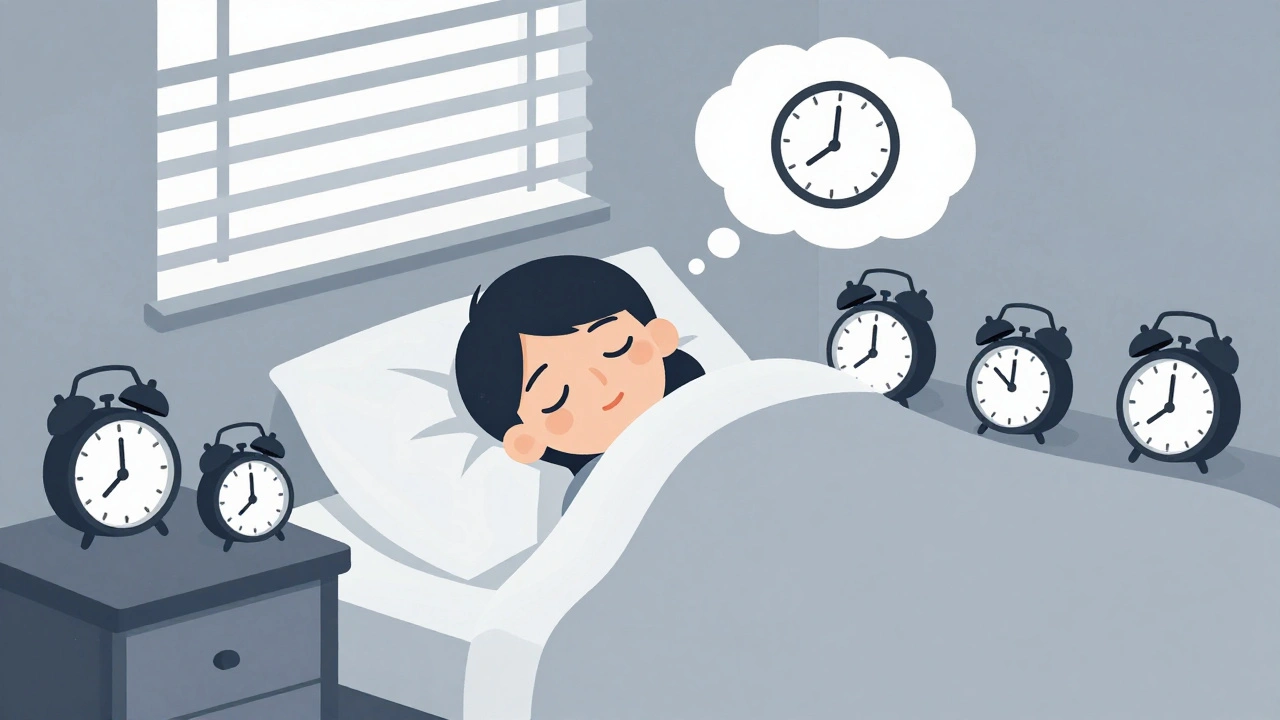
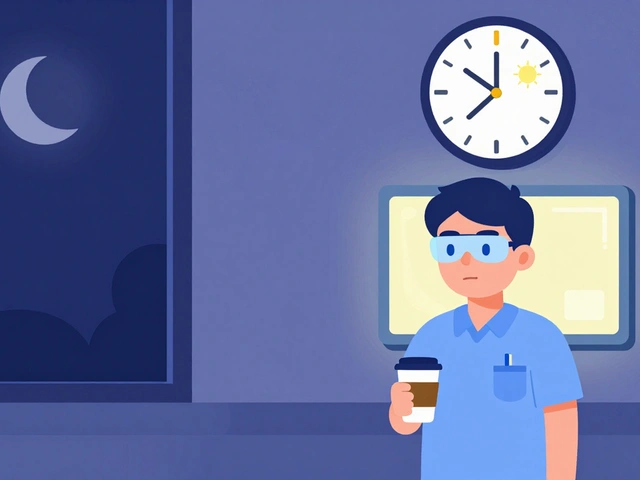
Imagine setting 17 alarms just to wake up for work-and still missing it three times in two months. For people with idiopathic hypersomnia, this isn’t an exaggeration. It’s daily life. Unlike just feeling tired after a bad night, idiopathic hypersomnia (IH) is a real, neurological sleep disorder where you sleep for 10, 12, even 14 hours at night-and still feel like you haven’t slept at all. Naps don’t help. Alarm clocks don’t work. And no matter how much rest you get, your brain just won’t stay awake.
What Exactly Is Idiopathic Hypersomnia?
Idiopathic hypersomnia is a rare neurological condition where the brain struggles to maintain wakefulness, even after long, uninterrupted sleep. The word "idiopathic" means "no known cause." Unlike sleep apnea or insomnia, there’s no obvious trigger-no snoring, no anxiety, no poor sleep habits. The problem lies in the brain’s wake-sleep control system. Symptoms usually start in the teens or early 20s. They creep in slowly over weeks or months. People often think they’re just lazy or depressed. But it’s not about motivation. It’s biology. You can sleep 11 hours and still wake up feeling like you’ve been hit by a truck. That’s called sleep inertia-or "sleep drunkenness." It’s not just grogginess. It’s confusion, disorientation, and sometimes automatic behavior-like driving to work without remembering the trip. Studies show 36% to 66% of IH patients experience severe sleep inertia that lasts for hours. One-third of patients report falling back asleep multiple times during the day, even after naps that last over an hour. And those naps? They don’t refresh you. That’s a key difference from narcolepsy, where short naps often leave people feeling alert.How Is It Different From Narcolepsy?
Most people confuse IH with narcolepsy because both involve extreme daytime sleepiness. But they’re not the same. Narcolepsy often comes with sudden muscle weakness (cataplexy), triggered by strong emotions like laughter or anger. IH has none of that. Narcolepsy patients usually have disrupted nighttime sleep and sudden "sleep attacks"-falling asleep without warning. IH patients sleep deeply and long at night, sometimes more than 10 hours, and rarely have sudden sleep episodes. Diagnostic tests show clear differences too. The Multiple Sleep Latency Test (MSLT), which measures how fast someone falls asleep during the day, often comes back normal in IH. In narcolepsy, it’s almost always abnormal. That’s why IH is so hard to diagnose. Many patients see four or more doctors over eight to ten years before getting the right label.What’s Happening in the Brain?
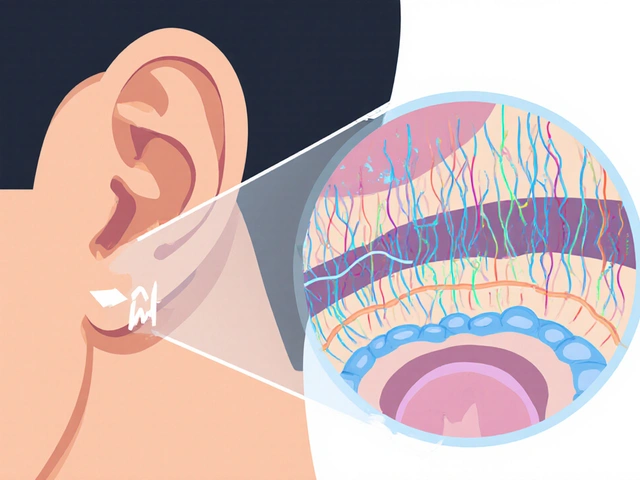
Research is uncovering biological roots. One major clue? A substance in the cerebrospinal fluid of about half of IH patients boosts GABA-A receptors. GABA is the brain’s main "calming" chemical. Too much of it? You get sleepy. It’s like your brain has an invisible sedative running through it. Another theory points to low histamine levels. Histamine keeps you awake. If your brain doesn’t produce enough-or if the signals don’t reach the right places-you’re stuck in a fog. Some studies also suggest problems with orexin, a brain chemical that helps regulate wakefulness. In narcolepsy, orexin is often missing. In IH, it’s not gone-it’s just not working right. Brain imaging studies show differences in activity patterns in areas that control alertness. It’s not a mental health issue. It’s not laziness. It’s a measurable neurological dysfunction.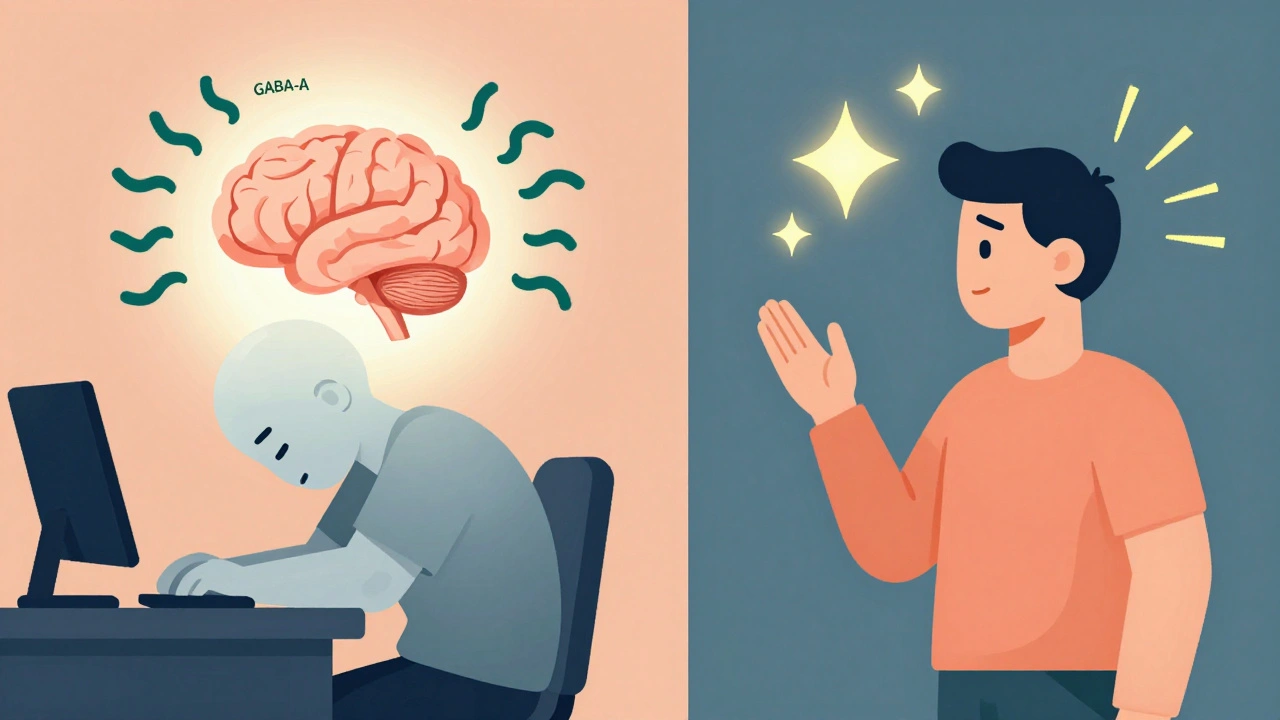
How Is It Diagnosed?
There’s no single blood test. Diagnosis requires ruling out everything else first. Here’s the standard path:- Full sleep history and sleep diary (tracking sleep times, naps, symptoms for at least two weeks)
- Overnight polysomnography (PSG)-a sleep study that checks for sleep apnea, restless legs, or other disorders
- Multiple Sleep Latency Test (MSLT)-done the next day, measuring how fast you fall asleep during four or five nap opportunities
- Rule out other causes: depression, medications, substance use, thyroid issues, or neurological conditions
Current Treatments: What Actually Works?
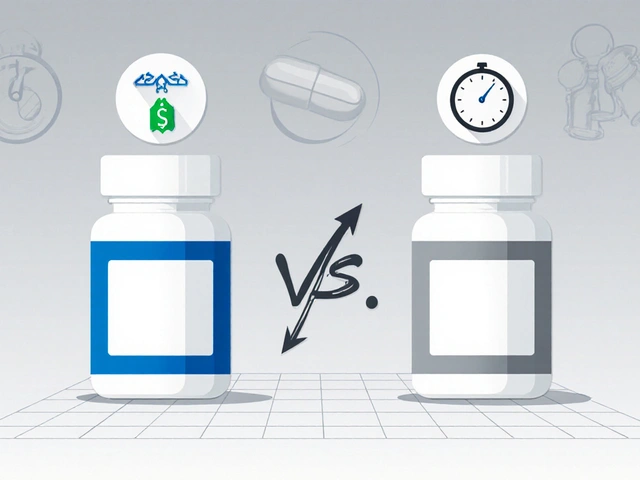
There’s no cure. But there are treatments that help. And they’re not one-size-fits-all. Medications: - Xywav (calcium, magnesium, potassium, and sodium oxybate): Approved by the FDA in 2021 specifically for IH. It’s the first and only drug made for this condition. In clinical trials, it reduced daytime sleepiness by 63%. It’s taken at night in two doses, and it helps with both sleep quality and next-day alertness. But it’s expensive and requires strict monitoring because of side effects like nausea and dizziness. - Modafinil and armodafinil: These stimulants are often tried first. About 42% of IH patients report moderate improvement. But many need higher doses over time, and side effects like headaches, anxiety, and heart palpitations are common. Around 31% of users quit because of them. - Pitolisant: Originally for narcolepsy, this drug boosts histamine in the brain. Early studies show a 47% response rate in IH patients. It’s not FDA-approved for IH yet, but it’s being used off-label with promising results. Non-drug approaches: - Cognitive Behavioral Therapy for Hypersomnia (CBT-H): A 12-week program tailored to IH. It teaches sleep scheduling, managing naps, avoiding caffeine after noon, and coping with brain fog. In one study, 58% of patients saw significant improvement in daily function. When combined with medication, the improvement jumped to 37%. - Strict sleep schedule: Going to bed and waking up at the same time every day-even on weekends-helps stabilize the body’s rhythm. It’s hard when you’re exhausted, but consistency matters. - Caffeine strategy: A small cup of coffee in the morning can help. But after 2 p.m., it often backfires, disrupting nighttime sleep and making next-day fatigue worse.The Real Cost of Untreated IH
This isn’t just about being tired. It’s about losing your life. A survey of 1,243 IH patients found that 87% struggled to keep a job. 62% had lost jobs because of sleepiness. People were fired for falling asleep in meetings, missing deadlines, or showing up late-even when they’d set 10 alarms. On the road, 78% reported near-misses due to drowsiness. 22% had actual car accidents. One Reddit user wrote: "I drove to work on autopilot and didn’t remember turning on the highway. I only realized when I saw my exit pass by." Mental health takes a hit too. 74% of IH patients meet clinical criteria for depression. Not because they’re "sad"-because they’re isolated, exhausted, and feel like no one believes them. The brain fog is so bad that 41% forget to turn off the stove, leave the oven on, or walk out of the house without their keys.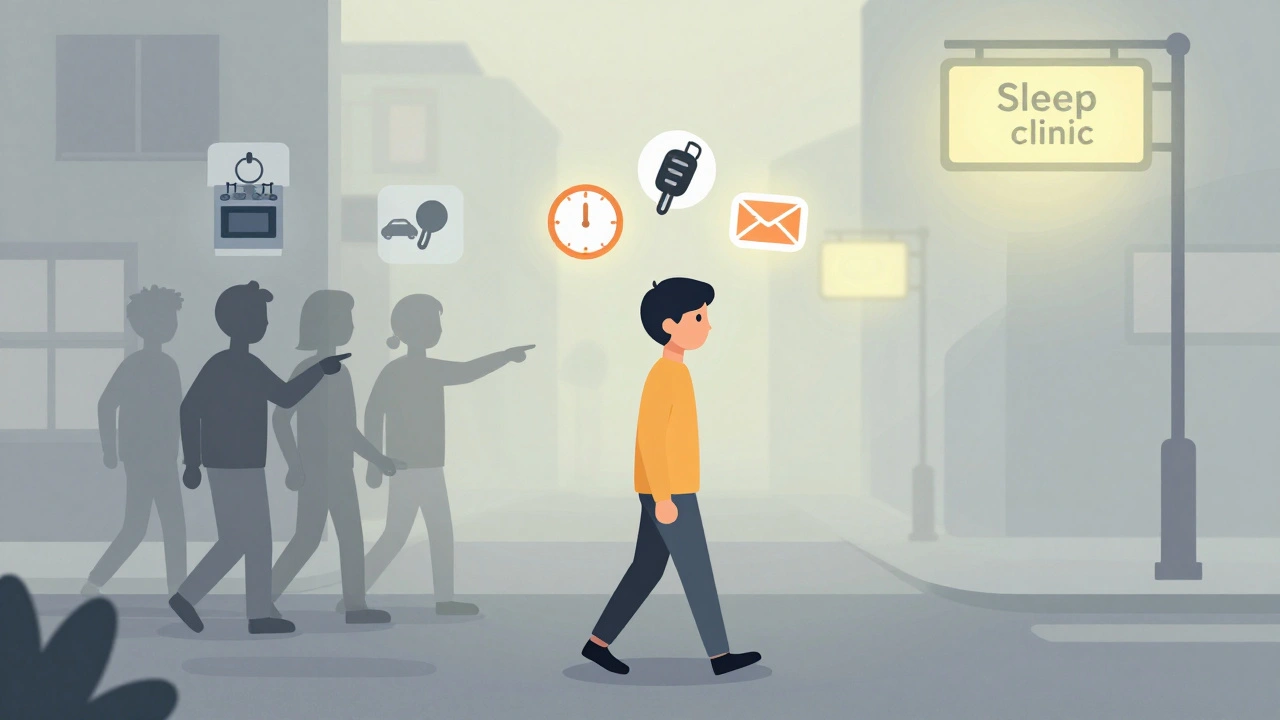
What’s New in Research?
Hope is growing. In March 2023, researchers identified a unique biomarker pattern in cerebrospinal fluid that correctly diagnosed 89% of IH cases. That could cut diagnosis time from years to weeks. Five new drugs targeting GABA-A receptors are in Phase 2 trials. Histamine H3 antagonists like pitolisant are being tested more widely. And scientists are exploring orexin replacement therapy-still in early stages, but potentially game-changing. The NIH has increased funding for hypersomnia research from $1.2 million in 2018 to $8.7 million in 2023. That’s a 625% jump. The Hypersomnia Foundation’s patient registry, with over 2,100 participants, is helping track long-term outcomes and treatment responses. The next version of the sleep disorder classification system, ICSD-4, is due in late 2024. It will include updated diagnostic criteria based on this new science.What Should You Do If You Suspect IH?
If you’ve been sleeping 9+ hours a night and still feel exhausted, if naps don’t help, if you struggle to wake up even after 12 hours of sleep-it’s time to see a sleep specialist. Don’t settle for "just be more tired" or "you’re depressed." Ask for a sleep study. Bring a sleep diary. Mention sleep inertia. Use the term "idiopathic hypersomnia." Most doctors haven’t heard of it. But you can be the one to bring the information. Start with an accredited sleep center. The American Academy of Sleep Medicine has a directory. Insurance often denies claims at first-be ready to appeal. Keep records of every missed workday, every car incident, every time you forgot to turn off the stove. These aren’t just stories-they’re evidence.Final Thought: You’re Not Alone
Idiopathic hypersomnia is rare, but you’re not alone. Thousands live with it. They’re teachers, engineers, nurses, parents. They wake up tired. They fight to stay awake. They get up again, even when the world doesn’t understand. The science is catching up. Treatments are improving. Awareness is growing. You don’t have to accept this as your normal. There is help. There is hope. And your exhaustion? It’s real. And it’s treatable.9 Comments

Sabrina Thurn
December 10, 2025 AT 22:22 PM
The GABA-A receptor overactivity hypothesis is fascinating-there’s emerging evidence that some IH patients have endogenous GABA potentiators in their CSF that bind to β-subunits, effectively mimicking benzodiazepine effects without exogenous administration. This explains why stimulants often fail: you’re not under-aroused, you’re pharmacologically sedated from within. Pitolisant’s histaminergic action may bypass this blockade entirely.

Anna Roh
December 12, 2025 AT 22:10 PM
I sleep 14 hours and still feel like I’ve been run over by a train. My cat judges me harder than my boss does.

Tiffany Sowby
December 13, 2025 AT 04:31 AM
Oh great, another ‘it’s not your fault’ post from people who want sympathy instead of accountability. If you can’t wake up, maybe you’re just not trying hard enough. I work 60-hour weeks and I’m awake at 5 AM every day. Stop making excuses.

Asset Finance Komrade
December 13, 2025 AT 14:44 PM
One must consider the ontological implications of sleep as a social construct. If consciousness is merely a fluctuation of neurochemical gradients, then perhaps ‘hypersomnia’ is not a disorder, but an evolutionary recalibration-a quiet rebellion against the capitalist imperative to be perpetually alert. 🤔

Jennifer Blandford
December 15, 2025 AT 09:42 AM
I cried reading this. Not because I’m sad-because I finally feel understood. I’ve been called ‘spacey’ since college. I forgot my kid’s birthday last year because I fell asleep in the middle of the kitchen and woke up at 3 AM with the oven still on. 😭 You’re not alone. We’re out here. And we’re warriors.

Brianna Black
December 15, 2025 AT 18:21 PM
The NIH funding increase from $1.2M to $8.7M is monumental. This isn’t just medical progress-it’s cultural validation. When institutions invest in rare diseases, they’re saying: your suffering matters. To every person reading this: your exhaustion is not weakness. It’s biology. And biology deserves respect.

Stacy Tolbert
December 16, 2025 AT 16:56 PM
I used to think caffeine was my lifeline. Then I realized it was making everything worse. After 2 p.m.? Total disaster. Now I stick to one small espresso at 8 a.m. and I swear, my brain fog lifts by noon instead of crashing at 1 p.m. Small changes, huge difference.

Ronald Ezamaru
December 18, 2025 AT 14:28 PM
I’m a nurse and I’ve had patients with IH. The hardest part isn’t the sleepiness-it’s the loneliness. They’re afraid to speak up because everyone thinks they’re lazy. I’ve seen people lose jobs, relationships, custody of kids over this. Please, if you’re reading this and you think you might have it-go to a sleep center. Bring your diary. Fight for your life. You’re not crazy. You’re not broken. You’re just wired differently.
Larry Lieberman
December 10, 2025 AT 17:34 PM
I used to think I was just lazy until I started setting 15 alarms and still woke up at 3 PM. 🥲 Now I know it’s not me-it’s my brain. Just found out I might have IH after 7 years of being called ‘unmotivated.’ Finally feel seen.