
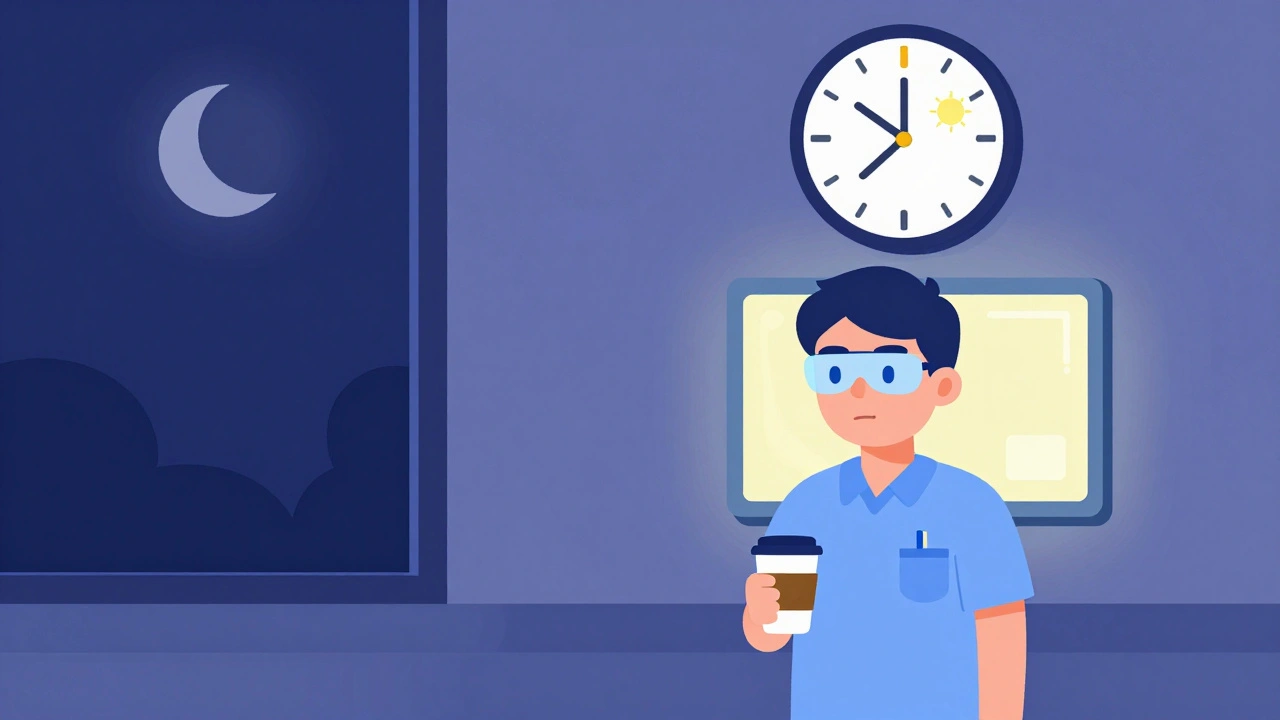
Working nights doesn’t just mean you’re tired. If you’re consistently struggling to sleep during the day, feeling groggy on the job, or waking up too early no matter how hard you try to rest, you might have shift work sleep disorder (SWSD). This isn’t just bad sleep habits-it’s a medical condition tied to your body’s internal clock being out of sync with your work schedule. The American Academy of Sleep Medicine officially recognizes it, and it affects up to one in three night or rotating shift workers. You’re not lazy. You’re not failing at sleep. Your biology is fighting your schedule.
Why Your Body Won’t Let You Sleep During the Day
Your brain runs on a 24-hour rhythm called the circadian clock. It’s controlled by a tiny group of cells deep in your brain called the suprachiasmatic nucleus. This clock tells your body when to feel awake and when to feel sleepy based on light and darkness. When you work nights, you’re forcing your body to be awake when it’s supposed to be sleeping-and asleep when it’s supposed to be awake. Melatonin, the sleep hormone, normally rises in the evening and stays high through the night. But if you’re trying to sleep at 9 a.m. after a 12-hour night shift, your body is still pumping out melatonin because it thinks it’s 2 a.m. Meanwhile, cortisol-the hormone that keeps you alert-is low when you need to be awake and spikes when you’re trying to rest. This mismatch means you’re fighting your own biology. Studies show that even after years on night shifts, only 2-5% of workers fully adapt. Most lose 1-4 hours of sleep every night. That adds up to 10-20 hours of sleep debt per week. Over time, this isn’t just exhausting. It increases your risk of heart disease, diabetes, obesity, and even certain cancers. The International Agency for Research on Cancer classifies shift work as “probably carcinogenic” because of how deeply it disrupts your body’s natural rhythms.How Do You Know If It’s SWSD and Not Just Being Tired?
Not everyone who works nights has SWSD. The difference is persistence and impact. If you’ve been having trouble sleeping for at least one month (some guidelines say three), and it’s directly tied to your work schedule, you might have it. Symptoms include:- Insomnia: Difficulty falling asleep, staying asleep, or waking up too early
- Excessive sleepiness during work hours: Dozing off, trouble focusing, slow reaction times
- Fatigue that doesn’t go away with rest
- Mood swings, irritability, or depression
- Memory lapses and trouble concentrating
- Headaches or digestive issues
What Works: Proven Strategies to Reclaim Your Sleep
There’s no magic pill, but science-backed strategies can help. The American Academy of Sleep Medicine recommends a three-part plan:1. Light Therapy-Use Light Like a Drug
Light is your most powerful tool. During your night shift, expose yourself to bright light-ideally 2,000 to 10,000 lux-for 30-60 minutes every 2 hours. Use a light box or even a bright LED lamp. This tricks your brain into thinking it’s daytime, suppressing melatonin and boosting alertness. When your shift ends, wear blue-light-blocking glasses on your way home. Even a 30-minute walk in daylight after your shift can reset your rhythm. Don’t skip this. One 2022 study found workers who used light therapy improved sleep quality by 40% within three weeks.2. Melatonin-Take It at the Right Time
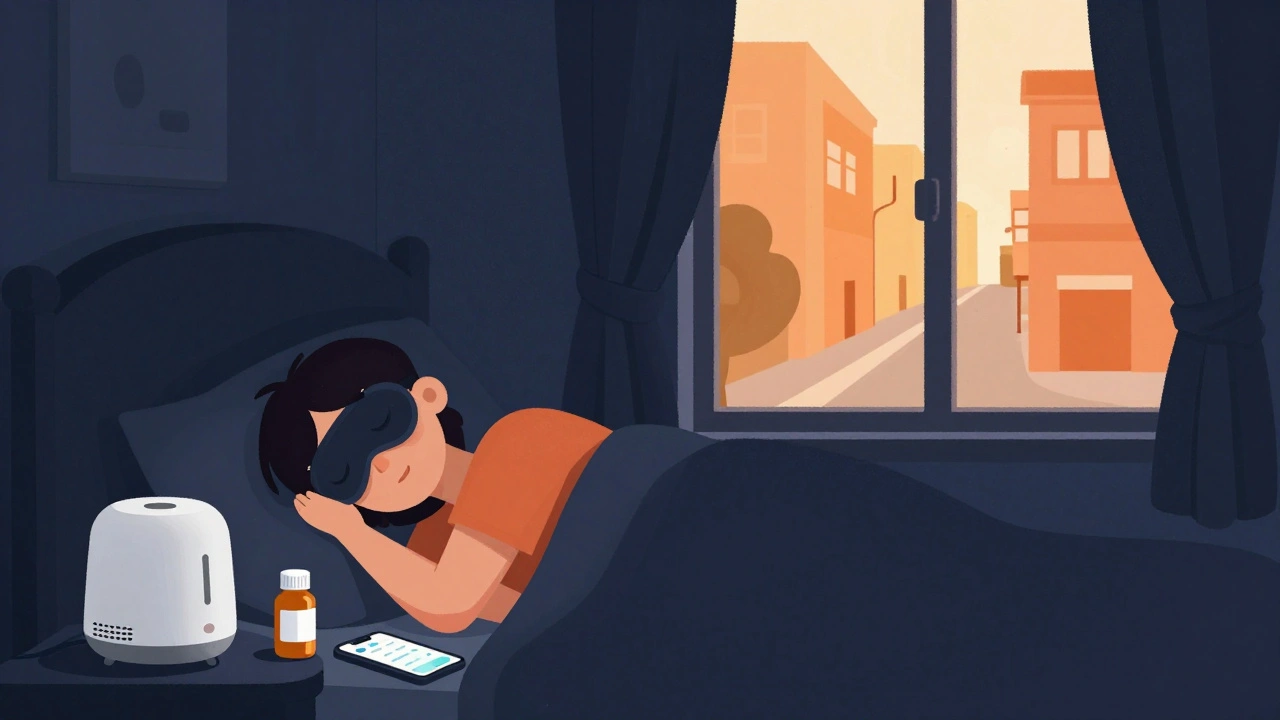
Melatonin supplements can help, but timing matters. Take 0.5 to 5 mg about 30 minutes before your daytime sleep. Don’t take it before your night shift-that’ll make you sleepy when you need to be alert. Studies show it can help you fall asleep faster and stay asleep longer, especially when combined with darkness.3. Caffeine-Use It Smart
Caffeine is fine, but don’t overdo it. Stick to 200 mg max per dose (about two cups of coffee) and stop at least 2 hours before you plan to sleep. That means if your shift ends at 7 a.m., no caffeine after 5 a.m. Too much caffeine late in your cycle will wreck your sleep.What Doesn’t Work (And Why)
You’ve probably tried these already:- Alcohol to “help you sleep”: It makes sleep shallow and fragmented. You’ll wake up more tired.
- Sleeping in on days off: Sleeping 12 hours on Saturday to “catch up” throws your rhythm even further off. Try to keep your sleep schedule within 1-2 hours of your work schedule, even on weekends.
- Just pushing through: Fatigue isn’t a character flaw. It’s a biological warning. Working while sleepy increases error rates by up to 30%-and that’s dangerous in healthcare, driving, or manufacturing.
Workplace Barriers-Why It’s Harder Than It Should Be
Here’s the ugly truth: most employers don’t help. Only 22% of night shift workers have access to quiet, dark sleeping spaces at work, even though the CDC says it’s a best practice. In factories and hospitals, managers often see sleep as a personal problem, not a safety issue. A 2021 case study from a Midwest plant found a worker with undiagnosed SWSD caused a $2.3 million equipment failure because he fell asleep at the controls. That’s not just tragic-it’s preventable. Some companies are starting to wake up. The CDC’s NIOSH program is used by 45% of Fortune 500 companies. They train managers to recognize fatigue, adjust schedules, and provide light therapy tools. But it’s still rare.Who’s Most at Risk?
Not everyone handles night shifts the same way. Women are 28% more likely to develop SWSD than men. Older workers-especially those over 50-are at higher risk. One study found 34% of workers aged 50-64 have SWSD, compared to 15% of those under 30. Your chronotype matters too. If you’re naturally a “night owl,” you adapt much better than a “morning lark.” Research from the University of Munich shows night owls adjust 37% more easily to night schedules. If you’ve always hated mornings, you might be built for this. But if you’re the type who wakes up at 6 a.m. without an alarm, your body is fighting you.New Treatments on the Horizon
In May 2023, the FDA approved a new drug called sodium oxybate for SWSD-related sleepiness. It’s the first new medication for this condition in nearly a decade. It’s not for everyone-it’s tightly controlled due to side effects-but it’s a sign that the medical community is finally taking SWSD seriously. Researchers are also testing personalized treatments based on your genes. Variations in the PER3 and CLOCK genes affect how well you adapt to shift work. In the next few years, genetic testing could help predict who’s most at risk and tailor interventions before problems start.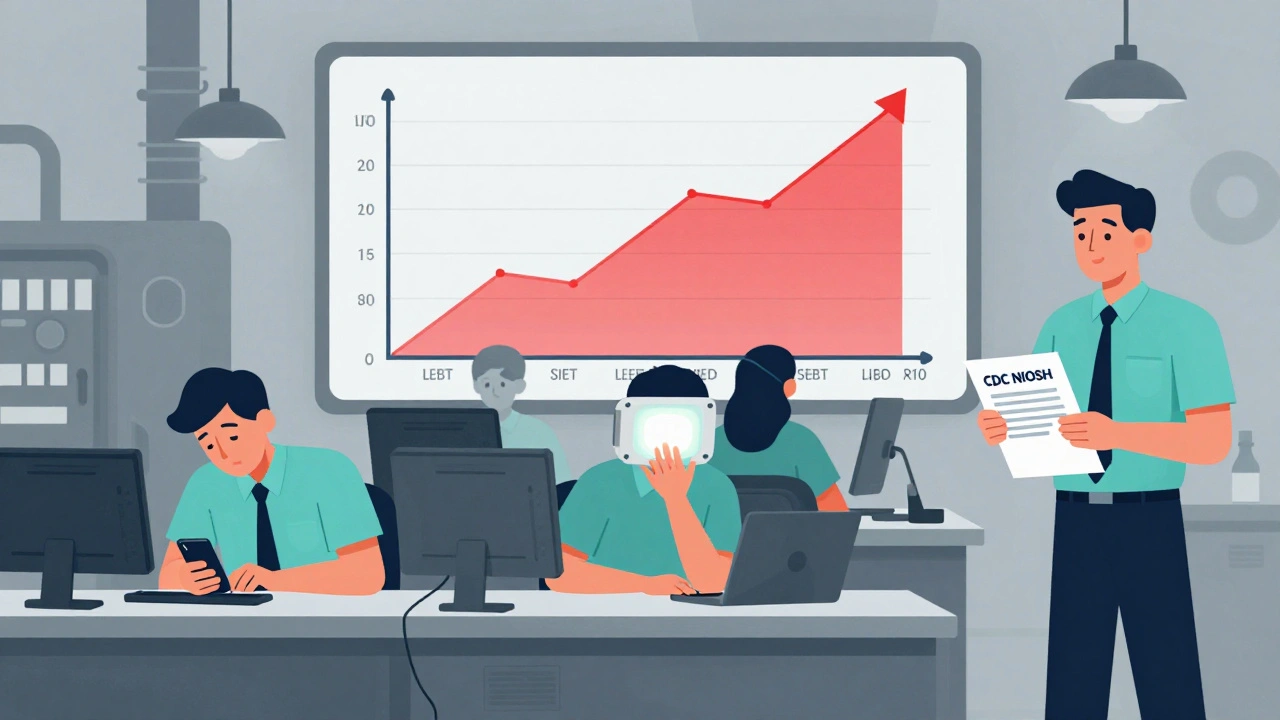
What You Can Do Right Now
You don’t need to wait for your employer to fix this. Start with these steps:- Track your sleep for a week with a simple app or notebook. Note when you go to bed, wake up, and how rested you feel.
- Invest in blackout curtains and a white noise machine. Use them every time you sleep.
- Wear blue-light-blocking glasses on your way home from work.
- Try 20-30 minute naps before your shift or during breaks. Studies show they improve alertness by 68%.
- Use bright light during your shift and avoid sunlight on your way home.
- Take melatonin 30 minutes before your daytime sleep.
- Stop caffeine 2 hours before sleep.
When to See a Doctor
If you’ve tried these steps for 4-6 weeks and still can’t sleep or stay alert, talk to a sleep specialist. Bring your sleep log. Ask about actigraphy-a device that tracks your movement and sleep patterns over days. It’s the gold standard for diagnosing SWSD. Don’t wait until you make a mistake at work, get into a car accident, or your health starts to decline. SWSD is treatable. But it won’t fix itself.Final Thought: This Isn’t Just About Sleep
Night shift work is part of modern life. But your body wasn’t built for it. SWSD isn’t a personal failure-it’s a mismatch between human biology and modern work demands. The good news? You can manage it. With the right tools, you can protect your sleep, your health, and your safety. You don’t have to choose between your job and your well-being. You just need to know how to fight back-with science, not willpower.Can you fully adapt to night shifts?
Only 2-5% of night shift workers ever fully adapt, even after years on the schedule. Most people never get their body clock to fully align with nighttime work. That’s why SWSD is so common-it’s not about willpower, it’s about biology.
Is melatonin safe for long-term use?
Yes, melatonin is generally safe for long-term use at low doses (0.5-5 mg). It’s not addictive like sleep medications. But it’s not a cure-all. It works best when paired with light management and sleep hygiene. Always talk to your doctor before starting any supplement, especially if you’re on other medications.
Should I take naps during my night shift?
Yes. A 20-30 minute nap before or during your shift can significantly improve alertness and reduce errors. NASA and military studies show naps boost performance by up to 50%. Avoid naps longer than 30 minutes-they can leave you groggy. Set an alarm.
Why do I feel worse on my days off?
Because your sleep schedule changes. If you sleep late on days off, your body gets confused. You’re trying to reset your clock every weekend. Try to keep your sleep and wake times within 1-2 hours of your work schedule-even on days off. It’s hard, but it helps your rhythm stay stable.
Can SWSD cause long-term health problems?
Yes. Chronic sleep disruption from SWSD increases your risk of heart disease, type 2 diabetes, obesity, depression, and certain cancers. The International Agency for Research on Cancer classifies shift work as “probably carcinogenic.” The longer you work nights without managing your sleep, the higher your risk.
Are there any new treatments for SWSD?
In 2023, the FDA approved sodium oxybate for excessive sleepiness caused by SWSD. It’s a new option for people who don’t respond to light therapy or modafinil. Researchers are also testing genetic-based treatments that tailor advice to your body’s natural rhythms. Wearable tech that tracks your circadian rhythm is expected to be widely used in workplaces by 2025.
Is SWSD covered by health insurance?
Many insurance plans cover sleep studies, melatonin, and even light therapy devices if prescribed by a doctor. Check with your provider. Some employers also offer wellness programs that provide light boxes or sleep coaching at no cost. Don’t assume it’s not covered-ask.
13 Comments

patrick sui
December 4, 2025 AT 04:01 AM
the circadian misalignment data here is spot-on. melatonin’s phase-shifting effect is well-documented in chronobiology literature - but most employers treat it like a caffeine fix. we need systemic interventions, not just biohacks. #shiftworkisnotalifestylechoice

Grant Hurley
December 4, 2025 AT 13:04 PM
just got off a 12hr shift and read this in my car before going home. 20min nap before work saved my life today. also wore my blue blockers like a boss. thanks for the legit info, not just fluff.

Lucinda Bresnehan
December 4, 2025 AT 22:56 PM
as a nurse who’s done nights for 14 years, i can confirm: the melatonin + blackout curtains combo is the only thing keeping me from becoming a ghost. also, naps > coffee. always.
ps: my dog now sleeps in my room to ‘help’ - he’s basically my circadian alarm clock.

Declan Flynn Fitness
December 5, 2025 AT 05:27 AM
you’re not alone. i used to think i was just lazy. turns out my brain was just confused. started using a 10k lux lightbox at 2am during shift - game changer. sleep improved 70%. now i even enjoy my days off. 🙌

Walker Alvey
December 5, 2025 AT 21:30 PM
so you’re telling me my body isn’t broken… it’s just that capitalism hates sleep? shocking. next you’ll say air conditioning is a human right.

Patrick Smyth
December 7, 2025 AT 11:51 AM
THIS IS A CONSPIRACY. THEY WANT US TIRED. THEY WANT US TO MAKE MISTAKES. THEY WANT US TO BECOME DEPRESSED SO WE DON’T ASK FOR MORE MONEY. THE FACTORY OWNERS ARE SIPPING TEA WHILE WE STARE AT MACHINES LIKE ZOMBIES. I’VE SEEN IT.

Shannon Gabrielle
December 8, 2025 AT 02:51 AM
so let me get this straight - the government says shift work causes cancer but won’t pay for light therapy? typical. if you’re rich you get melatonin and sleep pods. if you’re poor you get a coffee machine and a guilt trip. america.

Conor Forde
December 8, 2025 AT 08:10 AM
you call this science? i’ve been on nights since 2011 and my sleep schedule is a Jackson Pollock painting. i took melatonin, wore glasses, lit up like a disco ball - still wake up at 5am screaming at the ceiling. biology? nah. this is just life being a dick.

Michelle Smyth
December 8, 2025 AT 13:48 PM
how quaint. you’re treating a systemic labor exploitation issue as if it’s a personal sleep hygiene problem. the real solution isn’t melatonin - it’s a 32-hour workweek with guaranteed daytime hours. but no, let’s just give nurses more glasses.

Dennis Jesuyon Balogun
December 10, 2025 AT 02:08 AM
in Nigeria, night shift workers get no light boxes, no melatonin, no support. we rely on black tea, prayer, and sheer will. but this post? it’s the first time i’ve seen our struggle validated in Western medicine. thank you. we are not broken. we are surviving.

ANN JACOBS
December 11, 2025 AT 10:53 AM
As someone who has spent over two decades in the healthcare industry, I feel compelled to emphasize that the physiological toll of chronic circadian disruption is not merely anecdotal-it is quantifiable, longitudinal, and deeply correlated with metabolic dysregulation, immune suppression, and neurocognitive decline. The data presented here is not only accurate but critically underappreciated by policy-makers. Employers must be held accountable. Sleep is not a luxury. It is a biological imperative. I urge all night-shift personnel to advocate for institutional change-not just personal adaptation. Your health is non-negotiable.

Adrian Barnes
December 12, 2025 AT 07:06 AM
People who can't adapt to night shifts shouldn't be allowed to work them. It's not a medical condition-it's a lack of discipline. My grandfather worked 16-hour shifts in a steel mill with no light therapy and still raised five kids. You're not sick. You're weak.
Write a comment
Popular Posts

Declan O Reilly
December 2, 2025 AT 16:59 PM
man i’ve been on nights for 8 years and this is the first time someone actually explained why i feel like a zombie who got hit by a truck made of regret
my body thinks it’s 3am even when i’m trying to watch my kid’s soccer game at noon. biology is a cruel boss.