
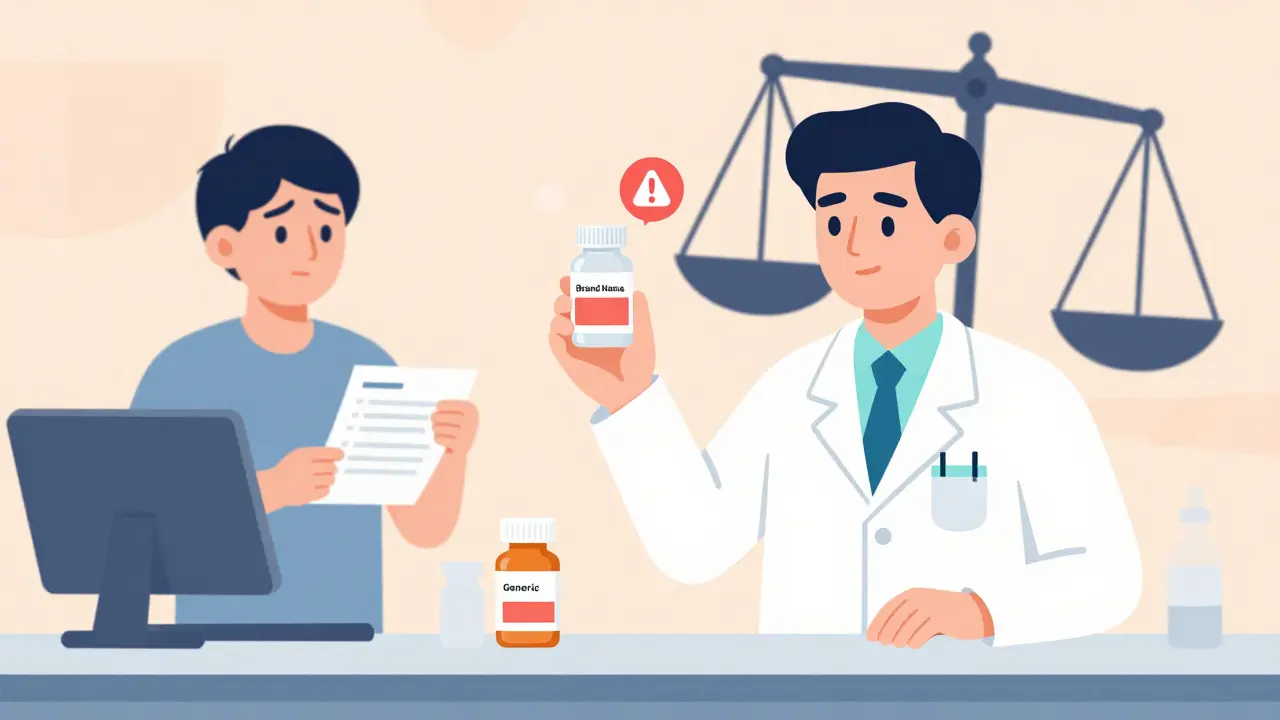
When a pharmacist swaps a brand-name drug for a generic version, they’re not just saving money-they’re stepping into a legal gray zone. In 2025, this simple act carries more risk than ever before. Federal law shields generic drug makers from lawsuits over warning labels, but pharmacists? They’re on the front line. And if something goes wrong, they could be the ones held responsible-even if they followed every state rule.
Why Generic Substitution Isn’t as Simple as It Looks
Generic drugs are cheaper. That’s the whole point. In the U.S., 90% of prescriptions are filled with generics, saving patients and insurers over $1.6 trillion since 2009. But cost savings don’t mean zero risk. The real danger lies in drugs with a narrow therapeutic index-medications where tiny changes in blood levels can cause harm. Think warfarin, levothyroxine, and antiepileptics. A 2017 study in Epilepsy & Behavior found that 18.3% of patients had therapeutic failure after switching from brand to generic epilepsy drugs. That’s not a glitch. It’s a pattern. The FDA says generics must be bioequivalent-meaning their absorption falls between 80% and 125% of the brand. Sounds precise, right? But that’s a 45% range. For a blood thinner like warfarin, even a 10% shift can mean the difference between a clot and a bleed. Patients don’t know this. They assume “generic” means “identical.” And when they suffer side effects, they blame the pharmacist.The Legal Trap: Who’s Actually Liable?
Here’s the catch: under the 2011 Supreme Court case PLIVA v. Mensing, generic manufacturers can’t be sued for failing to update warning labels. Why? Because federal law forces them to copy the brand’s label exactly. They can’t add a warning about a new side effect, even if they see it in their own data. So if a patient has a bad reaction, there’s no manufacturer to sue. That leaves pharmacists. And doctors. And sometimes, the patient’s own insurance company. But here’s the twist: state laws vary wildly. In 27 states, pharmacists are legally protected-they face the same liability whether they dispense brand or generic. In 23 states? No such protection. Connecticut, for example, has no explicit shield. A pharmacist there who substitutes levothyroxine without consent could be sued for negligence-even if they followed all state rules. And it gets worse. In 2022, a patient in Florida suffered permanent neurological damage after a generic antiepileptic drug was substituted. The court dismissed the case. Why? Because the generic maker couldn’t be held liable under federal preemption. The pharmacist? The doctor? No one could be sued. The patient lost everything. No one paid.What States Are Doing About It
Some states are trying to fix this. California, Texas, and Florida have strong protections: pharmacists must notify patients, get consent, and keep records. And guess what? A 2019 study by the National Community Pharmacists Association found these states had 32% fewer malpractice claims related to substitution. Other states? Not so much. In Massachusetts and Connecticut, where notification isn’t required and liability isn’t clearly defined, claims are 27% higher. Patients don’t know they’ve been switched. Pharmacists don’t know they’re at risk. And when things go wrong, lawsuits fly. The American Medical Association now recommends that all substitutions of narrow therapeutic index drugs require explicit patient consent. A 2022 survey of 452 pharmacists showed 74% have refused to substitute these drugs anyway-out of fear. That’s not practice. That’s panic.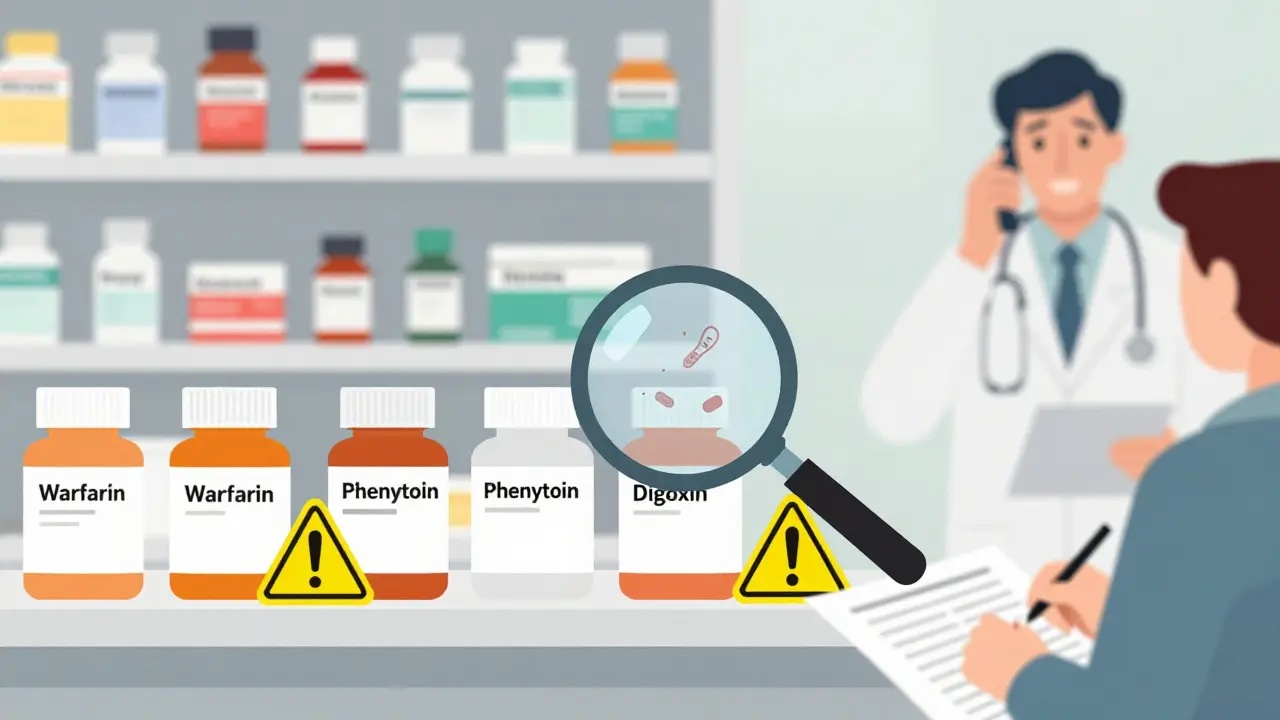
Seven Steps to Reduce Your Risk as a Pharmacist
You can’t control federal law. But you can control what happens in your pharmacy. Here’s what works:- Know your state’s rules. Laws change every year. Use the National Association of Boards of Pharmacy’s Compendium. Don’t rely on memory. Don’t assume your state is like the one next door.
- Flag high-risk drugs in your system. Set up electronic alerts in your pharmacy software for warfarin, levothyroxine, phenytoin, and other narrow therapeutic index drugs. Make it impossible to miss.
- Get written consent. Even if your state doesn’t require it, do it anyway. Use a simple form: “I understand this medication has been switched from brand to generic. I’ve been told about possible risks.” Have the patient sign it. Keep it on file.
- Communicate with prescribers. If you’re unsure about a substitution, call the doctor. Most will appreciate you checking. Some will say, “Don’t substitute this one.”
- Log every substitution. Record the brand name, generic name, lot number, and patient name. If there’s ever an issue, you need a paper trail. Traceability isn’t optional-it’s your defense.
- Use a risk assessment tool. The 2021 Journal of the American Pharmacists Association published a 27-point checklist for substitution risk. Use it. Every quarter.
- Buy extra liability insurance. Standard malpractice policies often exclude substitution-related claims. Get supplemental coverage. It costs $300-$800 a year. It could save your license.
What Patients Don’t Know (And Why It Matters)
A 2021 Patient Advocacy Foundation survey found 41% of patients didn’t know their prescription had been switched until they felt sick. In 28% of cases, pharmacists didn’t give the legally required notice. That’s not negligence-it’s systemic failure. Patients trust pharmacists. They assume you’re looking out for them. When they get a pill that looks different, they don’t think “generic.” They think “something’s wrong.” And if they have a seizure, a stroke, or a thyroid crash, they blame the person who handed them the bottle. The good news? Most patients are fine with generics. GoodRx data from 2023 shows 82% satisfaction with substitutions for drugs like metformin and lisinopril. The problem isn’t generics. It’s the lack of transparency for high-risk drugs.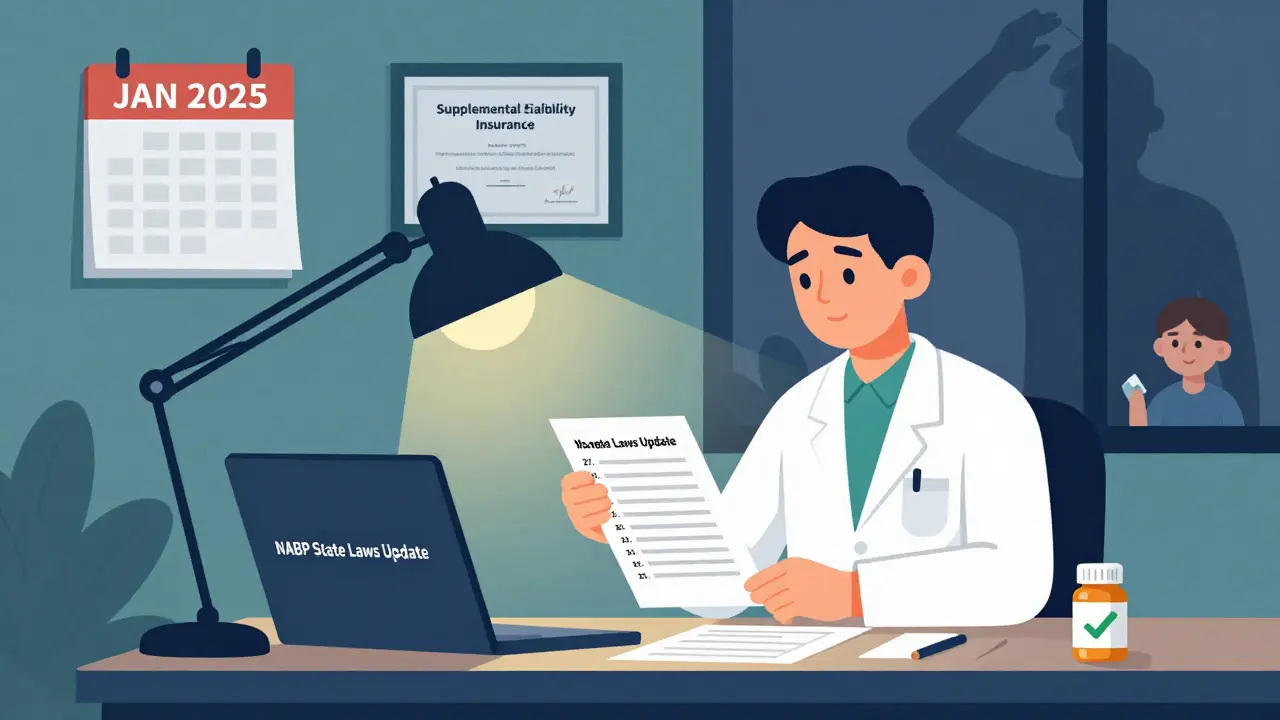
The Future: What’s Coming in 2025
In 2023, 11 states introduced the Generic Drug Safety Act. It would force brand-name makers to update labels within 30 days of new safety data-and require generics to adopt those changes within 60 days. That’s a big shift. It could finally close the liability gap. The FDA’s 2023 pilot program for label changes has approved 68% of requests-but only 12% came from generic manufacturers. Why? Because they’re still legally blocked from initiating changes. The system is broken. Meanwhile, biosimilars-generic versions of biologic drugs-are starting to appear. Forty-five states now allow substitution. But the rules? Messy. Liability? Unclear. This is the next wave. And pharmacists are still unprepared.Bottom Line: Protect Yourself, Protect Your Patients
Generic substitution saves money. That’s good. But it shouldn’t cost lives-or careers. The legal system isn’t fixing this. The FDA isn’t fixing this. You have to fix it in your pharmacy. Don’t wait for a lawsuit. Don’t wait for a state law to change. Start today. Know your rules. Flag your risks. Get consent. Document everything. Buy the extra insurance. Because in 2025, the difference between a safe substitution and a lawsuit isn’t just about compliance. It’s about doing the right thing-even when no one’s watching.Can a pharmacist be sued for substituting a generic drug?
Yes. While federal law protects generic manufacturers from liability, pharmacists can still be sued under state law if they fail to follow substitution rules, don’t notify patients, or substitute high-risk drugs without consent. In states without liability protections, pharmacists face the same legal exposure as if they dispensed the brand-name drug incorrectly.
Which drugs are most dangerous to substitute?
Drugs with a narrow therapeutic index are the highest risk: warfarin (blood thinner), levothyroxine (thyroid), phenytoin and carbamazepine (antiepileptics), digoxin (heart), and lithium (mood stabilizer). Even small changes in blood levels can cause seizures, strokes, thyroid crashes, or fatal toxicity. Studies show substitution of these drugs leads to therapeutic failure in up to 18% of cases.
Do I need patient consent to substitute a generic drug?
It depends on your state. Thirty-two states allow patients to refuse substitution, but only 18 require independent notification beyond the package label. However, best practice is to get written consent for all high-risk drugs-even if your state doesn’t require it. Documentation protects you legally and ethically.
Why can’t generic manufacturers change their warning labels?
Federal law requires generic manufacturers to use the exact same labeling as the brand-name drug. The Supreme Court ruled in PLIVA v. Mensing (2011) that they can’t unilaterally update warnings-even if new safety data emerges. This creates a legal gap: patients can’t sue the maker, and pharmacists may be left holding the liability.
How can I stay updated on state substitution laws?
Use the National Association of Boards of Pharmacy’s (NABP) Compendium of State Pharmacy Laws, updated annually. Many state pharmacy boards also publish summaries. Set a calendar reminder to review your state’s rules every January. Laws change frequently, and ignorance is not a legal defense.
Is generic substitution worth the risk for cost savings?
For most drugs-like statins, antibiotics, or blood pressure meds-yes. The risk is low, and savings are huge. But for narrow therapeutic index drugs, the risk often outweighs the benefit. Many pharmacists choose not to substitute these, even when allowed. Saving $20 isn’t worth risking a patient’s life or your license.
What kind of insurance should a pharmacist get?
Standard malpractice insurance often excludes substitution-related claims. You need supplemental coverage specifically for generic substitution liability. Premiums range from $300 to $800 per year. It’s a small cost compared to the potential legal fees, license suspension, or loss of reputation.
15 Comments

Joanna Ebizie
December 16, 2025 AT 18:50 PM
So let me get this straight - pharmacists are the ones getting sued because big pharma is immune? That’s not justice, that’s a joke. 😒

Ron Williams
December 17, 2025 AT 05:24 AM
I’ve been doing this for 22 years and I’ve never once substituted levothyroxine without consent. Not because the law says so - because I’ve seen what happens when you do. One patient went from fine to full-on myxedema coma. No one wants that on their conscience.

Elizabeth Bauman
December 17, 2025 AT 17:09 PM
Of course the FDA won’t fix this - they’re in bed with Big Pharma. This whole system is rigged. The government lets generics rip off the brand names but won’t let them update labels? That’s not regulation, that’s corporate protectionism. And don’t even get me started on how Canada and the EU handle this. We’re falling behind because we let corporations write our laws.

Randolph Rickman
December 18, 2025 AT 15:28 PM
Great breakdown. Seriously. The seven steps? Do them all. Even if your state doesn’t require it. You’re not just protecting yourself - you’re protecting people who trust you with their lives. That’s why we chose this job. Don’t cut corners. Ever.

Dave Alponvyr
December 18, 2025 AT 17:00 PM
Just get consent. Do the paperwork. It’s not hard.

Dylan Smith
December 20, 2025 AT 13:43 PM
I’m a pharmacist and I’ve been refusing to swap warfarin for years even when it’s legal. I don’t care if the patient saves $12. I care if they have a stroke because some lab report said the generic was ‘bioequivalent’

Kitty Price
December 20, 2025 AT 14:04 PM
My grandma got switched to a generic levothyroxine and started having panic attacks. She didn’t even know until she found the bottle looked different. We had to switch her back. This needs to change.

Colleen Bigelow
December 22, 2025 AT 06:19 AM
This is what happens when you let corporations control healthcare. The FDA? A puppet. The courts? A joke. The pharmacist? The fall guy. And the patient? Just another statistic. Wake up people - this isn’t about liability, it’s about who owns your body. And right now, it’s not you.

Kayleigh Campbell
December 22, 2025 AT 06:26 AM
So we’re supposed to be the moral compass in a system designed to fail? Cool. I’ll just keep doing the right thing and hope the lawsuit doesn’t come. Meanwhile, my malpractice premium just went up again. Thanks, capitalism.

Billy Poling
December 24, 2025 AT 06:15 AM
It is imperative to acknowledge that the legal framework governing pharmaceutical substitution is not merely a matter of regulatory compliance, but rather a profound ethical conundrum wherein the fiduciary duty of the pharmacist is placed in direct conflict with the economic imperatives of a corporatized healthcare system. The judicial precedent established in PLIVA v. Mensing, while legally sound under the doctrine of federal preemption, has effectively created a liability vacuum that disproportionately burdens frontline practitioners who possess neither the authority nor the resources to rectify systemic deficiencies. Moreover, the variance in state statutes introduces an untenable patchwork of obligations, rendering consistent clinical practice an exercise in legal roulette. It is thus incumbent upon professional associations to advocate for uniform federal standards that recognize pharmacists as integral agents of therapeutic safety, not convenient scapegoats for institutional negligence.

SHAMSHEER SHAIKH
December 26, 2025 AT 00:56 AM
Dear colleagues, I must express my heartfelt appreciation for this comprehensive and deeply insightful exposition. The meticulous attention to detail regarding narrow therapeutic index drugs, coupled with the clear delineation of state-by-state legal disparities, is nothing short of exemplary. As a pharmacist practicing in a resource-constrained environment, I have witnessed firsthand the devastating consequences of unmonitored substitution - and I can attest that the seven-step protocol you have outlined is not merely recommended, but essential. I shall distribute this document to every pharmacy trainee under my mentorship. Thank you for your courage in speaking truth to power.

Hadi Santoso
December 26, 2025 AT 13:38 PM
man i just saw a post about this on r/pharmacy and i was like wow… this is wild. i work in a small town and people get mad when i ask them to sign a paper for their thyroid med. like… it’s just a pill right? nope. it’s not. i’m gonna start using that checklist. thanks for the heads up.

sue spark
December 27, 2025 AT 20:04 PM
why do we still let pharmacists do this without mandatory patient education? if a patient doesn’t know they got switched then how is it their fault when something goes wrong? we’re not just handing out candy here

Mike Smith
December 27, 2025 AT 21:49 PM
To all pharmacists reading this: You are not merely dispensing medication. You are the final checkpoint in a chain that begins with a physician’s prescription and ends with a patient’s well-being. Your vigilance, your diligence, your commitment to documentation - these are not bureaucratic formalities. They are the bedrock of patient safety. The law may be broken. The system may be flawed. But your integrity? That is yours to protect. Do not underestimate its value. Do not compromise it for convenience. The next patient who walks through your door? They’re counting on you.



Arun ana
December 16, 2025 AT 10:29 AM
Wow, this is such an important topic! 🙌 I work in a pharmacy in India and we face similar issues with generic substitution, even if the regulations are different. The trust patients place in us is huge, and we’re often the only ones who catch these risks. Thanks for laying this out so clearly.