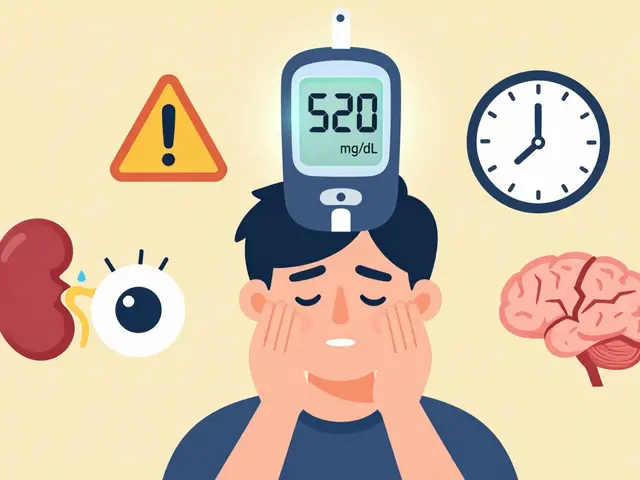
It sounds like a cliché from a sitcom, but the "doctor's scribble" is a deadly serious problem. When a pharmacist can't tell if a digit is a 0 or an 8, or if a drug name is one of two similar-sounding medications, the result isn't just a phone call for clarification-it's a potential disaster. We are talking about a systemic failure where a simple lack of legibility translates into thousands of preventable deaths every year. If you've ever stood at a pharmacy counter wondering why your medication is taking so long to fill, there's a good chance the pharmacist is currently playing a guessing game with your health.
The Real Cost of Bad Handwriting
Let's be clear: this isn't just about annoying handwriting; it's about survival. The Institute of Medicine has pointed out that medical errors cause between 44,000 and 98,000 preventable deaths annually in the U.S. alone. Shockingly, about 7,000 of those deaths are linked directly to illegible handwriting. When a prescriber forgets their initials or scribbles a dosage that looks like something else, the safety net fails.
The scale of the problem is staggering. One study found that a massive 92% of doctors and medical students made prescription errors, averaging two mistakes per person. In another audit of surgical notes in a British hospital, only 24% of the records were rated as "good" or "excellent" for legibility. That means the vast majority of critical medical instructions are essentially riddles that nurses and pharmacists have to solve on the fly.
Beyond the tragedy of patient death, there is a massive operational drain on the healthcare system. Pharmacists in the U.S. make roughly 150 million calls every year just to clarify unreadable orders. Nurses, too, feel the brunt of this, spending an average of nearly 13 minutes per illegible prescription just trying to figure out what the doctor actually wanted. In a fast-paced emergency room or a busy ward, those lost minutes are precious.
Why Do Doctors Still Write Like This?
It's easy to blame the individual physician, but the root cause is often the environment. Most doctors are operating under extreme time pressure, multitasking between dozens of patients, and dealing with immense burnout. A 2017 study revealed that 68% of medical trainees felt that slowing down to improve their handwriting would take too much time during patient encounters. When you're rushing to save a life or clear a waiting room, the elegance of your cursive isn't the priority.
However, this "time-saving" shortcut actually creates more work for everyone else. It creates a ripple effect of inefficiency: the doctor spends ten seconds scribbling, the pharmacist spends ten minutes on the phone, and the patient waits an extra hour (or days) for their medication. It's a textbook example of how a small efficiency gain for one person creates a massive risk and workload for the rest of the chain.

The Digital Solution: E-Prescribing
The most effective way to kill the "scribble" is to remove the pen entirely. E-prescribing is the digital transmission of a prescription from a healthcare provider to a pharmacy. Since its introduction in 2003, it has fundamentally changed the game. By 2019, about 80% of office-based providers in the U.S. had adopted this technology.
The numbers speak for themselves. Research shows that electronic prescriptions have an 80.8% accuracy rate in complying with safety criteria, while handwritten ones crater at a dismal 8.5%. Even when a doctor manually types a prescription without using a template, the accuracy stays around 56%-still vastly superior to a handwritten note. In short, e-prescribing reduces legibility errors by a whopping 97%.
| Feature | Handwritten Prescriptions | E-Prescribing (Electronic) |
|---|---|---|
| Safety Compliance Rate | 8.5% | 80.8% |
| Legibility Error Reduction | Baseline (High Risk) | 97% Reduction |
| Pharmacist Workflow | High volume of clarification calls | Direct, digital transmission |
| Risk of Omissions | High (missing initials, dosages) | Low (mandatory fields) |
New Challenges in the Digital Age
Switching to computers doesn't solve everything instantly. While we've fixed the "can't read the ink" problem, we've introduced "digital noise." One of the biggest issues is alert fatigue. When a software system pings a doctor every time there's a minor potential drug interaction, the doctor starts ignoring the alerts. If they override a critical warning because they're used to seeing a hundred meaningless ones, the safety benefit is lost.
There are also workflow disruptions. Some clinicians find that documenting everything digitally takes more time during the actual patient visit, which can make the encounter feel less personal. Plus, there's the cost-comprehensive systems can cost a provider between $15,000 and $25,000, and staff need hours of training to use them without making new types of digital mistakes.
Survival Tips for Handwritten Systems
We can't flip a switch and make every clinic in the world digital overnight, especially in resource-limited settings. If you're in a situation where handwritten notes are still the norm, there are ways to minimize the danger. The goal is to remove ambiguity.
- Print, Don't Cursive: Block lettering is significantly harder to misinterpret than flowing script.
- Avoid the "Do Not Use" List: The Joint Commission maintains a list of dangerous abbreviations (like "U" for units, which can look like a zero). Stop using them.
- Be Concrete: Never use vague terms. Instead of "take a few times a day," write "take 1 tablet every 8 hours."
- Check the Essentials: Every script must have the patient's full name, drug name, exact dose, frequency, route (e.g., oral, IV), and the prescriber's clear signature and date.
Some institutions have tried a "feedback loop" system where clinicians self-assess their notes against a 15-item checklist. It's a low-tech way to hold people accountable and slowly move the needle toward better legibility while they wait for a digital upgrade.
The Road to 2030: The End of the Scribble
Looking forward, the handwritten prescription is a dinosaur. With the growth of the e-prescribing market-projected to hit $4.2 billion by 2027-and regulatory pressures like the 21st Century Cures Act, the transition is almost inevitable. We're even seeing the rise of AI-assisted handwriting recognition, which can interpret common drug names with 85-92% accuracy. This could be a lifesaver for clinics that can't afford a full electronic health record system but need to double-check a doctor's scribbles.
Ultimately, the goal is a world where no patient suffers because a pharmacist couldn't tell an "S" from an "L." By embracing digital standards and strict prescribing protocols, we can move from a system of guesswork to a system of guaranteed safety.
How many deaths are caused by poor handwriting on prescriptions?
According to the Institute of Medicine and data from the MMS Journal, it is estimated that approximately 7,000 deaths annually in the United States are specifically attributable to illegible handwriting on medical prescriptions.
What is e-prescribing and how does it help?
E-prescribing is the digital transmission of a prescription from the provider to the pharmacy. It eliminates handwriting errors, reducing legibility-related mistakes by about 97% and significantly increasing the accuracy of medication dosing and drug selection.
What are the downsides of electronic prescribing systems?
While they solve legibility issues, electronic systems can lead to "alert fatigue," where clinicians ignore safety warnings due to over-notification. They can also increase documentation time and require significant initial financial investment and staff training.
What should I do if I receive a prescription that looks unreadable?
Never guess. If you are a patient or a healthcare provider, the only safe action is to contact the prescribing physician immediately for clarification. Pharmacists spend millions of hours doing this annually to prevent adverse drug events.
Are there any alternatives for clinics that cannot afford e-prescribing?
Clinics can implement strict protocols such as using block printing instead of cursive, adhering to The Joint Commission's "Do Not Use" abbreviation list, and using a 15-item checklist for self-assessment of prescription legibility.