FDA Drug Safety: What You Need to Know About Alerts, Recalls, and Risks
When the FDA drug safety, the system the U.S. Food and Drug Administration uses to monitor and respond to risks from medications. Also known as pharmacovigilance, it’s not just paperwork—it’s the last line of defense when a drug turns out to be more dangerous than first thought. You might hear about a recall or warning and think it’s just noise. But these alerts aren’t random. They come from real cases—like someone losing their hearing after taking an antibiotic, or a common painkiller causing a deadly bleed when mixed with blood thinners.
The FDA doesn’t act on guesses. It watches for patterns: dozens of people with the same rare side effect, a spike in hospital visits linked to a specific drug, or lab results showing a hidden interaction. Drug-specific safety alerts, warnings that apply to just one medication, like ciprofloxacin and tendon rupture are different from class-wide safety alerts, warnings that cover entire groups of drugs, like all fluoroquinolones or all PPIs. One might mean you need to switch pills. The other means you need to ask your doctor if any drug in that family is right for you.
And it’s not just about the active ingredient. Inactive ingredients, the fillers, dyes, and preservatives in pills can cause reactions too—especially when you’re taking five or six meds a day. A dye in one generic version might trigger a rash. A filler in another might mess with how your body absorbs a critical drug. The FDA tracks these too, but you won’t see them on the label. You have to know what to ask for.
When a medication recall, a formal request to pull a drug from shelves because of safety concerns happens, it’s not always because the pill is broken. Sometimes it’s because the lot was stored wrong. Sometimes it’s because a batch got contaminated. Other times, it’s because the drug causes a rare but deadly reaction like DRESS syndrome—where your immune system attacks your organs weeks after you started taking it. You need to check the lot number. You need to call your pharmacy. And you never stop cold turkey unless your doctor says so.
What you’ll find below are real cases that show how FDA drug safety works in practice. Not theory. Not warnings you’ve seen on TV. Real stories from people who got hurt, figured out why, and learned how to stay safe. You’ll see how antibiotics can wreck your tendons, how sleep apnea raises your heart risk, how even expired ibuprofen can be risky if stored in heat. You’ll learn how to spot the difference between a minor side effect and a red flag. And you’ll know exactly what to do when your prescription suddenly comes with a warning label you’ve never seen before.
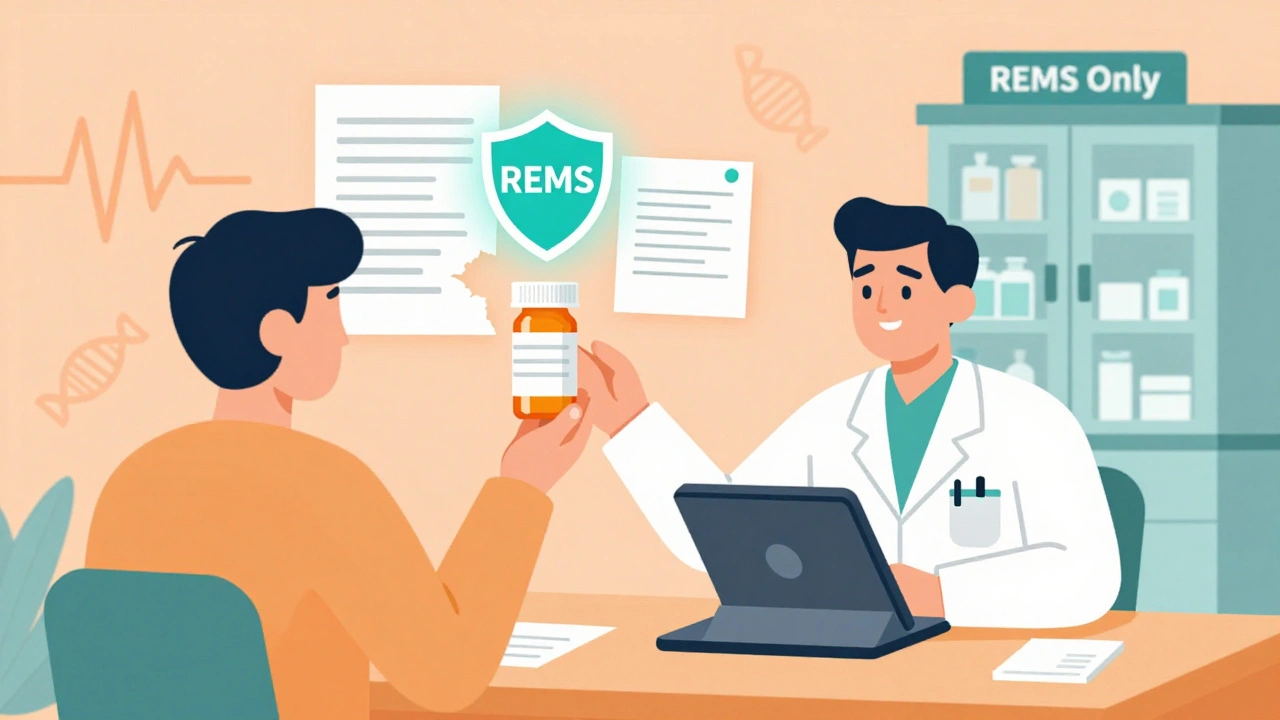
REMS Programs Explained: How the FDA Manages High-Risk Medications
REMS programs are FDA-mandated safety plans for high-risk prescription drugs. They require certifications, registries, and special dispensing rules to prevent serious side effects. Here's how they work - and why they're changing.
View More