High Blood Pressure: Causes, Medications, and What You Can Do
When your high blood pressure, a condition where the force of blood against artery walls stays too high over time. Also known as hypertension, it often has no symptoms but silently increases your risk of heart attack, stroke, and kidney damage. Many people think it’s just about eating too much salt or not exercising enough. But what you might not realize is that some everyday medications can quietly push your numbers up — and you might not even know it’s happening.
NSAIDs, common pain relievers like ibuprofen and naproxen are a major culprit. If you take them regularly for back pain or arthritis, they can interfere with how your kidneys handle fluid and sodium, leading to medication-induced hypertension, a rise in blood pressure caused by drugs rather than lifestyle. Same goes for corticosteroids, prescribed for inflammation, allergies, or autoimmune conditions. Even decongestants in cold meds can spike your pressure. And if you’re on a diuretic, a water pill used to lower blood pressure by flushing out excess fluid, it’s easy to mess up your balance — too little water, too much salt loss, and you’re at risk for dizziness or worse.
Monitoring your blood pressure at home isn’t just a good idea — it’s essential. Numbers can look fine at the doctor’s office but climb at home due to stress, meds, or diet. Tracking helps you spot patterns: Does your pressure jump after taking that painkiller? Does it drop too low when you skip your diuretic? Knowing these details lets you talk smarter with your doctor and avoid dangerous surprises.
There’s no single fix for high blood pressure. Sometimes it’s lifestyle. Sometimes it’s a drug interaction. And sometimes, it’s just the wrong combination of pills you didn’t know were working against each other. Below, you’ll find real, practical guides on what medications raise your pressure, how to monitor it safely, what to do if your numbers creep up, and how to avoid common mistakes that make things worse — all based on actual patient experiences and clinical evidence.
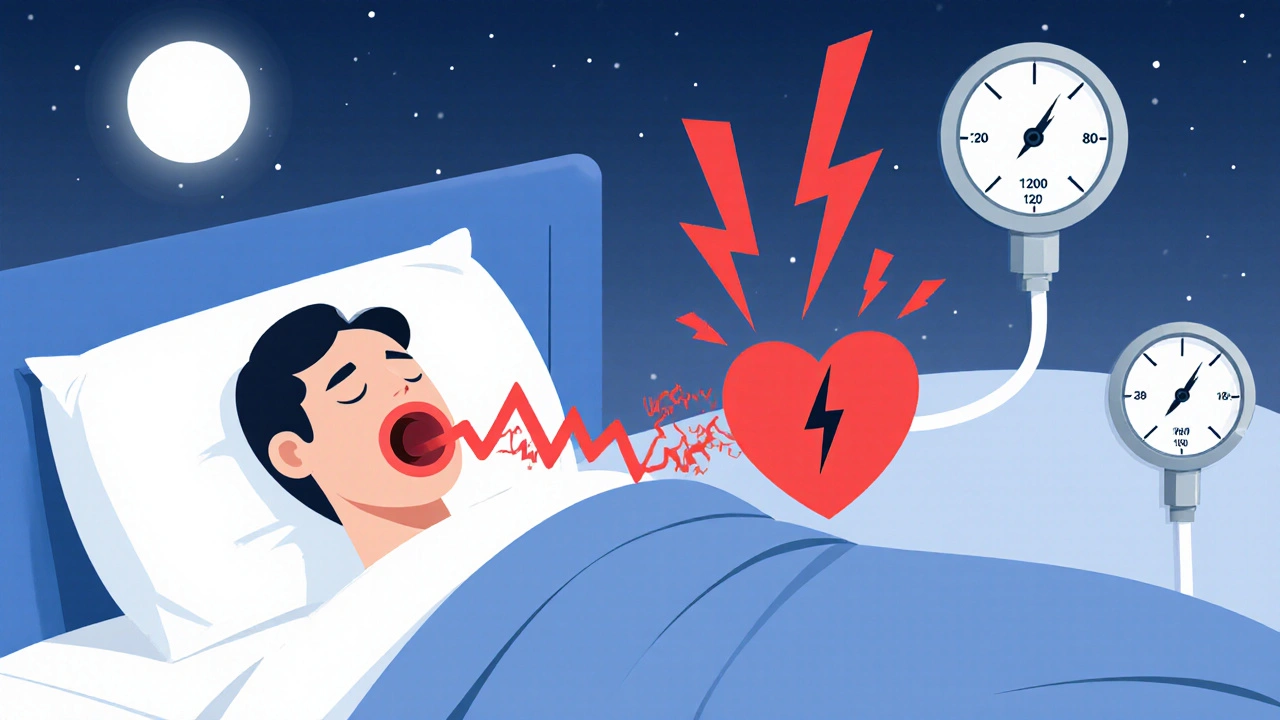
Sleep Apnea and Heart Risk: How Snoring Can Raise Blood Pressure and Trigger Arrhythmias
Sleep apnea isn't just about snoring-it raises blood pressure, triggers dangerous heart rhythms, and increases heart attack and stroke risk. Learn how untreated sleep apnea harms your heart and what actually works to fix it.
View More