Side Effect: What You Need to Know About Medication Reactions and Risks
When you take a medication, your body doesn’t just respond to what it’s supposed to do—it often reacts in ways you didn’t expect. This is a side effect, an unintended reaction to a drug that can range from annoying to deadly. Also known as an adverse reaction, a side effect isn’t a mistake—it’s a biological response, and it’s more common than most people realize. Some side effects are mild, like a dry mouth or drowsiness. Others, like tendon rupture from antibiotics or DRESS syndrome from antivirals, can land you in the hospital. The difference between harmless and dangerous often comes down to timing, dosage, and what else you’re taking.
Not all side effects come from the active ingredient. Sometimes it’s the fillers, dyes, or preservatives in generic medications, the inactive ingredients that help form the pill or capsule that trigger reactions. Other times, it’s how drugs interact with each other—like aspirin mixing with blood thinners and doubling your bleeding risk, or smoking changing how your liver breaks down medications. Even your age matters: older adults are more vulnerable to opioid-induced delirium and falls because their bodies process drugs slower. And some side effects don’t show up for weeks, like DRESS syndrome, which fools doctors into thinking it’s a virus. That’s why knowing your drug history and tracking new symptoms is critical.
There are systems in place to track these risks. The FDA uses REMS programs, special safety plans for high-risk drugs that require doctor certifications and patient monitoring to control access. But no system catches everything. That’s why you need to know the signs: sudden swelling, rash, hearing loss, confusion, or unexplained pain. If you’re on a long-term medication—like trazodone for sleep or lamotrigine for mood—ask if it affects your thyroid, kidneys, or cognitive function. Side effects aren’t just a footnote in the pamphlet. They’re part of the conversation you should have with your doctor before every prescription.
What you’ll find below isn’t a list of scary stories. It’s a practical guide to recognizing, avoiding, and managing real medication risks. From how fluoroquinolones can tear your Achilles tendon to why expired OTC pills might still be safe—or not—you’ll see exactly what to watch for, what to ask for, and when to act. These aren’t theoretical warnings. They’re based on real cases, real data, and real people who learned the hard way. Pay attention. Your next side effect might be preventable.
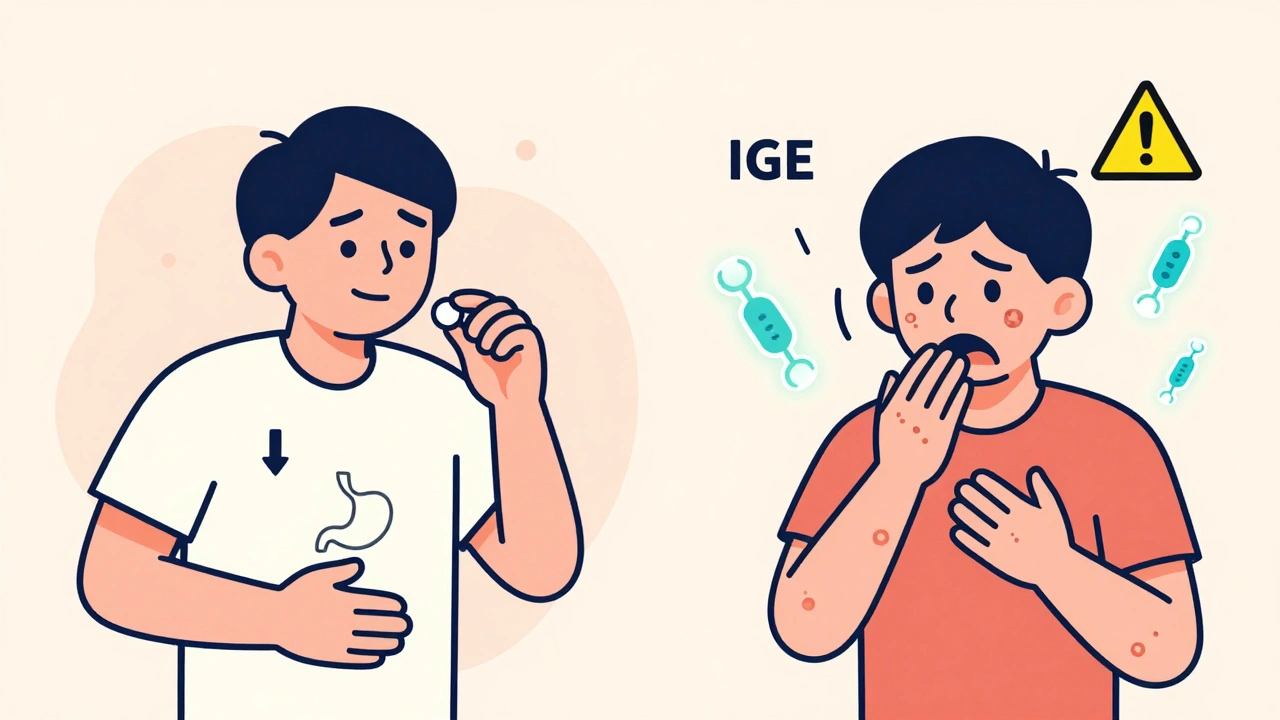
How to Tell a Side Effect from a True Drug Allergy
Learn how to tell the difference between a side effect and a true drug allergy-why confusing them can be dangerous, how to recognize the signs, and what steps to take to get the right diagnosis.
View More