Uhthoff's Phenomenon: What It Is and How It Affects MS Patients
When your body gets too warm, your multiple sclerosis symptoms might suddenly get worse—even if your condition hasn’t changed. This is called Uhthoff's phenomenon, a temporary flare-up of neurological symptoms triggered by a rise in body temperature. Also known as Uhthoff's sign, it’s not a new attack or disease progression. It’s your nerves, already damaged by MS, struggling to send signals when they overheat. Think of it like a frayed electrical wire: when it gets hot, the signal falters. Cool it down, and the connection comes back.
This isn’t just about hot weather. A hot shower, a fever, intense exercise, or even sitting in a sauna can trigger it. People with MS often notice blurred vision, weakness, or tingling when they’re overheated—symptoms that vanish once they cool off. That’s the key difference: multiple sclerosis, a chronic autoimmune condition that damages the protective coating around nerves causes permanent changes, but heat sensitivity, a reversible reaction tied to nerve conduction issues is temporary. You’re not getting worse—you’re just temporarily struggling to communicate with your body.
Doctors don’t treat Uhthoff’s phenomenon with new meds. They treat the trigger. Cooling down is the fastest fix. Wearing cooling vests, drinking cold fluids, avoiding hot tubs, and planning outdoor time for cooler hours all help. Some people track their body temperature and symptoms to spot patterns. If you notice your vision blurs after a workout or your legs feel heavy after a long car ride in summer, it’s likely Uhthoff’s. The good news? It doesn’t mean your MS is advancing. It just means your nerves are extra sensitive.
The posts below cover real-world ways people manage this daily. You’ll find guides on cooling gear that actually work, how to tell if a symptom spike is Uhthoff’s or something more serious, and what medications or lifestyle tweaks help reduce heat sensitivity. Some posts even link heat issues to other MS treatments—like how certain drugs might make you more prone to overheating. Whether you’re newly diagnosed or have lived with MS for years, understanding this phenomenon helps you take back control. No magic cure, but plenty of practical ways to stay cool and keep symptoms from running your life.
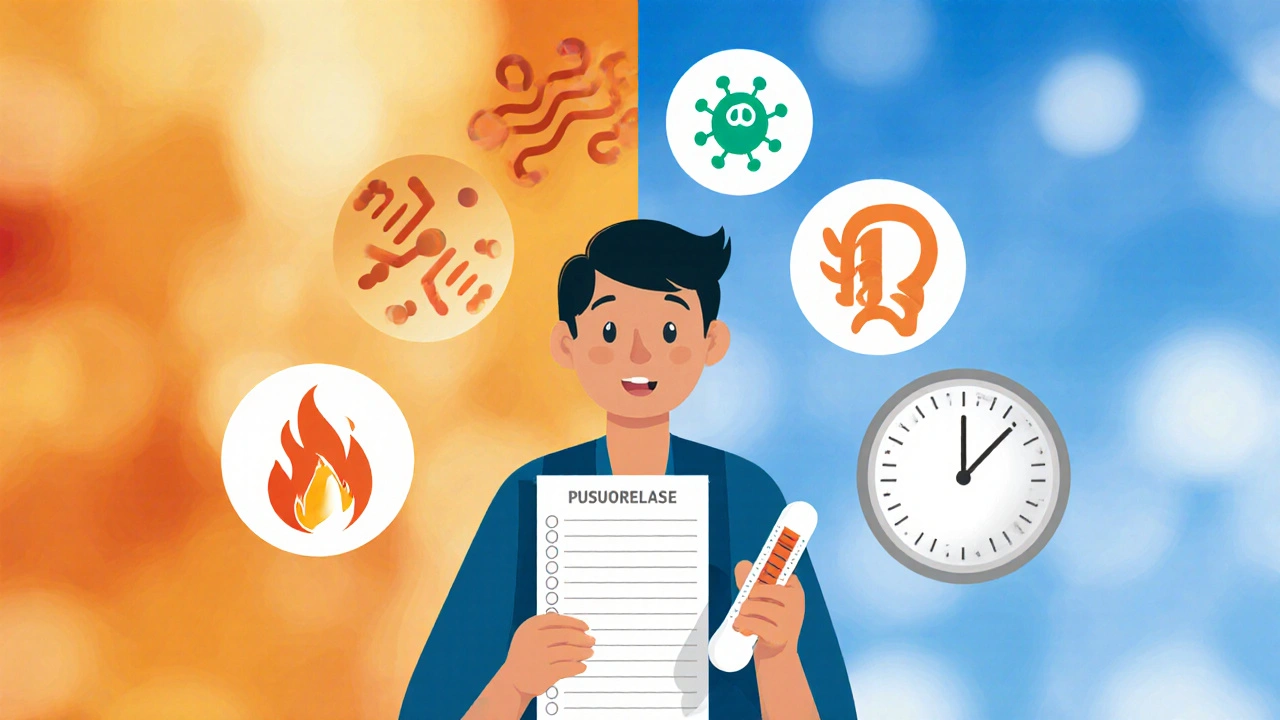
MS Relapse vs. Pseudorelapse: What Triggers Each and When Steroids Are Needed
Learn how to tell the difference between a true MS relapse and a pseudorelapse, what triggers each, and why steroids are sometimes unnecessary-and even risky. Understand when to seek help and how to avoid misdiagnosis.
View More