Diabetes Medication Weight Impact Estimator
Enter your weight and select a medication to see the estimated impact.
Estimated Impact Analysis
Imagine spending months tightening your diet and hitting the gym, only to see the scale creep up despite your best efforts. For many people managing type 2 diabetes, this isn't a failure of will-it's a side effect of their medication. While Sulfonylureas is a class of oral medications that stimulate the pancreas to release more insulin to lower blood glucose, they come with a stubborn baggage: weight gain. This creates a frustrating paradox where your blood sugar looks great on paper, but your metabolic health takes a hit as the pounds pile on.
How Sulfonylureas Actually Cause Weight Gain
It's not just about the insulin. While more insulin in your system tells your body to store glucose as fat, there's a deeper biological mechanism at play. Research, including a detailed study from the Farmacia Journal, shows that these drugs interact directly with adipocytes (fat cells). By activating specific receptors, they increase intracellular calcium levels, which essentially flips a switch that stimulates lipogenesis-the process of creating new fat.
Because of this, the weight gain isn't just water weight. It's a structural change in how your body stores energy. For some, this results in a modest increase of 2-5 kg, but for others, it can be a significant barrier to overall health, making it harder to manage the very condition the drug is meant to treat.
Not All Sulfonylureas Are Created Equal
One of the biggest misconceptions is that every drug in this class behaves the same. In reality, the specific molecule matters. If you're worried about the scale, you should know that different agents have very different weight profiles. For instance, Glimepiride has been strongly linked to measurable weight gain in clinical cohorts. In one study, over 60% of patients who gained weight were using glimepiride.
On the flip side, Gliclazide often tells a different story. Some long-term trials have actually seen patients maintain or even slightly decrease their body weight while on this specific medication. This proves that the "class effect" isn't universal; the specific prescription can make a huge difference in your long-term weight trajectory.
| Medication Class | Typical Weight Effect | Primary Impact |
|---|---|---|
| Sulfonylureas (e.g., Glimepiride) | Gain (2-5 kg) | Stimulates insulin & lipogenesis |
| Metformin | Neutral / Slight Loss (2-3 kg) | Improves insulin sensitivity |
| SGLT2 Inhibitors | Loss (3-7 kg) | Flushes glucose via urine |
| GLP-1 Agonists | Significant Loss (3-7+ kg) | Slows digestion & suppresses appetite |

The Trade-Off: Cost vs. Metabolic Health
If these drugs cause weight gain, why are they still prescribed? The answer is simple: accessibility. Sulfonylureas are incredibly affordable, often costing as little as $15 a month. Compare that to newer GLP-1 agonists, which can cost over $600 monthly. For millions of people without premium insurance or high incomes, these drugs are a lifeline for keeping glucose levels safe.
However, this affordability comes with a metabolic cost. Experts like Dr. John B. Buse have pointed out that while glucose control improves, the resulting weight gain can actually worsen other metabolic markers. This is why the American Association of Clinical Endocrinologists suggests avoiding these drugs if your BMI is already over 35 kg/m². The risk of compounding existing obesity issues often outweighs the blood-sugar benefits.
Real-World Struggles and Patient Experiences
Clinical trials are one thing, but the real world is another. On community platforms like Reddit and ADA forums, patients often report more drastic weight shifts than those seen in controlled studies. It's common to see people report gaining 10-12 pounds in under a year despite no changes to their diet. This often leads to a "cycle of frustration" where the patient feels they are doing everything right, yet the scale keeps moving up, eventually leading them to stop the medication altogether.
But it's not all bad news. Some patients find that the stability of their blood sugar allows them to feel more energetic, which helps them stick to an exercise routine that offsets the drug-induced weight gain. The key is recognizing that the weight gain is a side effect of the chemistry, not a failure of the person.
Strategies to Fight the Weight Gain
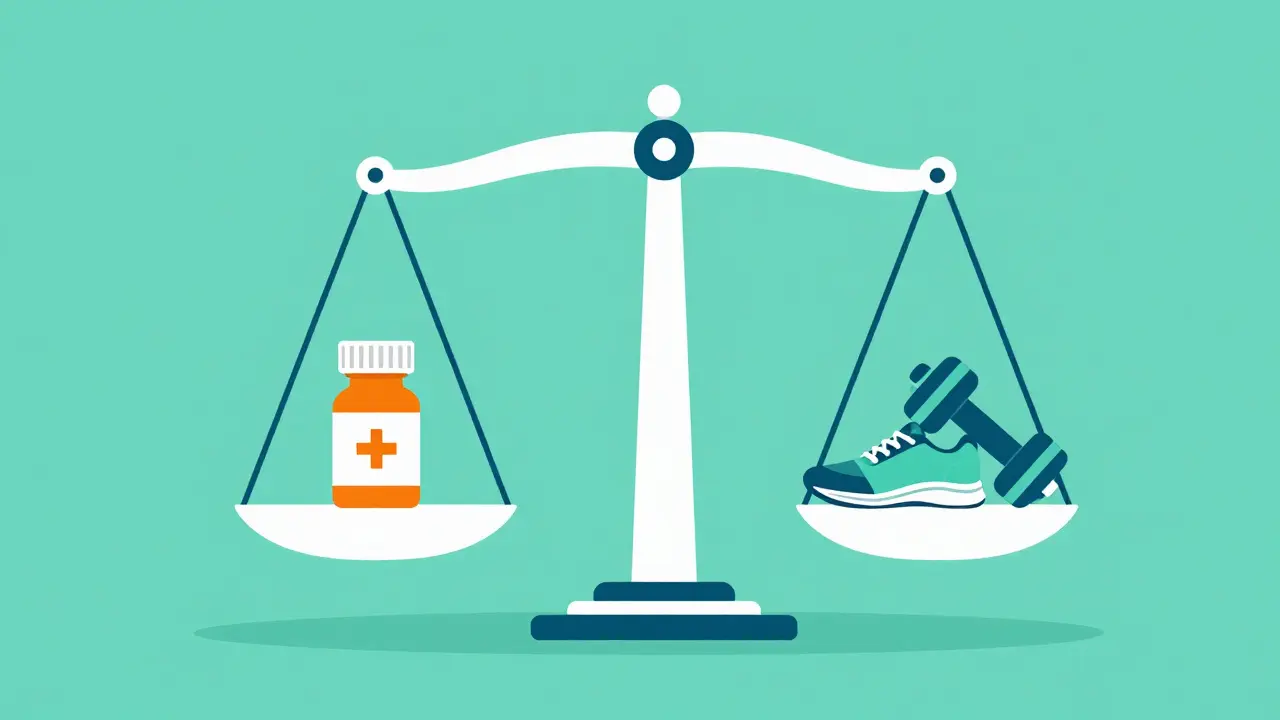
If you're on a sulfonylurea and seeing the numbers climb, you don't necessarily have to jump ship immediately. There are a few evidence-based ways to mitigate the impact:
- Strategic Pairing: Combining a sulfonylurea with Metformin can help. Data suggests that patients on this combination gain significantly less weight than those on sulfonylureas alone.
- Time-Restricted Eating: Recent research suggests that limiting your eating window to 8 hours a day can drastically reduce the weight gain associated with these drugs.
- Active Monitoring: Don't wait for your six-month checkup. Monitor your weight monthly. If you see an increase of more than 3% of your baseline weight within half a year, it's time to talk to your doctor about a switch.
- Focus on Resistance Training: Since these drugs affect how fat is stored, maintaining muscle mass through strength training can help keep your metabolic rate higher.
Looking Ahead: The Future of Diabetes Care
The medical world is moving away from "one size fits all" prescribing. We're seeing a shift toward using sulfonylureas only for patients with low cardiovascular risk and tight budgets, while prioritizing weight-loss-promoting agents for everyone else. New fixed-dose combinations are also being developed to keep the glucose-lowering power of these drugs while neutralizing the weight gain.
While they may not be the "gold standard" for weight loss, sulfonylureas remain a vital tool in global health. The goal for 2026 and beyond is not to eliminate them, but to use them smarter-matching the specific drug (like gliclazide) to the specific patient's metabolic needs.
How much weight do people typically gain on sulfonylureas?
Most clinical data suggests a weight gain of about 2 to 5 kg (roughly 4.4 to 11 lbs) during treatment. However, real-world reports from patient communities sometimes show higher increases, depending on the specific drug used and the individual's metabolic response.
Which sulfonylurea is least likely to cause weight gain?
Gliclazide is generally considered to have a more favorable weight profile than others in its class. Some studies have even shown that patients on gliclazide may experience a decrease in body weight, unlike glimepiride or glyburide, which are more closely linked to weight gain.
Can I take metformin to stop sulfonylurea weight gain?
Yes, combining sulfonylureas with metformin is a common strategy. Metformin is weight-neutral or may even cause slight weight loss, which can help balance out the weight-promoting effects of the sulfonylurea.
Why do sulfonylureas cause weight gain if they lower blood sugar?
They work by forcing the pancreas to release more insulin. Insulin is an anabolic hormone, meaning it promotes the storage of energy. Additionally, these drugs act on fat cells to increase lipogenesis, which is the creation of new fat tissue.
Should I stop taking my medication if I start gaining weight?
Never stop diabetes medication without consulting your doctor, as this can lead to dangerous spikes in blood glucose (hyperglycemia). Instead, discuss your weight concerns with your provider to see if a different agent, such as an SGLT2 inhibitor or a GLP-1 agonist, is more appropriate for your goals.
Popular Posts