CPAP Therapy: What It Is, How It Works, and What You Need to Know
When you hear CPAP therapy, a treatment that uses steady air pressure to keep your airway open while you sleep. Also known as continuous positive airway pressure, it’s the go-to solution for millions with sleep apnea. This isn’t just about snoring — it’s about keeping your body alive at night. Without it, your airway collapses, oxygen drops, and your brain wakes you up dozens of times without you even realizing it. That’s why CPAP therapy isn’t optional for many — it’s life-saving.
CPAP therapy works by delivering a gentle stream of air through a mask you wear while sleeping. The pressure keeps your throat from closing, letting you breathe normally. It doesn’t cure sleep apnea, but it stops the damage it causes: high blood pressure, heart strain, daytime fatigue, and even memory loss. People who stick with it often say they feel like a different person — more alert, less irritable, and finally sleeping through the night. The machine itself is quieter now than ever, and masks come in all shapes and sizes, from nasal pillows to full-face designs. Finding the right fit matters more than you think — a bad seal means leaks, dry mouth, and frustration.
But CPAP therapy isn’t just about the machine. It’s tied to everything else that affects your sleep. If you’re overweight, losing even 10% of your body weight can reduce your need for pressure. If you drink alcohol or take sedatives, they relax your throat muscles and make CPAP less effective. And if you have nasal congestion, a humidifier attachment or saline spray can make a huge difference. Some people switch to BiPAP if they struggle with high pressure — it’s a cousin to CPAP that adjusts pressure during inhale and exhale. Others try oral appliances, but those only work for mild cases. For most, CPAP remains the gold standard.
You’ll find posts here that dig into the real-world struggles: how to travel with your CPAP, what to do when your mask irritates your skin, why some people quit and how to get back on track, and even how CPAP affects your partner’s sleep. There’s no magic fix — it takes patience. But the payoff is real. Better sleep means better health, better mood, and better days. If you’ve been told you need CPAP therapy, this collection is here to help you understand it, live with it, and actually stick with it.
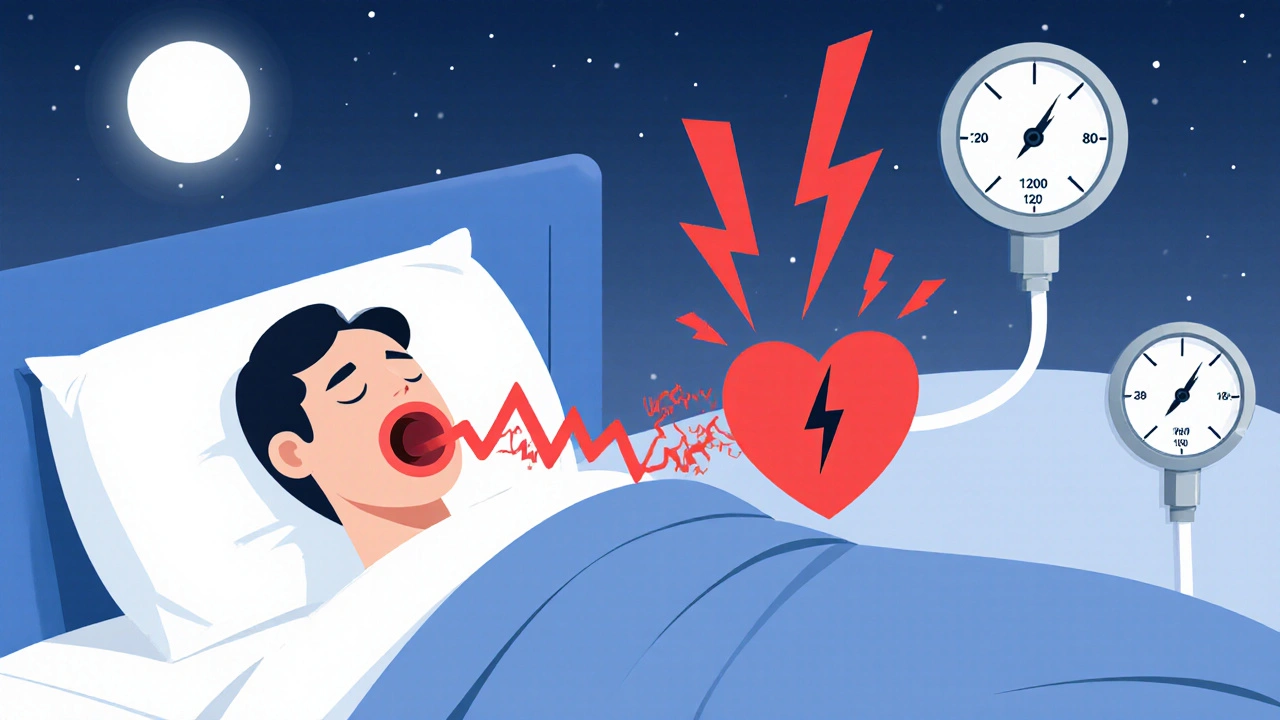
Sleep Apnea and Heart Risk: How Snoring Can Raise Blood Pressure and Trigger Arrhythmias
Sleep apnea isn't just about snoring-it raises blood pressure, triggers dangerous heart rhythms, and increases heart attack and stroke risk. Learn how untreated sleep apnea harms your heart and what actually works to fix it.
View More