DRESS Syndrome: Causes, Symptoms, and Medication Triggers
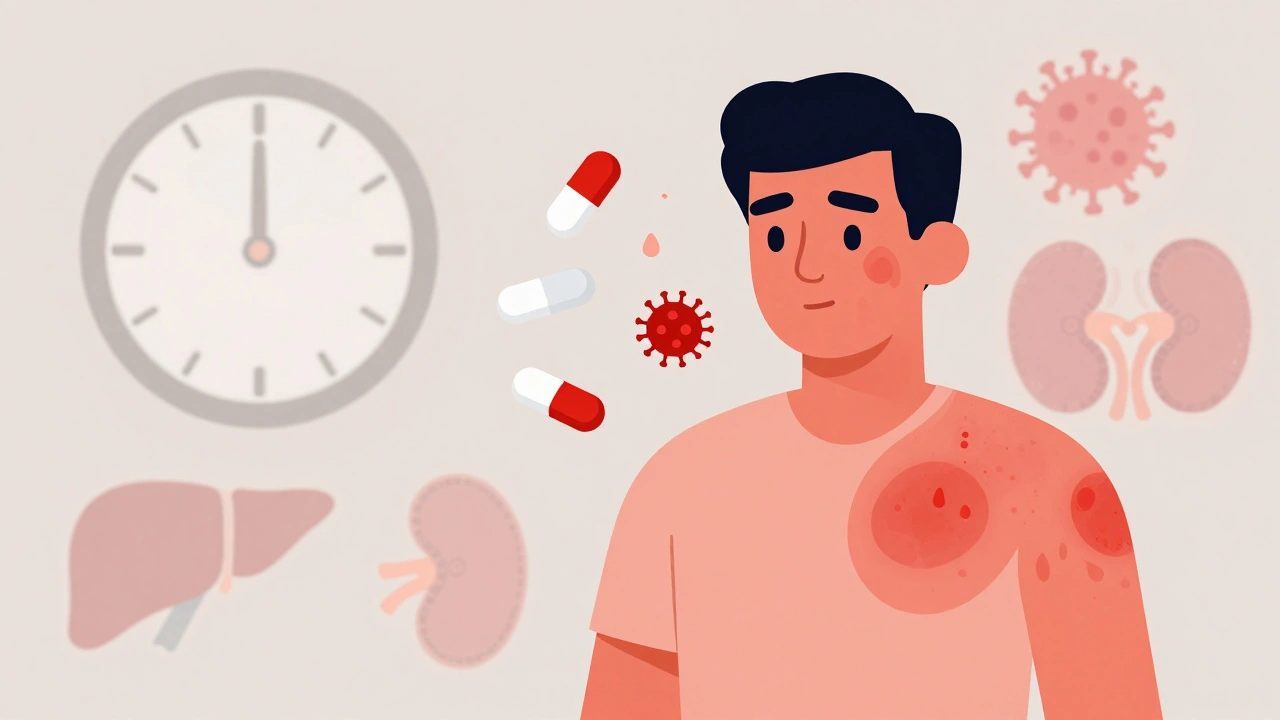
When your body overreacts to a medication, it doesn’t always mean a simple rash or upset stomach. DRESS syndrome, a life-threatening drug-induced hypersensitivity reaction that affects multiple organs and often involves fever, rash, and blood abnormalities. Also known as drug reaction with eosinophilia and systemic symptoms, it’s rare but dangerous—especially if doctors miss the link to a recent drug change. Unlike typical allergies, DRESS doesn’t show up right away. It can take weeks after starting a new medicine for symptoms to appear, which is why so many cases get misdiagnosed as infections or autoimmune diseases.
The most common culprits? Anticonvulsants like carbamazepine and phenytoin, antibiotics like sulfonamides, and allopurinol used for gout. But it’s not just the drug itself—it’s your genes. People with certain HLA gene variants are far more likely to develop DRESS after taking these meds. That’s why some patients react badly to a drug while others take it without issue. It’s not random. It’s biological. And if you’ve been on one of these drugs for a few weeks and suddenly get a fever, swollen lymph nodes, a widespread rash, or abnormal blood tests (like high eosinophils or liver enzymes), you need to act fast. Stopping the drug is step one. Delaying can lead to liver failure, kidney damage, or even death.
DRESS syndrome doesn’t happen in isolation. It’s tied to other serious drug reactions you’ve probably heard of—like anaphylaxis or Stevens-Johnson syndrome. But while those strike quickly, DRESS creeps up. That’s why it’s often overlooked. And because it affects multiple organs, it overlaps with conditions like hepatitis, kidney disease, or even lupus. That’s why knowing the full picture matters. You can’t just treat the rash. You have to track the fever, the blood counts, the liver enzymes. It’s a puzzle, and the medicine you started three weeks ago is the missing piece.
Below, you’ll find real-world stories and science-backed guides that connect the dots between medications and rare but deadly reactions. From how to spot early signs to understanding which drugs are most likely to trigger DRESS, these posts give you the tools to ask the right questions—before it’s too late.
Drug Reaction with Eosinophilia and Systemic Symptoms (DRESS): What You Need to Know Now
DRESS syndrome is a rare but deadly drug reaction that strikes weeks after taking certain medications. Learn the signs, triggers, and how to get diagnosed before it’s too late.
View More