MS Relapse: What Happens, How to Spot It, and What to Do
When you have MS relapse, a sudden return or worsening of multiple sclerosis symptoms lasting more than 24 hours, with no other cause like infection or heat exposure. Also known as an exacerbation, it’s not just feeling tired—it’s your nervous system sending out distress signals. This isn’t a flare-up from stress or overheating. It’s an actual immune attack on the myelin sheath around your nerves, causing new damage. If you’ve been stable for months or even years, a relapse can feel shocking. But it’s a normal part of relapsing-remitting MS, the most common form of multiple sclerosis, where periods of symptom flare-ups are followed by partial or full recovery—and knowing what to look for helps you act fast.
Common signs include sudden numbness or tingling in your limbs, vision problems like blurred or double vision, weakness in one side of your body, trouble walking, or loss of bladder control. These aren’t vague symptoms you can ignore. They show up quickly, often over hours or a day, and stick around. If you’ve had a cold or the flu recently, don’t assume it’s just exhaustion. MS treatment, includes corticosteroids like methylprednisolone to reduce inflammation during a relapse, and disease-modifying therapies to lower future relapse risk works best when started early. Your neurologist doesn’t want you to wait and see if it gets better. If symptoms last more than 24 hours and aren’t tied to fever or heat, call your doctor. Delaying treatment can mean longer recovery or even permanent nerve damage.
What causes a relapse? It’s not one thing. Stress, infections, sleep deprivation, and even vitamin D deficiency can trigger them. Some people notice relapses after flying or spending time in hot weather. Others get them after skipping their daily disease-modifying drug. The key isn’t to live in fear—it’s to recognize patterns. Keep a simple log: when symptoms started, what you were doing, how long they lasted. That info helps your doctor decide if you need to adjust your treatment plan. You’re not alone in this. Thousands track their relapses, adjust their routines, and still live full lives. What you learn about your body now helps you stay in control later.
Below, you’ll find real-world guides on how medications like corticosteroids work during a relapse, what to do if you miss a dose of your MS drug, how infections can trigger flare-ups, and how to tell the difference between a true relapse and just having a bad day. These aren’t theory pieces—they’re practical, no-fluff advice from people who’ve been there.
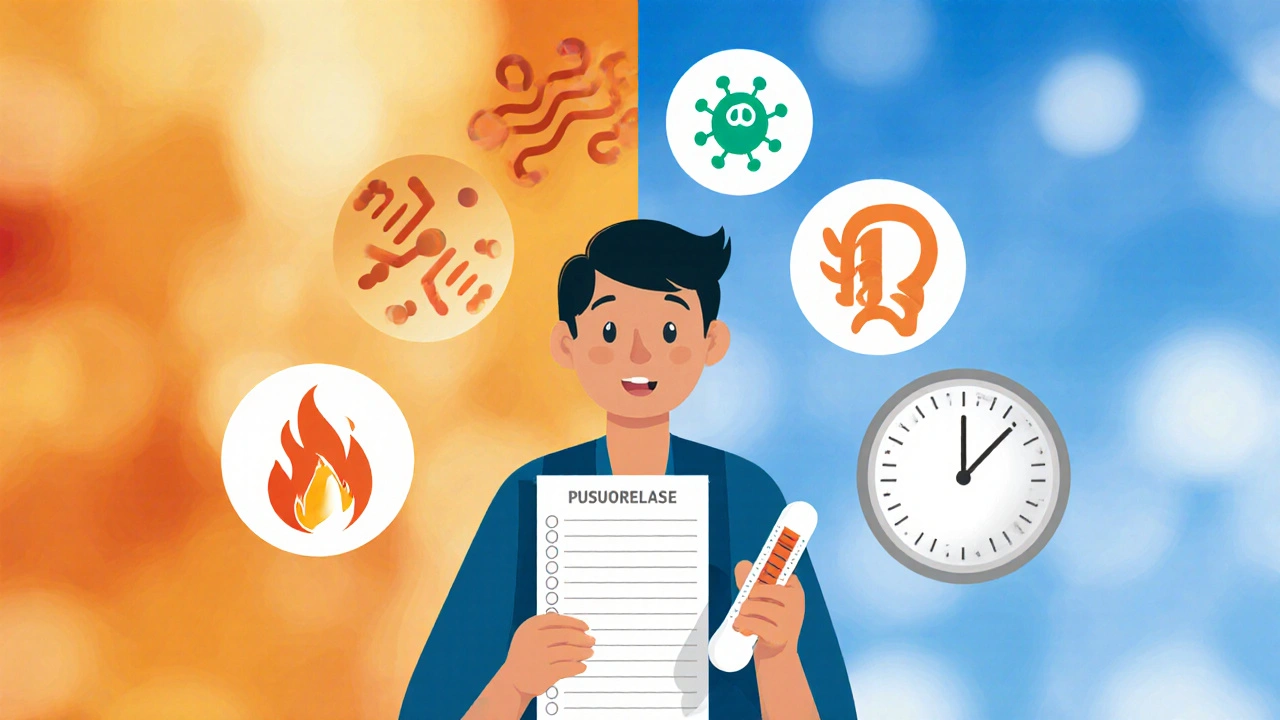
MS Relapse vs. Pseudorelapse: What Triggers Each and When Steroids Are Needed
Learn how to tell the difference between a true MS relapse and a pseudorelapse, what triggers each, and why steroids are sometimes unnecessary-and even risky. Understand when to seek help and how to avoid misdiagnosis.
View MorePopular Posts

How to Find Safe Licensed Online Pharmacies
Jan, 14 2026