Skin Cancer Detection: How to Spot Early Signs and When to Act
When it comes to skin cancer detection, the process of identifying abnormal skin growths before they become life-threatening. Also known as early skin cancer screening, it’s not just about checking moles—it’s about understanding how your skin changes over time and acting fast when something looks off. The most dangerous type, melanoma, a fast-spreading form of skin cancer that starts in pigment-producing cells, can turn deadly in weeks if ignored. But here’s the truth: if caught early, melanoma has a 99% five-year survival rate. That’s not luck—it’s awareness.
Skin lesions, any abnormal area on the skin, including moles, bumps, or patches are the first warning signs. Not all are cancerous, but you need to know the ABCDEs: Asymmetry, Border irregularity, Color variation, Diameter larger than a pencil eraser, and Evolving size or shape. A mole that bleeds, itches, or doesn’t heal? That’s not normal. And UV damage, harm caused by sun or tanning bed exposure that breaks down skin DNA over time is the #1 cause. You don’t need to burn to get hurt—even daily sun exposure adds up. People who use tanning beds before age 35 raise their melanoma risk by 75%. That’s not a risk—it’s a red flag.
Most cases are found by patients themselves, not doctors. That’s why monthly skin checks matter. Stand in front of a mirror. Check your back, scalp, between toes, under nails. Take photos if you need to track changes. If something looks wrong, don’t wait. A skin biopsy, a quick procedure where a small sample of skin is removed and tested for cancer cells is the only way to know for sure. It’s not scary. It’s simple. And it can stop cancer before it spreads.
You’ll find posts here that dig into the real stories behind skin cancer warnings—the drugs that increase sun sensitivity, the rare reactions that mimic melanoma, and how certain medications can hide or worsen early signs. Some articles show you how to tell the difference between a harmless freckle and something dangerous. Others explain why a rash that won’t go away might be more than just irritation. There’s no fluff here—just what you need to know to protect yourself and your loved ones.
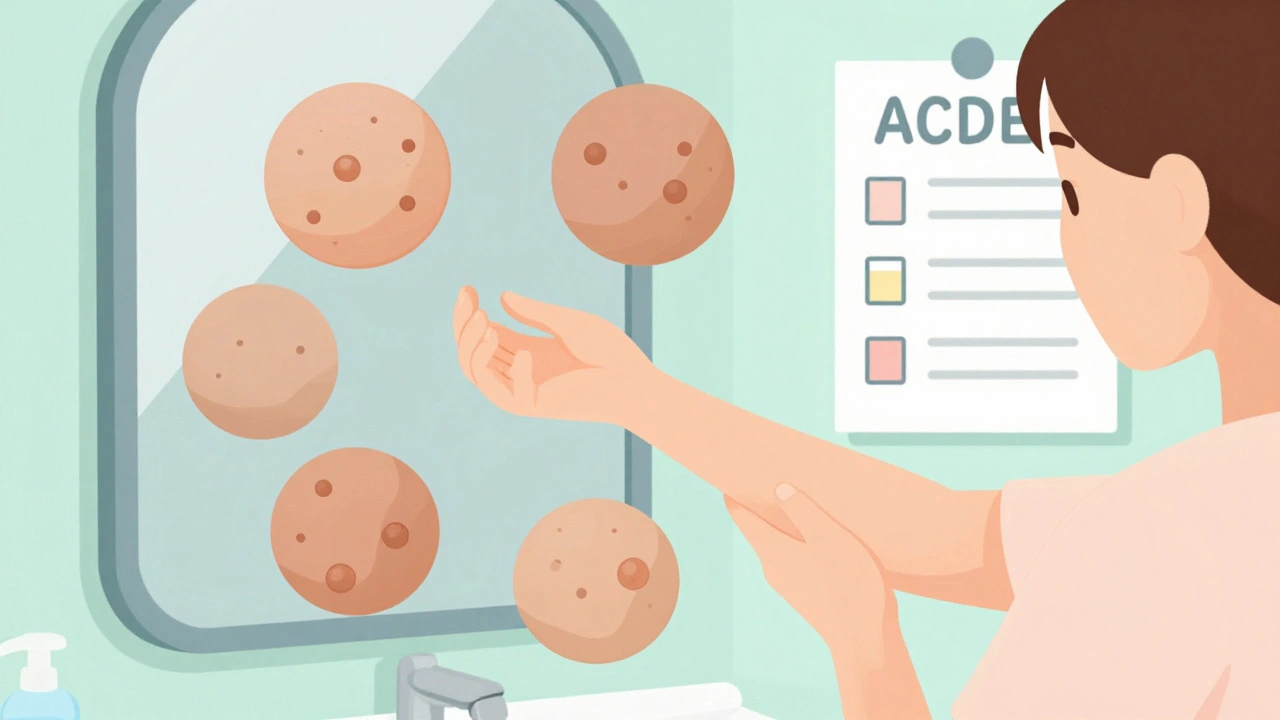
Moles and Melanoma: How the ABCDE Rule Helps Spot Skin Cancer Early
Learn how the ABCDE rule helps spot melanoma early, its limitations, and what to do if a mole looks suspicious. Understand when to get a biopsy and how to check your skin at home.
View More