
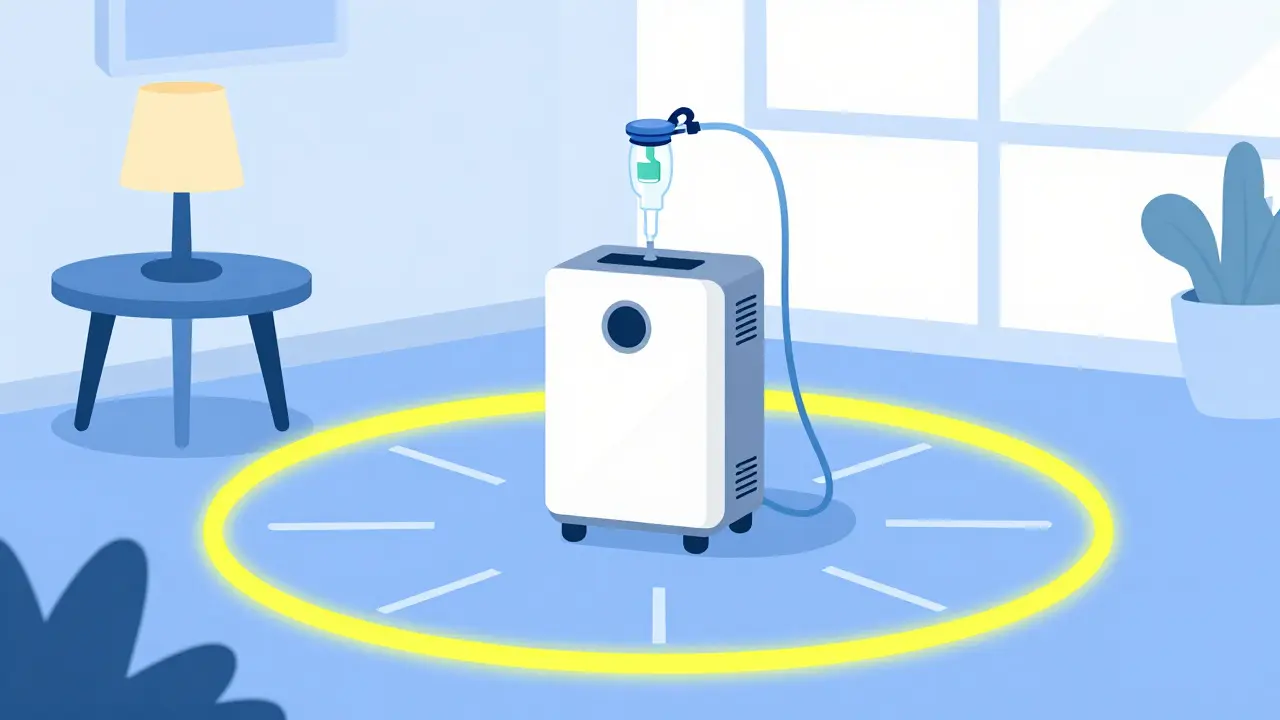
Getting a prescription for supplemental oxygen can feel like a lifeline. Whether you're dealing with COPD, pulmonary fibrosis, or cystic fibrosis, having that extra boost of air makes a world of difference in how you feel and how long you live. But here is the reality: while oxygen itself doesn't catch fire, it acts like gasoline for a flame. It makes things burn way faster and hotter than they would in normal air. If you're bringing an oxygen system into your home, you aren't just managing a medical device; you're managing a specific set of environmental risks.
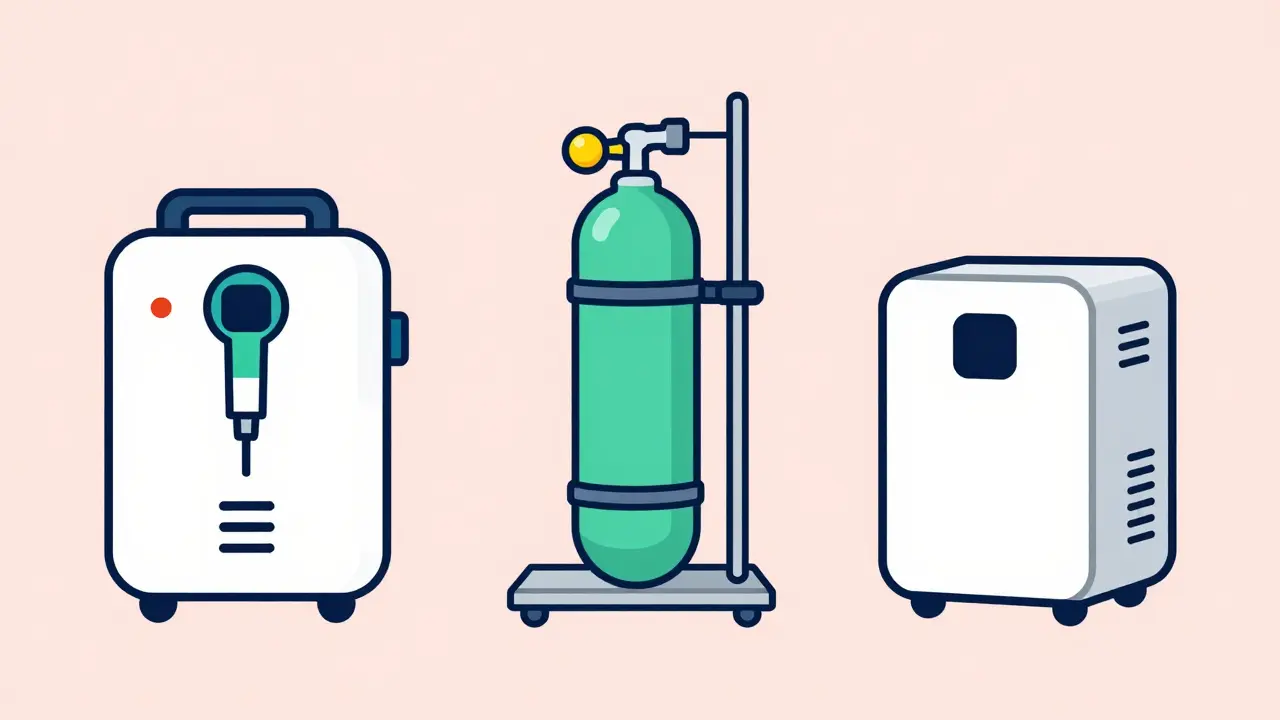
| System Type | How it Works | Primary Risk | Best For |
|---|---|---|---|
| Oxygen Concentrator | Filters air from the room | Electrical hazards | Daily home use |
| Compressed Gas Cylinders | Stored in high-pressure tanks | Explosion/Valve damage | Short trips & backup |
| Liquid Oxygen | Cryogenic liquid storage | Severe cold burns | High mobility/Long trips |
The Golden Rules of Oxygen Safety
The biggest mistake people make is thinking that a few feet of distance is enough. You've probably seen brochures saying stay 5 feet away from flames. However, newer research from the American Thoracic Society suggests a 10-foot minimum. Why? Because in a 40% oxygen environment, combustion happens nearly four times faster than normal. A small spark that would usually flicker out can become a wall of fire in seconds.
You need to be hyper-aware of the "Fire Triangle": heat, fuel, and oxygen. Your equipment provides the oxygen, and your home is full of fuel (curtains, carpets, clothing). The only thing you can control is the heat. This means no smoking, no open flames, and no high-heat appliances near your gear. The FDA has noted that a huge chunk of home fires are caused by simple things like hair dryers, electric razors, and space heaters used too close to the tubing.
One weird but critical tip: check your bedding. Synthetic fabrics can create static electricity. You might not even feel a 1,000-volt spark, but that's enough to ignite oxygen-rich air. Stick to 100% cotton sheets and pajamas to keep the static risk low.
Managing Your Equipment Based on Type
Depending on what your doctor prescribed, your safety checklist will look a bit different. If you use an Oxygen Concentrator, which is an electric device that pulls oxygen from the air, your main focus is airflow and electricity. Don't push the machine right up against a wall; give it at least 6 inches of breathing room so it doesn't overheat. Also, remember that these need a steady power source. If you live in an area with frequent blackouts, ensure you have a battery backup or a backup tank ready to go.
If you're using compressed gas cylinders, you're dealing with pressure. These tanks are heavy and can be dangerous if they fall. If a valve snaps off, the tank can literally turn into a rocket. Always secure your tanks in a stand or a cart. Never let them lean against a wall where they could slide. Also, keep them away from direct sunlight or heaters; if the internal temperature hits 125°F, you're entering a danger zone for explosions.
For those using liquid oxygen, the danger is the temperature. These systems store oxygen at a freezing -297°F. If you spill liquid oxygen on your skin, it's not just a cold sensation-it's a severe cryogenic burn. Handle these with the extreme care described in your provider's manual and always use the prescribed pressure relief valves.
Staying Active and Moving Safely
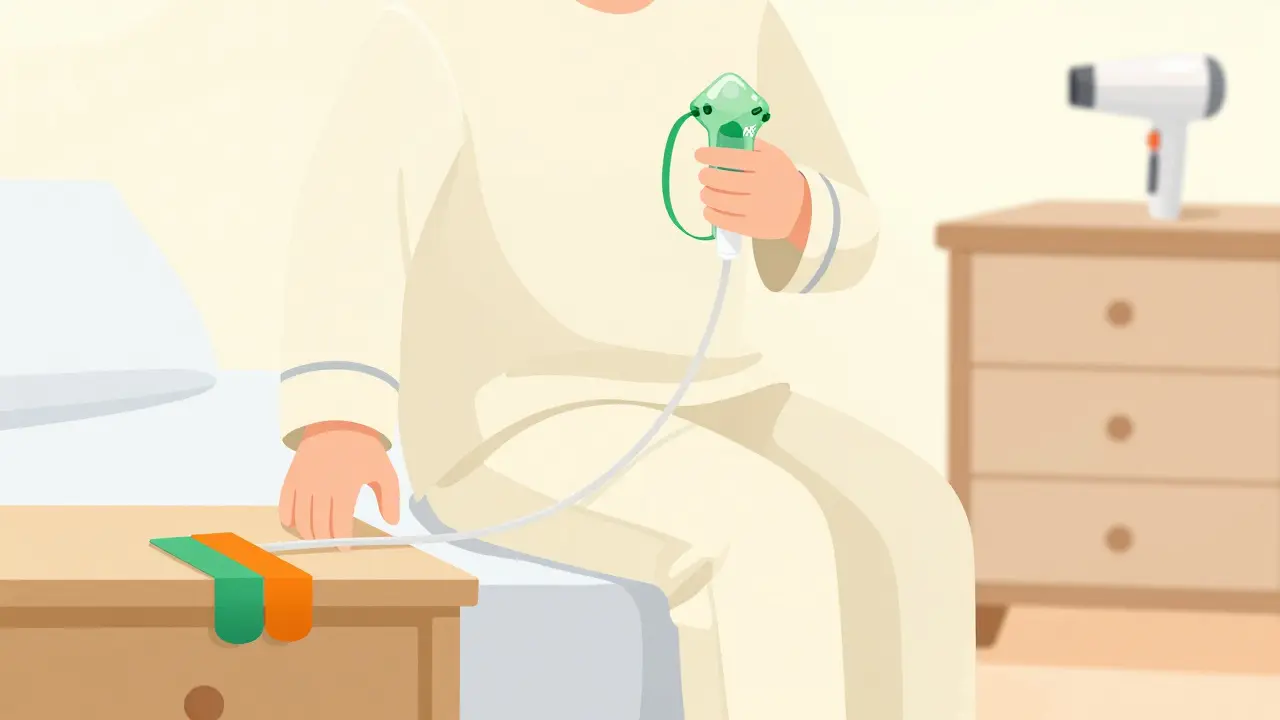
Oxygen therapy shouldn't keep you housebound, but it does change how you move. The most common accident isn't actually fire-it's falling. Long lengths of tubing are classic tripping hazards. To fix this, many experienced users use Velcro straps to secure tubing to furniture or use wheeled carts to move their concentrators from room to room.
When you're getting dressed or grooming, follow these steps to stay safe:
- Remove your nasal cannula before using any oil-based products (like VapoRub or heavy moisturizers) on your face, as these can be flammable in the presence of high oxygen.
- Move your oxygen source to another room or turn it off completely before using a hair dryer or curling iron.
- Avoid using aerosol sprays-like hairspray or spray deodorant-while wearing your oxygen. There are documented cases of hairspray igniting almost instantly upon contact with oxygen tubing.
If you're heading out, match your equipment to your activity. Use a small portable tank for a quick trip to the mailbox, but save the liquid oxygen system for a full day of shopping or a visit to family. Always check your flow rate (usually between 0.5 and 6 liters per minute) as set by your physician; cranking up the flow because you "feel short of breath" can actually be dangerous and waste your supply.
Maintenance and Long-Term Care
Your equipment is a medical device, not a piece of furniture. If you're using a concentrator, you need to clean the filters every 2 to 4 weeks. A clogged filter makes the motor work harder, increases heat, and can lead to electrical failure. Professional servicing should happen every six months to ensure the oxygen purity stays between 87% and 96%.
Keep a detailed log of your tank levels. There is nothing more stressful than running out of oxygen in the middle of a grocery store. A good rule of thumb is to always have a "reserve tank" that you only touch in an absolute emergency. If you're using a newer "smart" concentrator with AI flame detection, don't let the technology make you complacent. The alarm is a backup, not a license to ignore the 10-foot rule.
| Check Item | Action | Frequency |
|---|---|---|
| Air Filters | Dust and clean | Every 2-4 weeks |
| Tubing Condition | Check for kinks or leaks | Daily |
| Tank Stability | Ensure tanks are in stands | Daily |
| Clearance Zone | Remove flammable items within 10ft | Constant |
Can I use an electric blanket while on oxygen?
It is generally discouraged. Many electric blankets can spark or overheat, and in an oxygen-rich environment, this can lead to a fire. If you must use one, ensure it is a modern, certified safe model and keep the oxygen tubing as far away from the heating elements as possible. Using a heating pad is often riskier than a blanket.
What should I do if my concentrator starts beeping?
Most beeps indicate a drop in oxygen purity or a power failure. Immediately switch to your backup compressed gas cylinder. Check that the machine is plugged in and that the filters aren't blocked. If the alarm continues, contact your medical equipment provider immediately.
Is it safe to use lotion or Vaseline on my nose?
Avoid oil-based products like Vaseline or petroleum jelly. These can ignite more easily in the presence of concentrated oxygen. Instead, use a water-based lubricant or a saline nasal spray to keep your nostrils from drying out.
How do I transport oxygen tanks in a car?
Never leave oxygen tanks lying loose in a car; in a sudden stop, they can become projectiles. Use a secure tank holder or strap them down firmly. Never leave tanks in a hot car during summer, as the heat can increase the internal pressure to dangerous levels.
How often should I change my nasal cannula?
Most providers recommend replacing the cannula every two weeks to prevent bacteria buildup and ensure the plastic doesn't become brittle and leak. If it becomes dirty or damaged, replace it immediately.
What to Do Next
If you've just started therapy, your first priority is a home safety walkthrough. Walk through every room you spend time in and identify "hot zones"-the stove, the fireplace, or where you plug in your hair dryer. Move your furniture to ensure you have a clear path to avoid tripping over tubes.
If you feel your current training was too brief, don't be afraid to call your supplier. Ask them to show you exactly how to change a filter or how to read your tank gauge. If you're an elderly user or have balance issues, consider installing ceiling-mounted tubing tracks, which can significantly reduce the risk of falls. Finally, make sure your family and local emergency responders know that you use oxygen; a simple sign on the front door or window can save lives during a fire.




dwight koyner
April 7, 2026 AT 15:04 PM
The emphasis on the "Fire Triangle" is absolutely critical. Many patients underestimate how quickly an oxygen-rich environment can accelerate a combustion event. I would also strongly suggest that users ensure their smoke detectors are not only functional but strategically placed near the equipment areas, as early detection is the only way to mitigate the risks described here.