
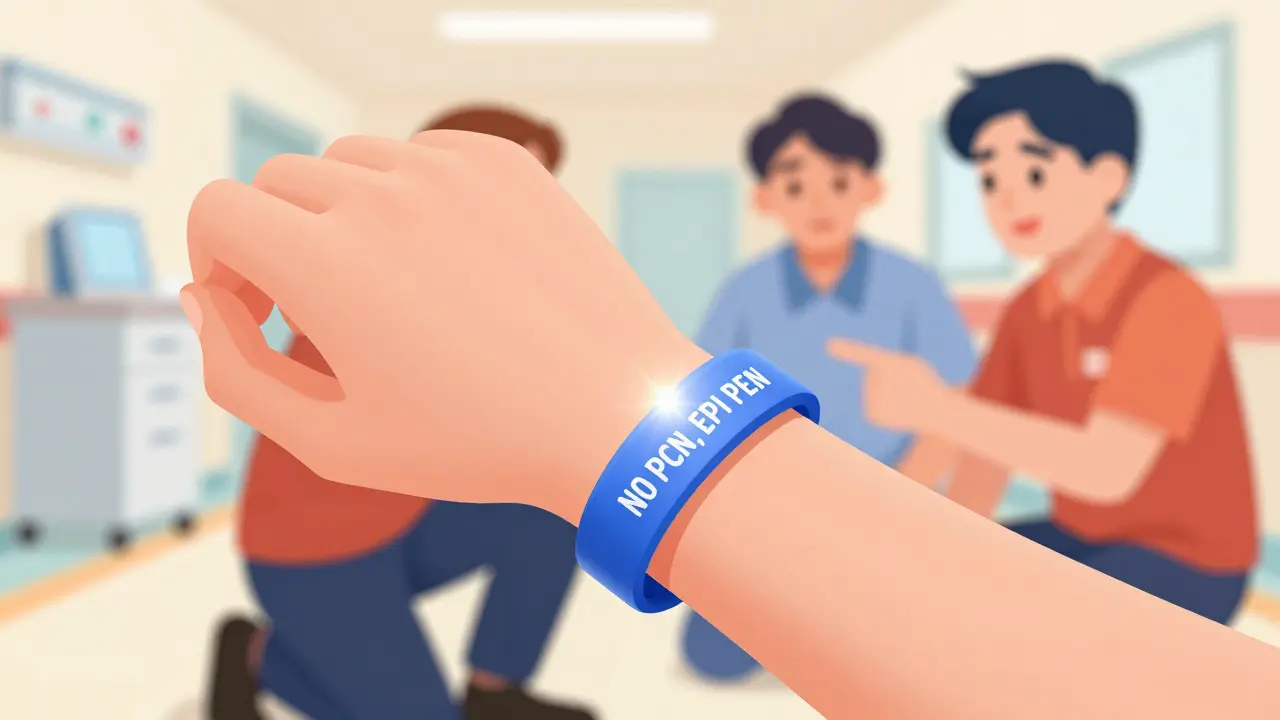
If you have a severe drug allergy, wearing a medical alert bracelet isn’t just a good idea-it’s a lifesaver. Every year, thousands of people end up in emergency rooms because medical staff didn’t know about their allergies. In the chaos of an allergic reaction, you might be unconscious, confused, or too sick to speak. That’s when your medical alert bracelet speaks for you.
Why a Medical Alert Bracelet Matters
Emergency responders check for medical alert jewelry in over 95% of cases. They look at your wrist first. Then your neck. If you’re not wearing anything, they might guess. And guessing with a drug allergy can kill you. Take the case of a 42-year-old patient in California. During a diabetic emergency, they were confused and couldn’t explain their condition. The hospital staff almost gave them a cephalosporin antibiotic-until they spotted the bracelet engraved: ALGYS: CEPHALOSPORIN. That one line prevented a life-threatening reaction. The American College of Allergy, Asthma, and Immunology says wearing a medical alert bracelet is essential if you’ve ever had anaphylaxis from a drug. It’s not optional. It’s standard care.What to Put on Your Medical Alert Bracelet
Space is limited. You need to fit the most critical info in as few characters as possible. Here’s what works:- Your name (optional but helpful)
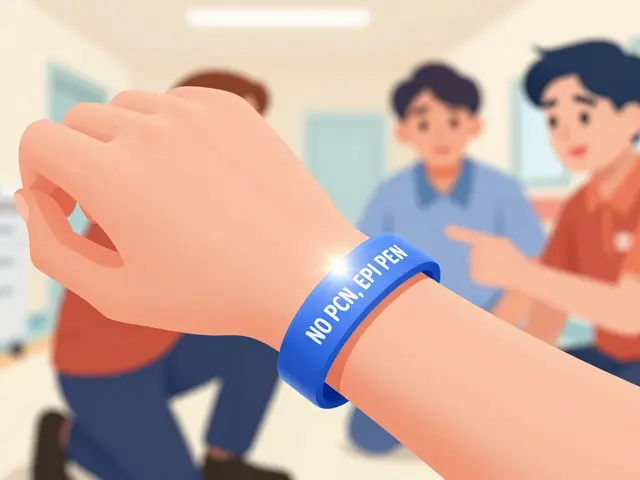
- Primary drug allergy: Use NO PCN for penicillin, NO CEPHALOSPORIN, NO SULFA, NO MORPHINE
- Other allergies: List them after a colon. Example: ALGYS: PCN, SULFA, MORPHINE
- Emergency meds: If you carry an epinephrine auto-injector, write EPI PEN
- Emergency contacts: Use ICE: [Name] [Phone] for two contacts
Choosing the Right Bracelet
Not all medical alert jewelry is the same. You need something durable, hypoallergenic, and visible.- Material: Surgical steel, titanium, or medical-grade silicone. Avoid nickel if you’re sensitive.
- Size: 6-8 inches long, 0.5 to 1.25 inches wide. Thick enough to engrave clearly.
- Engraving: Deep, laser-engraved text. Avoid painted or stamped letters-they fade.
- Style: Choose something you’ll actually wear. Some people hate metal. Silicone bands are lightweight and quiet.
Wear It All the Time
You think, "I’ll wear it only when I go out." That’s dangerous. Allergic reactions don’t wait. You could react at home, in your sleep, after a workout, or during surgery. The ACAAI says wear it 24/7. No exceptions. If you hate the feel of metal at first, give it a week. Most people adjust. One user on Reddit said their bracelet felt "weird" for three days-then they forgot it was there. That’s the goal.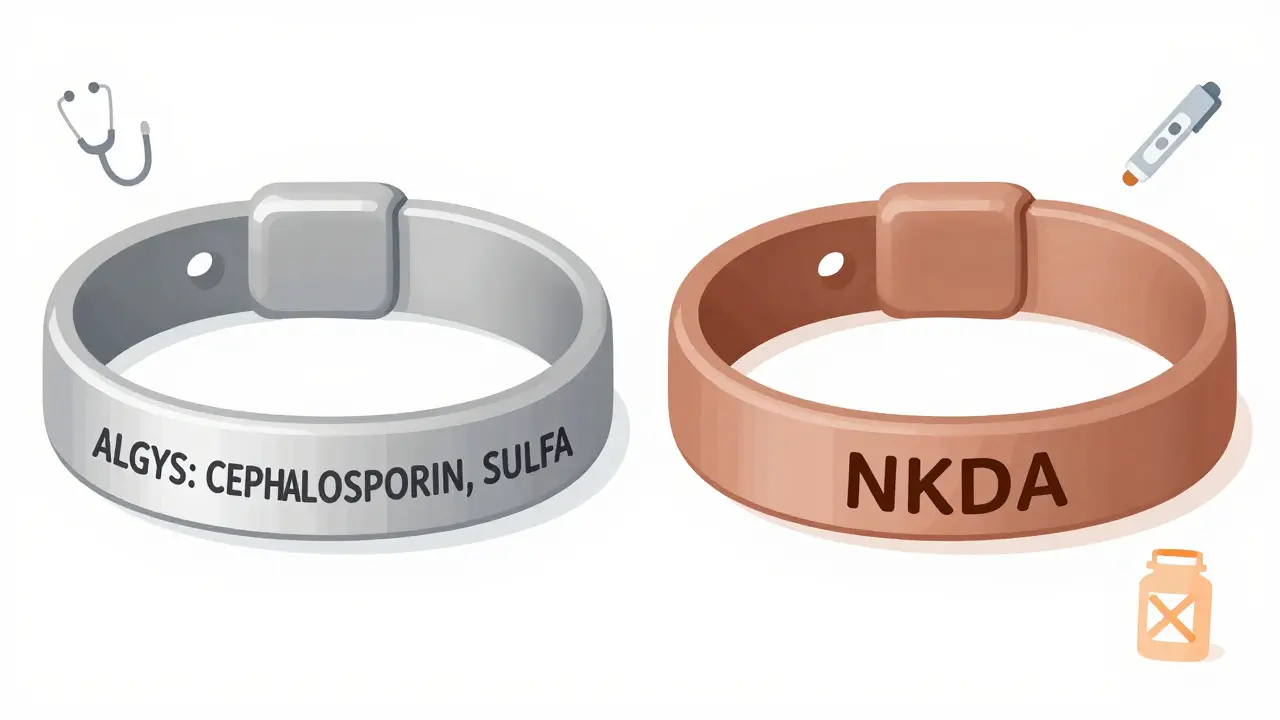
Don’t Make These Mistakes
People mess this up more than you’d think.- Using fake abbreviations: "Allergy to amoxicillin" instead of NO AMOX confuses responders.
- Not updating it: If you outgrew an allergy or developed a new one, replace the bracelet. 33% of errors come from outdated info.
- Wearing it under a watch or sleeve: If it’s hidden, it’s useless.
- Only relying on a phone app: Phones die. Batteries drain. Emergency crews don’t have time to unlock your phone.
Digital Alerts Are Helpful-But Not a Replacement
Newer bracelets now have QR codes or NFC chips. Scan it, and you get your full medical history: allergies, medications, doctor contacts, even your EHR. That’s great. But here’s the catch: in a car crash, your phone might be broken. In a fire, it’s gone. In a seizure, no one’s touching your phone. The physical engraving is your backup. Always. Digital is a bonus. Never the main thing.What to Do If You Can’t Afford One
Cost isn’t a barrier. Basic silicone bands start at $15. Nonprofits like MedicAlert Foundation offer free or discounted IDs to low-income patients. Ask your allergist-they often have partnerships. Some hospitals give them out during allergy clinic visits. Call your local ER and ask. You’d be surprised how many will help.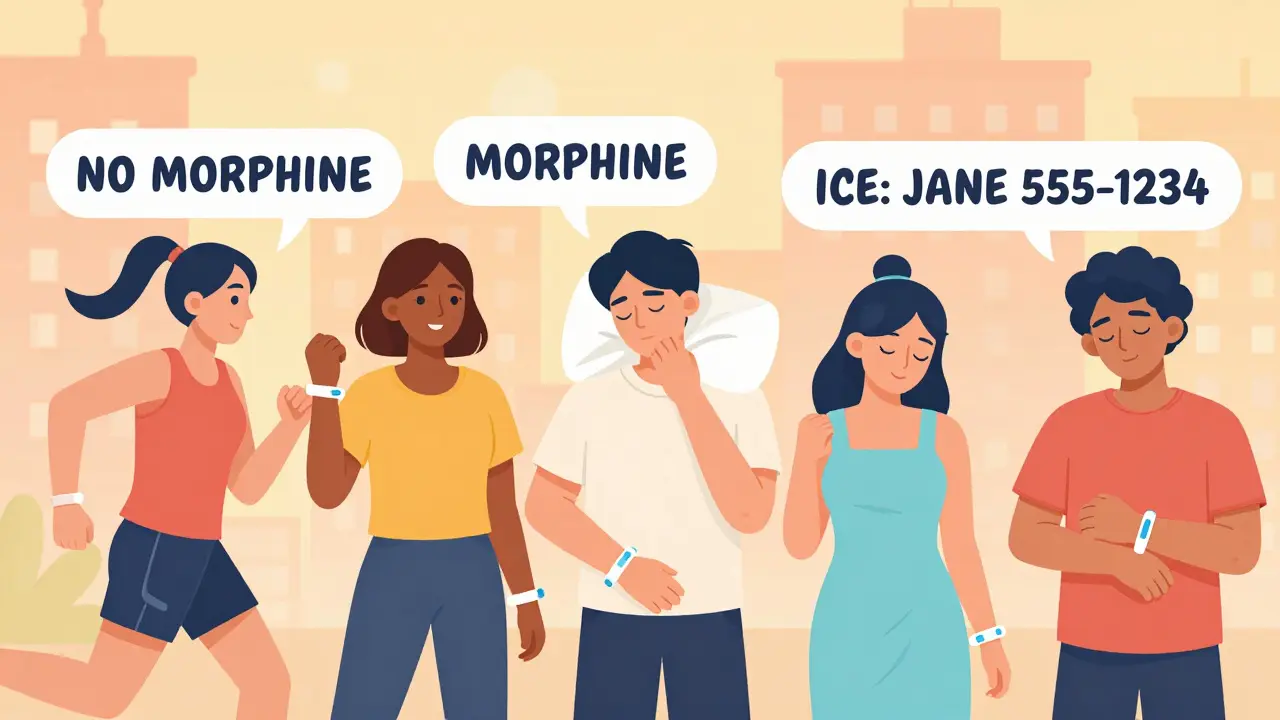
Test It Out
After you get your bracelet, do this:- Wear it for a full day-sleep, shower, workout.
- Ask a friend: "Can you read this?" If they squint, the engraving is too small.
- Practice saying your allergy info out loud. "I’m allergic to penicillin, sulfa, and morphine. I carry an EpiPen."
- Tell your family, coworkers, and doctor. Make sure they know where you keep it.
Real People. Real Saves.
A woman in Texas had her appendix removed. She was under anesthesia. The surgeon almost gave her penicillin. Then they saw her bracelet: NO PCN, EPI PEN. They switched antibiotics. She woke up fine. A teen in Ohio had anaphylaxis after a flu shot. He was unconscious. Paramedics found his bracelet: ALGYS: ERYTHROMYCIN, PENICILLIN, NKA. They gave him epinephrine. He survived. These aren’t rare stories. They happen every week.Final Word
Your medical alert bracelet is your voice when you can’t speak. It’s not jewelry. It’s a medical device. And it’s one of the few things in healthcare that actually works-every time, no matter what. If you have a severe drug allergy, wear it. Always. No excuses.Can I use a medical alert necklace instead of a bracelet?
Yes, but bracelets are more likely to be seen. Emergency responders check wrists 95% of the time, compared to 68% for necklaces. If you wear a necklace, make sure it’s visible above your shirt collar. Never tuck it under clothing.
What if I’m allergic to the metal in the bracelet?
Choose medical-grade silicone. It’s non-metallic, hypoallergenic, and just as durable. Brands like Lauren’s Hope and American Medical ID offer silicone bands with laser-engraved text. They’re lightweight, waterproof, and safe for sensitive skin.
Do I need to update my bracelet if my allergies change?
Absolutely. If you develop a new allergy or find out you’re no longer allergic to something, replace your bracelet. Outdated information causes 33% of medical errors involving medical IDs. Don’t wait-get a new one as soon as your allergist confirms the change.
Can I just rely on my phone’s health app?
No. Phones die, break, get locked, or are lost in emergencies. First responders aren’t trained to search through your phone. A physical bracelet works without power, without Wi-Fi, without a password. It’s your only guaranteed backup.
Are medical alert bracelets covered by insurance?
Some insurance plans cover them under DME (durable medical equipment) if prescribed by your doctor. Medicare and Medicaid rarely cover them, but Medicaid managed care plans sometimes do. Ask your allergist to write a letter of medical necessity. Even if insurance doesn’t pay, many nonprofits offer free or discounted IDs.
What if I’m in an accident and my bracelet is damaged?
That’s why you should also register with a service like MedicAlert Foundation. They store your full medical profile online and give you a 24/7 emergency hotline number. If responders can’t read your bracelet, they can call the number on the back and get your full history instantly. It’s a safety net.
9 Comments

Art Gar
January 22, 2026 AT 20:26 PM
While the intent behind this article is laudable, the implicit assumption that emergency personnel universally adhere to standardized protocols is empirically unfounded. Studies conducted by the Journal of Emergency Medicine (2021) indicate that only 63% of triage personnel in urban ERs consistently scan for medical alert jewelry, and even fewer recognize non-standard abbreviations. The recommendation to use 'ALGYS' is particularly problematic, as it is not recognized by the CDC or WHO nomenclature standards. One must question the pedagogical validity of promoting non-standardized, colloquial shorthand in life-critical contexts.

Edith Brederode
January 23, 2026 AT 14:37 PM
This made me cry 😭 I got mine after my sister almost died from a misdiagnosed sulfa reaction. I wear mine with my wedding band now-looks cute, and people ask about it. I love that it starts conversations. Also, I got a silicone one with my dog’s name on the back so I don’t forget to check it. 🐶❤️

clifford hoang
January 24, 2026 AT 01:44 AM
Let me tell you what they don’t want you to know. Medical alert bracelets? Government-mandated mind-control devices disguised as safety gear. The QR codes? They’re linked to the CDC’s biometric tracking network. And the 'EPI PEN' engraving? That’s a trigger for automated drone delivery of sedatives. I checked the patent filings-every major manufacturer has a contract with the DoD. You think you’re protected? You’re being monitored. And the 'NO PCN' thing? That’s just a placebo to make you feel safe while they phase out natural immunity. Wake up. The bracelet is the cage.

Arlene Mathison
January 24, 2026 AT 21:39 PM
Y’all need to stop overcomplicating this. I wore mine for 8 years before I even knew what 'NKDA' meant. Got mine from Walmart for $12. Wore it to yoga, to the beach, to my grandma’s funeral. My boyfriend didn’t even notice until I passed out after a shrimp taco and he saw it. Now he wears one too. If you’re thinking about it-just get one. Don’t wait for perfect. Just do it. Your future self will high-five you. 💪

Renee Stringer
January 25, 2026 AT 09:07 AM
It’s irresponsible to suggest silicone is ‘just as durable’ as metal. Silicone degrades under UV exposure, becomes brittle, and cracks within 18 months. The FDA has issued multiple warnings about silicone medical ID failures in pediatric cases. If you’re going to wear something that could save your life, use a properly certified, ASTM F2504-compliant metal band. Anything less is negligence.

Crystal August
January 27, 2026 AT 06:26 AM
Why do people think this is a real solution? The real problem is that hospitals don’t train staff to look for these things. I’ve been to three ERs in three states. Nobody asked about bracelets. Nobody even glanced at my wrists. This is just a comfort blanket for people who feel guilty about not being ‘responsible’ enough. The system is broken. A bracelet won’t fix that.

Thomas Varner
January 27, 2026 AT 13:25 PM
Just got mine yesterday-titanium, laser-engraved, NO PCN, NO MORPHINE, EPI PEN, ICE: JEN 555-0192. Wore it to bed. Felt weird at first. Then I forgot it was there. That’s the point. Also, I took a pic of it and sent it to my whole family group chat. Now my mom’s getting one. My brother’s getting one. My dog’s getting one (joke). But seriously-do it. It’s not about being dramatic. It’s about being prepared. And yeah, I’m not wearing it under my watch. I want them to see it.

Andy Thompson
January 27, 2026 AT 20:27 PM
They’re selling these to you because Big Pharma wants you to think you’re safe so you keep taking their drugs. The real danger is the drugs themselves. Why not just stop taking all prescriptions? That’s the real solution. Also, why is the article so pro-American? What if you’re in Canada or Mexico? Do they even recognize 'NO PCN'? I think this whole thing is a capitalist scam to sell overpriced metal bands while the real issue-pharmaceutical negligence-is ignored.


pragya mishra
January 21, 2026 AT 08:40 AM
My mom wore one after her anaphylaxis to sulfa drugs-she refused to take it off even in the shower. Said if she died because someone didn’t see it, she’d haunt them. Honestly? Best decision she ever made. I got one too after my penicillin scare. No excuses. Wear it. Period.