
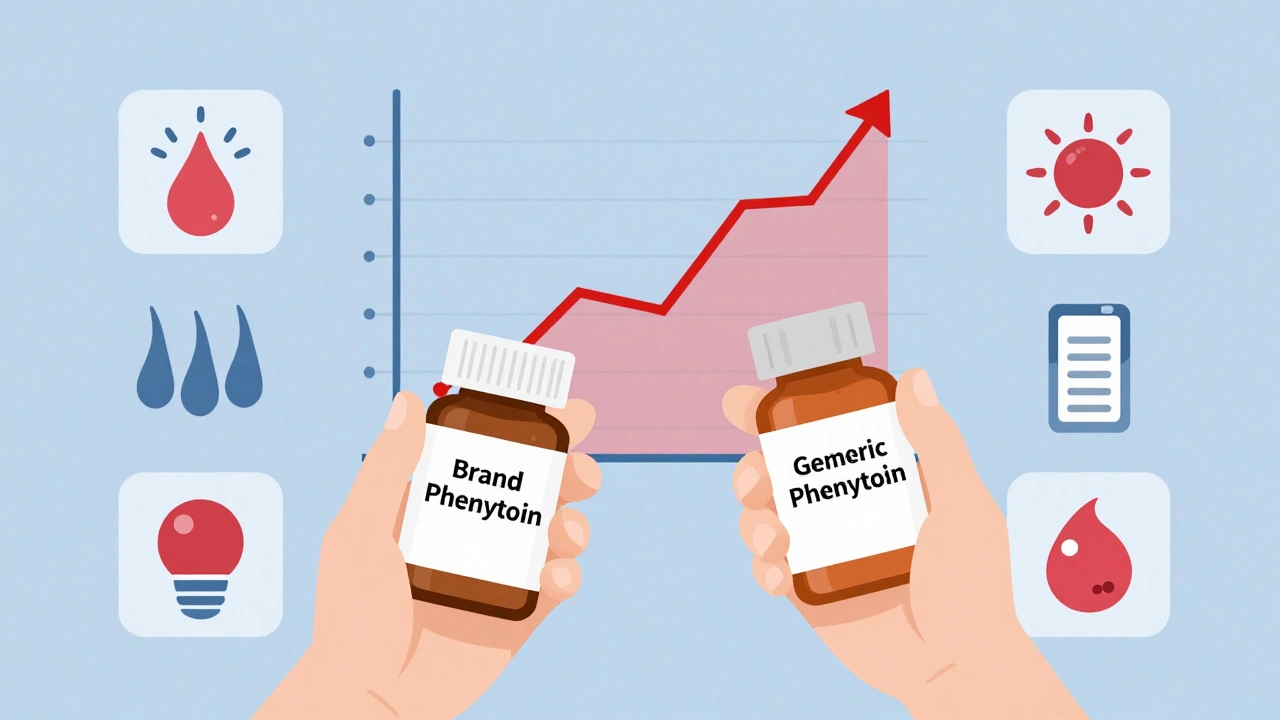
Switching from brand-name phenytoin to a generic version might seem like a simple cost-saving move-but for patients taking this drug, it can be anything but. Phenytoin isn’t like most medications. Even a small change in how much of the drug gets into your bloodstream can mean the difference between seizure control and dangerous toxicity. That’s why therapeutic drug monitoring isn’t optional when you switch formulations-it’s essential.
Why Phenytoin Is Different
Phenytoin, first developed in the 1930s and sold under the brand name Dilantin, is still used today to treat seizures, especially tonic-clonic and partial seizures. But unlike newer antiepileptic drugs, phenytoin has a nasty combination of traits that make it tricky to manage: a narrow therapeutic window, nonlinear pharmacokinetics, and heavy protein binding. Its therapeutic range? Just 10 to 20 mcg/mL. Go below that, and seizures might return. Go above it, and you risk toxicity-nystagmus, loss of coordination, confusion, even coma or death at levels over 50 mcg/mL. And here’s the kicker: phenytoin doesn’t clear from your body at a steady rate. At low doses, it’s eliminated predictably. But as levels climb toward the therapeutic range, the enzymes that break it down get overwhelmed. That’s called saturation kinetics. A tiny dose increase-say, 25 mg more per day-can cause a huge spike in blood levels. It’s not linear. It’s explosive.Generic Switches: The Hidden Risk
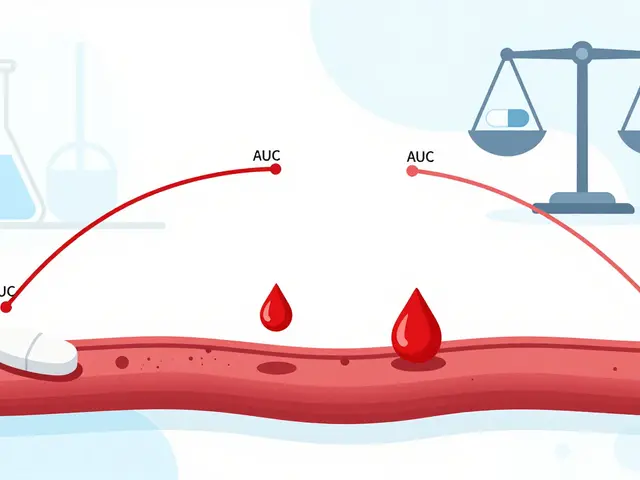
Generic drugs are required by the FDA to be bioequivalent to the brand name. That means their absorption (AUC) and peak concentration (Cmax) must fall within 80-125% of the original. Sounds fair, right? But for phenytoin, that 20% variation can be dangerous. Imagine you’ve been stable on your brand-name phenytoin at 15 mcg/mL. You switch to a generic that delivers 12% less drug. Your level drops to 13.2 mcg/mL-still in range. But then you switch again to another generic that delivers 12% more. Suddenly, you’re at 16.8 mcg/mL. That’s fine. But now imagine you switch back to the first generic after that. You’re now at 14.8 mcg/mL. No big deal? Maybe. But if you’re on the edge of toxicity already, or if you have low albumin, that 2 mcg/mL swing could push you over the line. And it’s not just about the active ingredient. Different generics use different fillers, binders, and coatings. These excipients can affect how fast or how well the drug dissolves in your gut. For phenytoin, even small differences in absorption speed can throw off your steady state.When to Monitor: The Critical Times
You don’t need to check phenytoin levels every week. But you absolutely must check them at key moments:- Before switching formulations-get a baseline trough level (just before your next dose)
- 5 to 10 days after switching-this is when steady state is reached
- Any time you add or stop another medication
- If you develop new side effects like unsteady walking, blurred vision, or confusion
- If you’re hospitalized or have liver or kidney problems

Protein Binding: The Silent Trap
Phenytoin is 90-95% bound to albumin in your blood. Only the free, unbound portion works. That’s why total serum levels can be misleading. If you’re malnourished, have liver disease, or are critically ill, your albumin levels drop. Your total phenytoin level might look normal-say, 14 mcg/mL-but if your albumin is low, your free level could be 30% higher. That’s toxic territory. The correction formula used by many clinics is:Corrected phenytoin = Measured level / [(0.9 × Albumin / 42) + 0.1]
But here’s the truth: this formula is just a rough estimate. It’s based on population averages. In real patients, especially those with complex illness, it can be off by a lot. That’s why many experts now recommend measuring free phenytoin directly when albumin is low or when toxicity is suspected. Don’t rely on the math. Test the real thing.Drug Interactions That Change Everything
Phenytoin is metabolized by liver enzymes-CYP2C9 and CYP2C19. Many common drugs interfere with them:- Increase phenytoin levels: Amiodarone, fluconazole, metronidazole, cimetidine, valproate, sulfa drugs
- Decrease phenytoin levels: Rifampin, carbamazepine, phenobarbital, alcohol, theophylline
Long-Term Monitoring: More Than Just Blood Levels
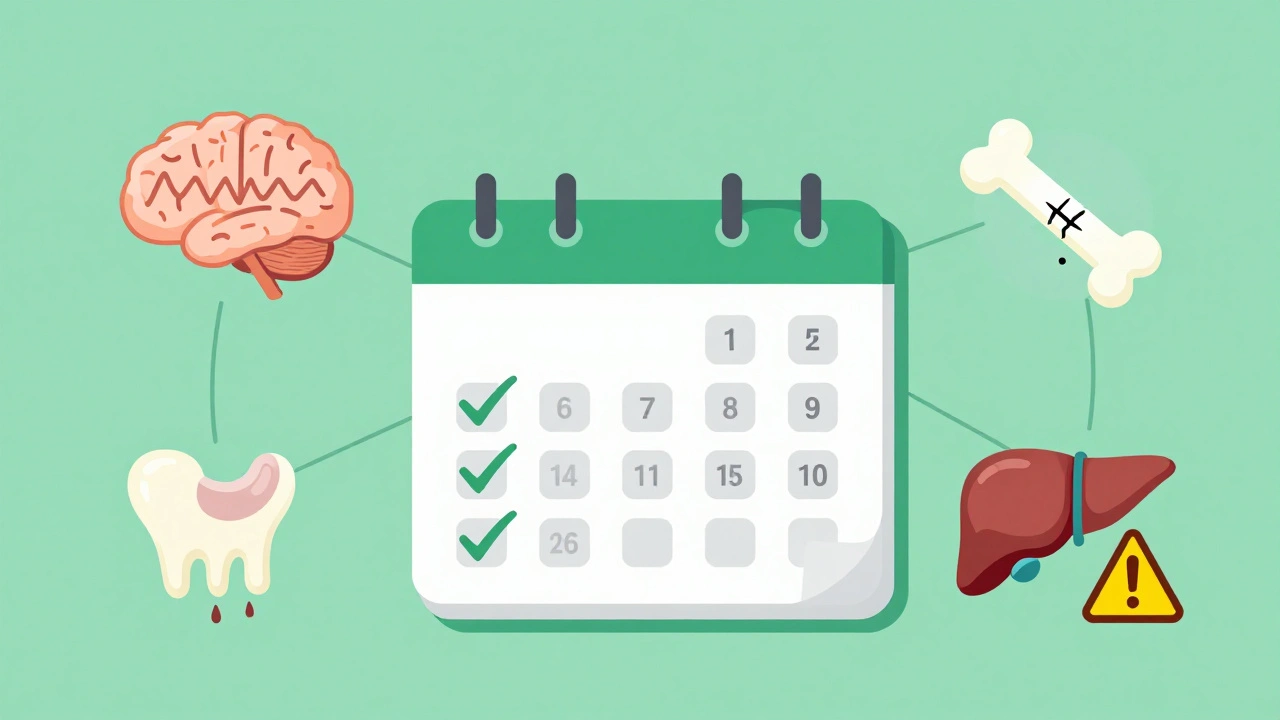
Phenytoin doesn’t just affect your brain. Over years, it can damage your bones, gums, and liver.- Gingival hyperplasia: Swollen, overgrown gums-common in up to 50% of long-term users
- Bone loss: Phenytoin accelerates vitamin D breakdown, leading to low calcium, low phosphate, and osteomalacia
- Folic acid deficiency: Can cause anemia and neurological symptoms
- Hirsutism and facial changes: Thickened features, excessive hair growth-especially in women
- Baseline and annual liver function tests
- Full blood count (for anemia)
- Vitamin D and calcium levels every 1-2 years
- Dental checkups every 6 months
What to Do If You’re Switching
Here’s your practical checklist:- Don’t switch without talking to your neurologist or pharmacist.
- Get a blood level right before the switch.
- Keep your dose exactly the same-no adjustments unless instructed.
- Wait 5 to 10 days after the switch, then get another level.
- If you feel dizzy, unsteady, or confused, get a level immediately.
- If your albumin is low, ask for a free phenytoin test-not just total.
- Keep a log of your seizure frequency and side effects.
- Never switch back and forth between generics without monitoring.
Bottom Line
Generic phenytoin is safe-for some people, most of the time. But because of its narrow window, nonlinear metabolism, and sensitivity to small changes, it’s one of the few drugs where bioequivalence doesn’t equal clinical equivalence. Monitoring isn’t just good practice. It’s life-saving. If you’ve been stable for years on brand-name phenytoin, don’t switch unless you have to. If you’ve already switched and feel off, don’t wait. Get tested. Your brain is counting on it.Do I need to monitor phenytoin levels if I’m on a generic version?
Yes-especially if you’ve switched from brand to generic or between different generics. Phenytoin has a narrow therapeutic range and nonlinear metabolism, meaning even small changes in absorption can lead to toxicity or breakthrough seizures. Monitoring before and 5-10 days after a switch is standard practice.
Can I trust generic phenytoin to work the same as brand-name?
FDA requires generics to be bioequivalent, but for phenytoin, that’s not enough. The allowed 20% variation in absorption can cause clinically significant changes in blood levels due to its saturation kinetics. Many neurologists prefer to keep patients on the same formulation long-term to avoid risks.
What if my albumin is low? Should I still use total phenytoin levels?
No. When albumin is low, total phenytoin levels can be misleading. Up to 50% of the drug may be unbound, even if the total level looks normal. In this case, a free phenytoin test is more accurate. Correction formulas exist but are unreliable in individual patients-clinical symptoms matter more.
How often should phenytoin levels be checked after starting treatment?
Check levels 5-10 days after starting or changing the dose, and again after 2-3 weeks if levels are stable. After that, levels are typically checked every 6-12 months unless there’s a change in medication, health status, or symptoms.
What are the signs of phenytoin toxicity?
Early signs include nystagmus (involuntary eye movements), dizziness, slurred speech, and unsteady walking. As levels rise, you may develop confusion, drowsiness, vomiting, or even coma. Toxicity usually occurs above 20 mcg/mL, with severe symptoms above 30-40 mcg/mL. Death is possible above 50 mcg/mL.
Can I switch back to the brand-name drug if I have problems with generics?
Yes-if your doctor agrees. Many patients who experience seizures or side effects after switching to generics return to the brand-name version. Insurance may require prior authorization, but clinical stability and safety should come first. Document your symptoms and levels to support your case.
Are there alternatives to phenytoin that don’t require such strict monitoring?
Yes. Drugs like levetiracetam, lamotrigine, and lacosamide have wider therapeutic ranges, linear pharmacokinetics, and fewer drug interactions. They’re often preferred for new patients. But phenytoin is still used for certain seizure types, especially in resource-limited settings, because it’s inexpensive and effective.
9 Comments

Bruno Janssen
December 13, 2025 AT 09:49 AM
I’ve been on it for 12 years. Brand only. Never switched. Don’t want to risk it. My seizures are quiet. My brain is quiet. Don’t touch it.

Tommy Watson
December 15, 2025 AT 01:39 AM
YOOOOO THIS IS WHY WE CAN’T HAVE NICE THINGS 😭
Generic manufacturers don’t even *try* to match the *feel* of Dilantin. It’s like swapping your favorite coffee for something that tastes like burnt cardboard. And then they wonder why people crash.

Karen Mccullouch
December 15, 2025 AT 06:13 AM
USA makes the best meds. If you're switching to some foreign generic, you're playing Russian roulette with your brain. 💀 Get your Dilantin. Pay the extra $10. Your life is worth it.

sharon soila
December 16, 2025 AT 18:37 PM
Thank you for sharing this important information. Everyone deserves to understand the risks. Monitoring is not optional-it is a gift of care to yourself and your loved ones. Stay safe. Stay steady.

nina nakamura
December 17, 2025 AT 17:05 PM
Free phenytoin testing is the only valid measure. Total levels are meaningless if albumin is low. Why are so many doctors still using the formula? It's outdated. Stop pretending it's science.

Hamza Laassili
December 19, 2025 AT 01:16 AM
Wait… so if I switch generics, I might get SEIZURES?? I thought generics were ALL THE SAME?? My pharmacist said it was fine… I’m gonna call them right now. This is insane. 😳

Rawlson King
December 19, 2025 AT 21:52 PM
Most people don’t realize how dangerous this drug is. You’re not just managing epilepsy-you’re managing a chemical bomb. If your neurologist isn’t monitoring you closely, find a new one. This isn’t a suggestion. It’s survival.

Cole Newman
December 20, 2025 AT 10:52 AM
Bro I switched to generic last year and started nodding off at work. Got my level checked-was at 24. Toxic. Went back to brand. Back to normal in 3 days. Don’t be a hero. Get tested. Period.

Webster Bull
December 12, 2025 AT 09:56 AM
Man, I never realized how wild phenytoin is until I read this. One tiny switch and your brain could go haywire. It’s not just a pill-it’s a tightrope walk. Glad someone finally spelled it out like this.