Overactive Bladder Drugs: What Works, What to Avoid, and How to Choose
When your bladder sends signals you didn’t ask for—sudden urges, frequent bathroom runs, even leaks—you’re not alone. Overactive bladder drugs, medications designed to calm an overactive bladder muscle and reduce urgent, frequent urination. Also known as anticholinergics or bladder relaxants, these drugs target the nerves and muscles that control urination to give you back control of your day. They’re not a cure, but for millions, they’re the difference between living normally and living in fear of the next urge.
Not all overactive bladder drugs work the same way. Some, like oxybutynin, a classic anticholinergic that blocks nerve signals to the bladder, dry out your mouth and make you sleepy. Others, like mirabegron, a beta-3 agonist that gently relaxes the bladder muscle, work without the dry mouth side effect but might raise your blood pressure. Then there’s tolterodine, another anticholinergic that’s often better tolerated than oxybutynin, with fewer brain fog issues. Each has trade-offs: cost, side effects, how fast it kicks in, and how well it fits your lifestyle. What works for your neighbor might leave you dizzy or constipated.
What you won’t find in most ads is how often these drugs fail—or how many people quit because the side effects are worse than the symptoms. That’s why knowing your options matters. Some people need to try three or four before finding one that sticks. Others switch to non-drug options like pelvic floor therapy or nerve stimulation. The posts below dive into real-world experiences, comparisons, and warnings you won’t hear from a pill bottle. You’ll see what people actually feel on these drugs, what side effects they can’t ignore, and which ones doctors quietly recommend when the usual options don’t cut it. No fluff. Just what helps, what doesn’t, and how to make a smarter choice next time.
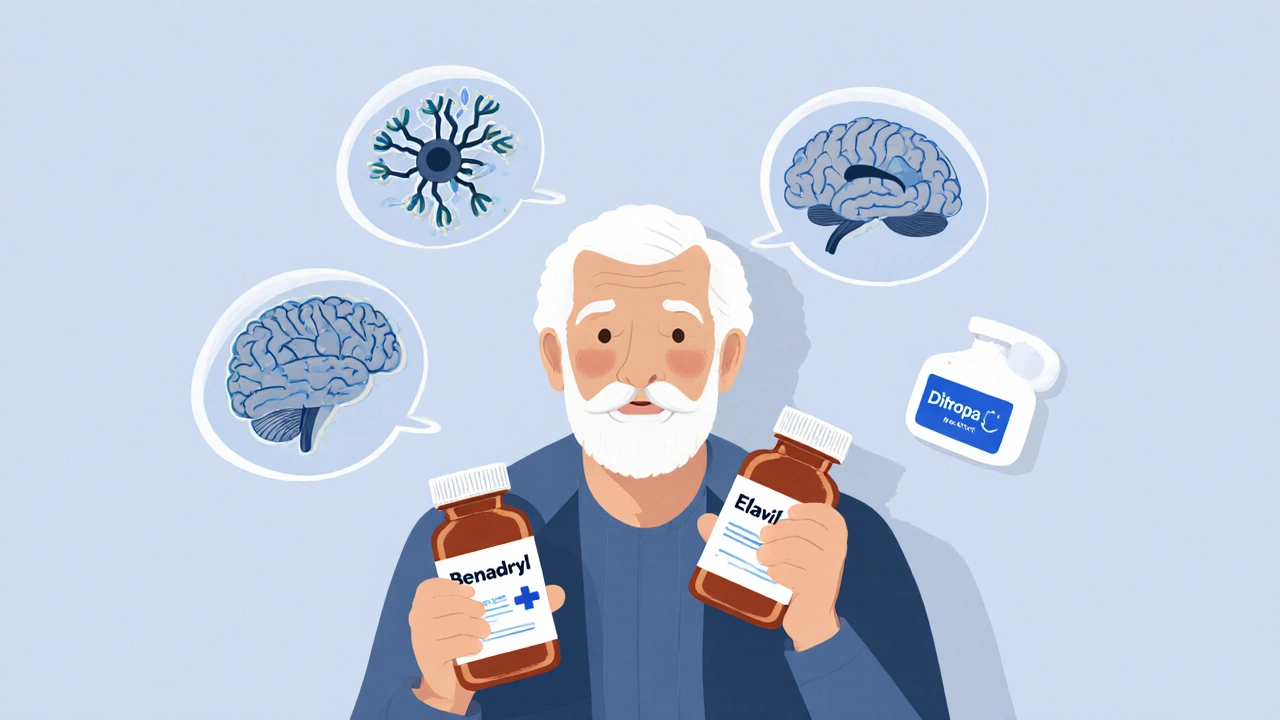
Anticholinergic Medications and Dementia: What You Need to Know About Cognitive Risk
Long-term use of anticholinergic medications like Benadryl and oxybutynin is linked to higher dementia risk. Learn which drugs are most dangerous, how to check your burden, and safer alternatives.
View MorePopular Posts